Walking into J. Webster Smith’s office, you can see degrees and photos covering the walls and bookshelves covered in books. The only difference between Smith’s office and that of another professor’s is the stack of braille papers next to a braille machine sitting on one half of his desk.
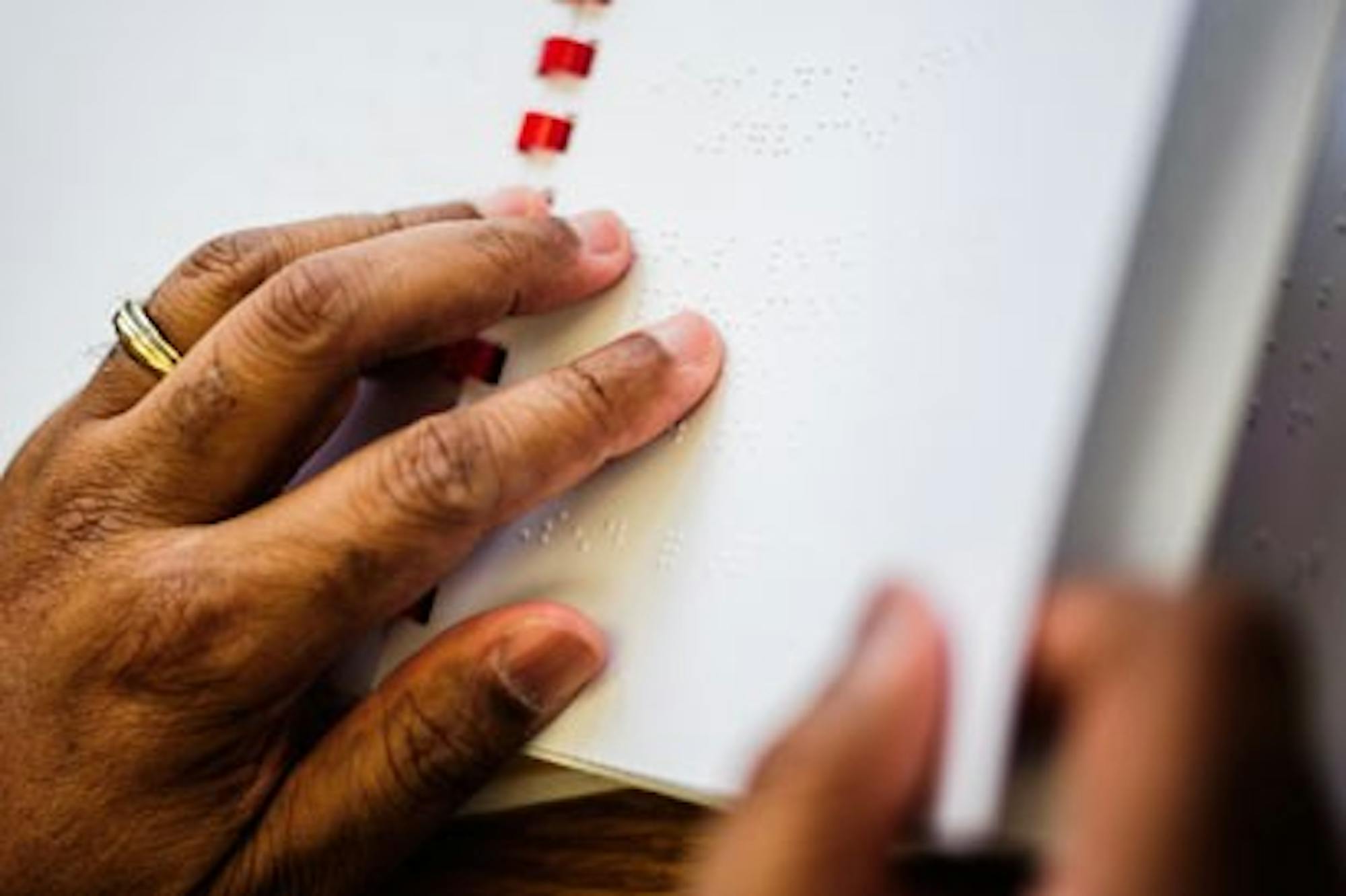
Smith, professor of communication studies and interim director of the Honors Tutorial College communication studies program, has been blind since he was born, and he uses braille on a daily basis.
“I can’t imagine life without braille, but I grew up in a time when braille was commonly taught to blind students,” he said. “It helps with literacy in general, and it gives you flexibility.”
The literacy rate for blind school-age children has decreased from 50 percent to 12 percent in the last 40 years, according to the National Braille Press. But many organizations for the blind are aiming to increase literacy by proclaiming January as Braille Literacy Month.
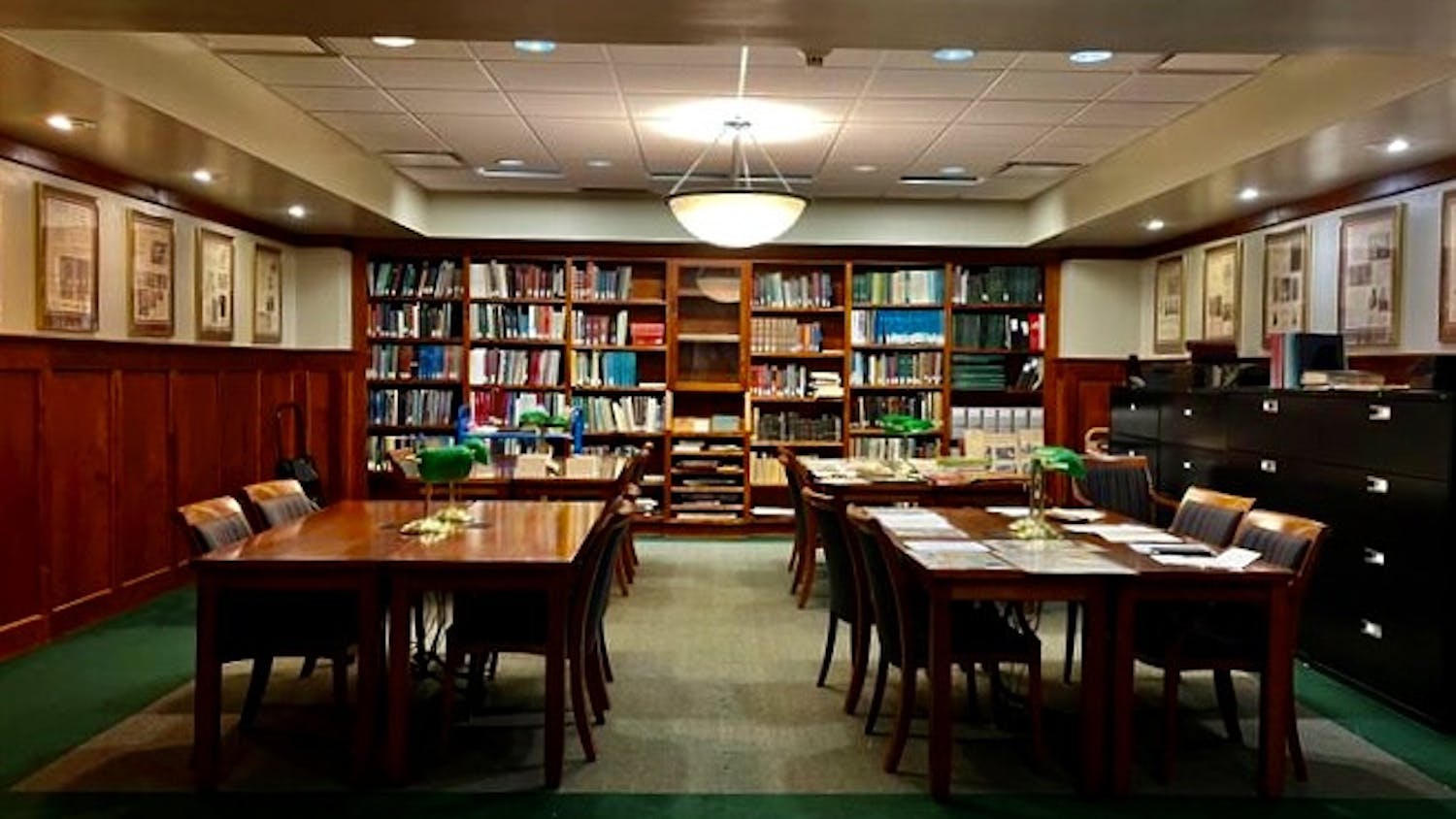
The Alden Library G. Lynn Shostack Adaptive Equipment Room is outfitted with programs and equipment to accommodate people who are visually impaired.
Among the equipment available is the Romeo Braille Embosser (printer), a Bierley handheld magnifier and several types of screen readers, said Christopher Guder, reference and instruction librarian.
The embosser connects to software, which allows a document to be translated into braille and printed for use, Guder said.
“I’ve used it periodically each semester,” Guder said. “It depends on what preferences students have on campus at that time, but it’s not as highly used as some of the other things, like screen readers which read a document to you. And, those are available on all of the computers in the library.”
Accommodations for anyone with a disability are geared toward specific individuals, said Carey Busch, assistant dean of Student Accessibility Services.
“What we find with students who are blind, types of accommodations we make would typically be helping them access their textbooks, printed course materials or notes from the classroom,” she said.
There is not a large collection of braille books in Alden because most of the books can be translated with the Romeo Brailler, Guder added.
“A lot of what has happened is people have moved to the screen readers, now; I don’t know if that’s the same everywhere, but that’s what I’ve seen,” he said.
Although there are usually 50 to 60 students at Ohio University who consider themselves low vision or blind per year, it has been about two years since a student has used braille, Busch said.
But for Smith, he said he can’t imagine not using braille, even if it could be considered an outdated technology.
“There is a lot of technology now that has braille displays, and I do like doing some stuff on computer, but I can’t imagine doing my job without braille,” Smith said.
Many people might think being blind is a setback, but with braille and new technology, people who are visually impaired can do much of the same work, he added.
“I think people think that it’s a sighted world, and people think that if you don’t have sight that you are shut out of so much or that you can’t appreciate or understand this or that,” he said. “That’s just not true.”
ao007510@ohiou.edu
@thisisjelli