Free the Falls, a project to remove the Gorge Dam in Summit County, officially began Aug. 28, following years of discussion on the matter, according to an official statement from Gov. Mike DeWine. The dam, located in the northeastern Ohio city of Cuyahoga Falls, sits on the Cuyahoga River and was built in 1913.
The dam is 58 feet tall and 425 feet wide and was initially built to produce hydroelectric power. However, the dam was a fairly ineffective source due to the Cuyahoga's smaller size, according to Mike Johnson, Chief of Conservation at Metro Parks in Summit County.
The dam ceased producing hydroelectric power by 1958 and was later used to provide cooling water for a nearby coal-fired power plant until 1992.
The project to remove the dam has been years in the making. Approximately 10 years ago, local and statewide community members came together to form a coalition called Free the Falls. The organization has been advocating for the removal of the dam.
The movement consists of organizations such as the City of Akron, the U.S. and Ohio EPA, Summit County, University of Akron, Ohio Department of Natural Resources and more.
“All of these agencies kind of came together and started to seriously talk about the possibility of taking down the Gorge Dam and restoring a free-flowing river,” Johnson said. “And that was just about 10 years ago we really started to get serious about it.”
The project costs $130 million and is funded through a cost-sharing agreement between the Great Lakes Restoration Initiative and other project partners. A large portion of funding came from the Great Lakes Legacy Act.
In 2022, the Ohio government provided $25 million in funding for the project. The EPA provided over $3.8 million in GLRI funding through a grant to the city of Akron for the design of the dam removal.
In addition to a lack of use, proponents for the dam’s removal have cited contamination in the river as a reason to remove the dam.
According to Johnson, the river contains 800,000 cubic yards of contaminated sediment. The sediments in the river come from a century of industry along the watershed, with many factories depositing contamination into the water before clean water standards were put in place.
“The sediment behind the Gorge Dam contains heavy metals, polycyclic aromatic hydrocarbons, polychlorinated biphenyls, oil and grease,” U.S. EPA spokesperson David Shark wrote in an email. “The primary contaminants of concern are cadmium, lead, PAHs and PCBs, which exceed toxicological risk thresholds for plants and animals, especially those living in deep water, and may pose risks to human health through direct contact.”
Johnson also noted that sewage discharge can often be released into the river. While most of these discharges have been cleaned up, sewage can still sometimes find a way into the river.
“When those nutrients are in a free-flowing river, it can assimilate nutrients better,” Johnson said. “A dam essentially turns the river into a lake, and that sort of non-flowing ... stagnant water cannot process the nutrients as well as a free-flowing river. This leads to algal blooms (and) low dissolved oxygen in the water, and the water then flows over the dam into the river.”
The dam’s construction has posed a threat to the local ecosystem in the Cuyahoga River. According to Johnson, the biggest impact on the river’s wildlife is the inhibition of migration down the river. He stated the changing of the river from free-flowing to a stagnant lake has harmed many fish species in the area.
Many fish species in the river are migratory, meaning they need to travel up and down the river to survive. Johnson stated the inhibition of migration is more pressing to the species than the contamination.
The project is currently in Phase 2, which consists of removing these sediments from the water. The process is being directed by the U.S. EPA and utilizes a mechanical dredge system, consisting of a clamshell bucket, crane and barge. The devices will carry the sediments to a staging area, where they will be screened to remove large debris, then transported for placement.
According to the EPA, the process is expected to be completed in 2027 after three construction sessions.
“When everything has been dredged out and moved down there, it will be capped with clean material from the site and re-vegetated,” Johnson said. “It will be monitored then over time, by the park, the EPA and the city of Akron.”
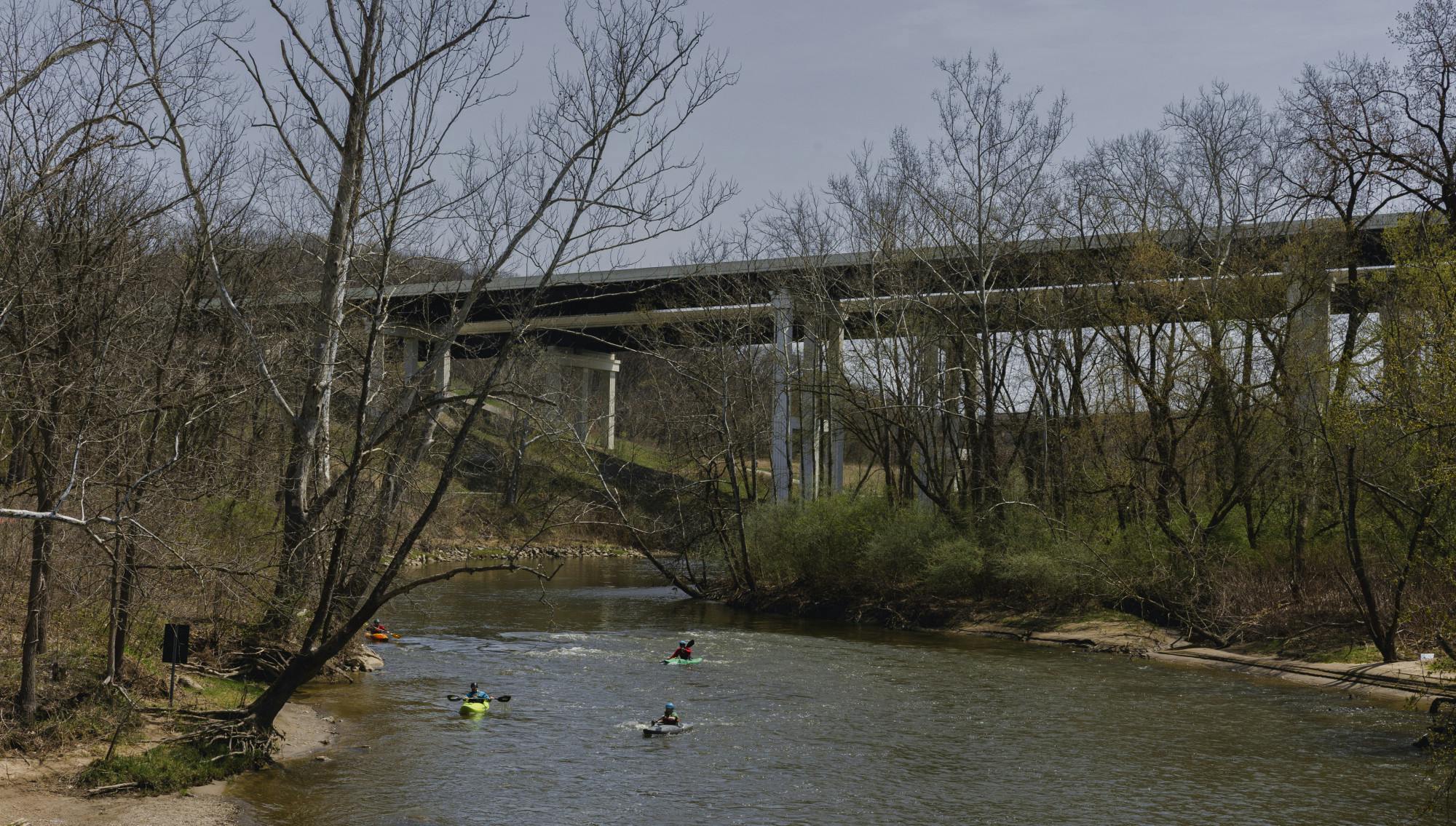
In addition to the benefits for wildlife, Johnson is excited for the recreational opportunities that will arise after the removal of the dam. According to Johnson, there are rapids both downstream and upstream of the Gorge Dam pool.
“We’ll probably have about a five- or six-mile uninterrupted whitewater recreational resource that is going to be excellent for experienced kayakers,” Johnson said. “These will be class three to class five rapids, and it's really going to be a draw for recreation and tourism in the area.”
Once the dredging process is complete, the dam removal phase will begin and is expected to take up to two years to complete. The City of Akron is leading the engineering design for the removal process, with assistance from other stakeholder groups.