

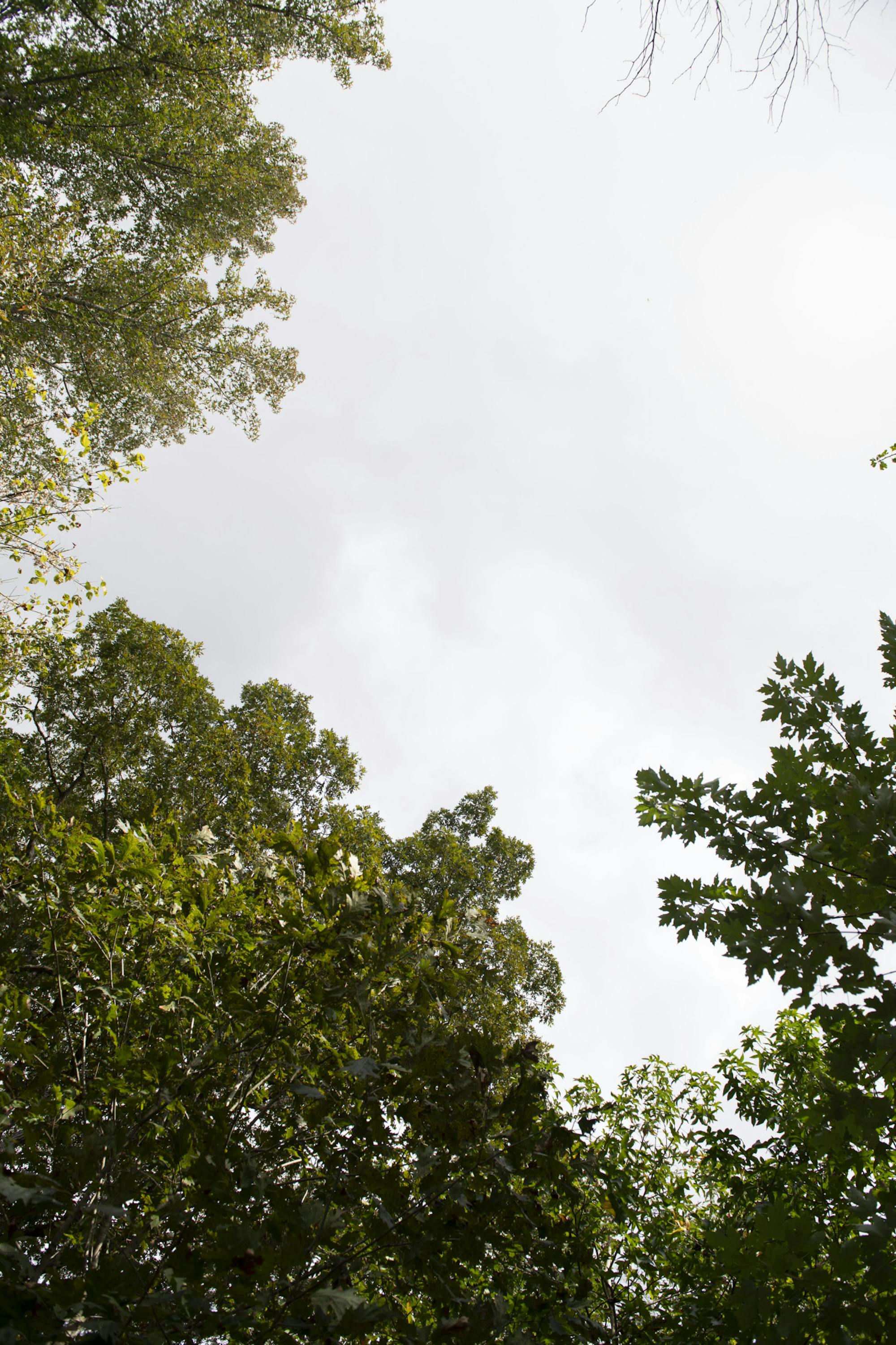
President Donald Trump signed an executive order March 1, titled “Immediate Expansion of American Timber Production.” The order calls on the U.S. Departments of Agriculture and Interior to increase logging across the country by 25%.
According to a map released by the U.S. Forest Service that outlines lands across the country viable for timber production, all 3 units of the Wayne National Forest were identified as sites for logging, which include the Athens Unit, the Marietta Unit and the Ironton Unit.
The Wayne National Forest is the only national forest in Ohio, covering 244,000 acres of land across the southeastern region.
The Trump administration cited increasing jobs for the logging industry and wildfire management as reasons for the initiative. According to the executive order, the increased logging will help manage forests, protecting Americans from disasters. The executive order also claims timber production is vital for construction and energy production.
U.S. Department of Agriculture Secretary Brooke Rollins released a memo following the directive, promising a prompt response to the order. The memo calls on the U.S. Forest Service to increase its timber outputs, removing restrictions in the National Environmental Policy Act.
NEPA restrictions are in place to ensure federal agencies properly assess the environmental impact of their decisions, according to a press release from the USDA.
Forest cover across Ohio has dramatically shifted in the past 200 years. When European settlers came to the state, it is estimated there was around 95% forest cover. The settlers engaged in massive deforestation efforts, bringing the forest cover down to 10% by the 1910s, according to the Ohio Department of Natural Resources.
The forests were then able to regrow due to conservation efforts and regulations set in place by the Ohio Division of Forestry.
Vice President of the Athens Conservancy Kate Kelley owns a tree farm with her husband and discussed the nature of this regrowth based on her own personal opinions, describing herself as “disappointed,” based on the federal executive order.
“The Wayne symbolizes the resilience and ability of nature to come back after it has been scraped bare by various resource extraction,” Kelley said. “And the Wayne is really a celebration of the fact that nature can recover to some degree.”
According to the Wayne National Forest Land and Resource Management Plan released in 2006, 161,752 acres of the forest are suitable for timber management. The forest currently auctions off small parcels of the land for logging, but this remains relatively minor, according to OU professor of Environmental and Plant Biology Glenn Matlack.
Matlack worked at Wayne National Forest as the chairman of a professional citizen group that helped rewrite the forest management plan.
Matlack stated the regrowth of forest cover in the state is heavily related to the collapse of the agriculture industry in the early 20th century. Increased mechanization and consolidation of farming practices forced many in the Midwest to cease working on farms, according to a 1950 report from the U.S. Census Bureau.
“As a result, we have massive regrowth of forest in the eastern United States,” Matlack said. “It's not a forest that has held over from the pre-European times; it's not a forest that was intentionally planted. It's not the forest that was protected. Economic decline is the greatest conservation movement we have in the United States.”
Matlack expressed worries that increased logging could further exacerbate flash floods, an issue already common across Ohio.
“Our signature natural disaster is flooding,” Matlack said. “And if water falls on trees and tree roots, a lot of it is either held back or is actually sucked up by the trees and pumped into the air rather than going down the stream. However, if the tree isn't there, the water falls on the ground, goes directly into the stream, and you get a flash flood. What they're doing by proposing extensive clear-cutting is increasing the risk of flooding.”
Kelley expressed her concerns that increased logging could harm local wildlife species.
“So there are two endangered species that are known to be in Wayne, there is the timber rattlesnake and the Indiana bat,” Kelley said. “Either of those could be significantly affected by logging. Their populations could be diminished.”
Kelley stated her worries for these species are due to the fact the executive order allows contractors to bypass NEPA and other environmental protection acts.
Matlack discussed the benefits of biodiversity that stretch beyond providing habitats, food and aesthetics. He noted that biodiverse areas are a major source of new medicines, referencing the discovery of Penicillin as an example. He said biodiversity is a library of genes helpful for crop breeding.
Matlack went on to discuss the benefit that Wayne National Forest has on the local economy.
“People come here to do recreation, to do fishing, to do camping, hunting and they bring money,” Matlack said. “They put gas in their cars, they buy food, they stay in motels, and they're not going to come and look at a clear-cut. They want to come and be in forest … that influx of money is really important to the local economy.”
Matlack expressed the long-term effects extensive logging could have on the future growth of the forest.
“Once you make this wound in the forest, it's going to take at least 30 years before you have a canopy over the forest, and it's going to take probably 60 or 80 years before they're commercially viable again,” Matlack said.


