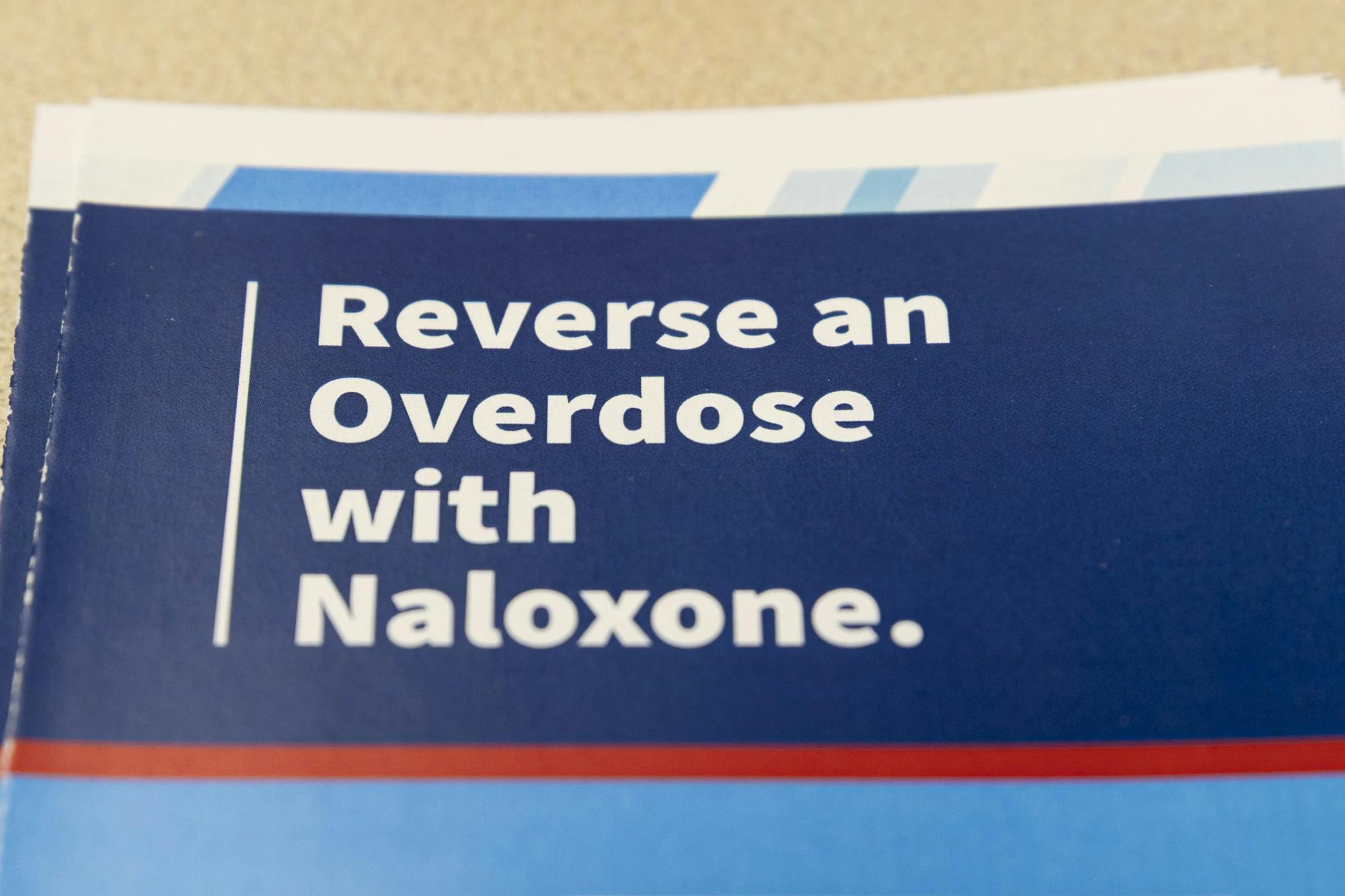
Editor’s Note: This story is the first in a series of solutions stories The Post is publishing as a part of the Solutions Journalism Network’s Student Media Challenge. Stay tuned for more stories about Narcan resources and other solutions to the opioid epidemic in the coming months.
What is Narcan?
In Ohio, there were 4,452 unintentional drug overdose deaths in 2023, according to the Ohio Department of Health. Narcan, the brand name of naloxone, is one tool helping reduce this number across the state.
Berkeley Franz, a professor in the Heritage College of Osteopathic Medicine and research faculty member, said naloxone is an effective tool for treating overdoses. According to Franz, naloxone works as an opioid antagonist by binding to opioids such as heroin, fentanyl and morphine in the body and removing them. Naloxone works to reverse an overdose by restoring regular breathing patterns.
“It can actually reverse an overdose and bring somebody out of an opioid overdose, and so it has a really incredible potential to help,” Franz said.
Jack Fishman helped develop naloxone alongside Moses J. Lewenstein based on research from Harold Blumberg. Fishman and Lewenstein applied for one of the first naloxone patents in March 1961. The Food and Drug Administration approved naloxone as an overdose treatment in 1971. The FDA later approved Narcan nasal spray as a prescription drug in 2015. It was approved as an over-the-counter nasal spray in 2023.
“Initially, there were really strong feelings about naloxone, especially in this region or the broader Appalachian region,” Franz said. “There were some feelings that the medication would only enable people to keep using drugs if they knew they could be brought back from an overdose.”
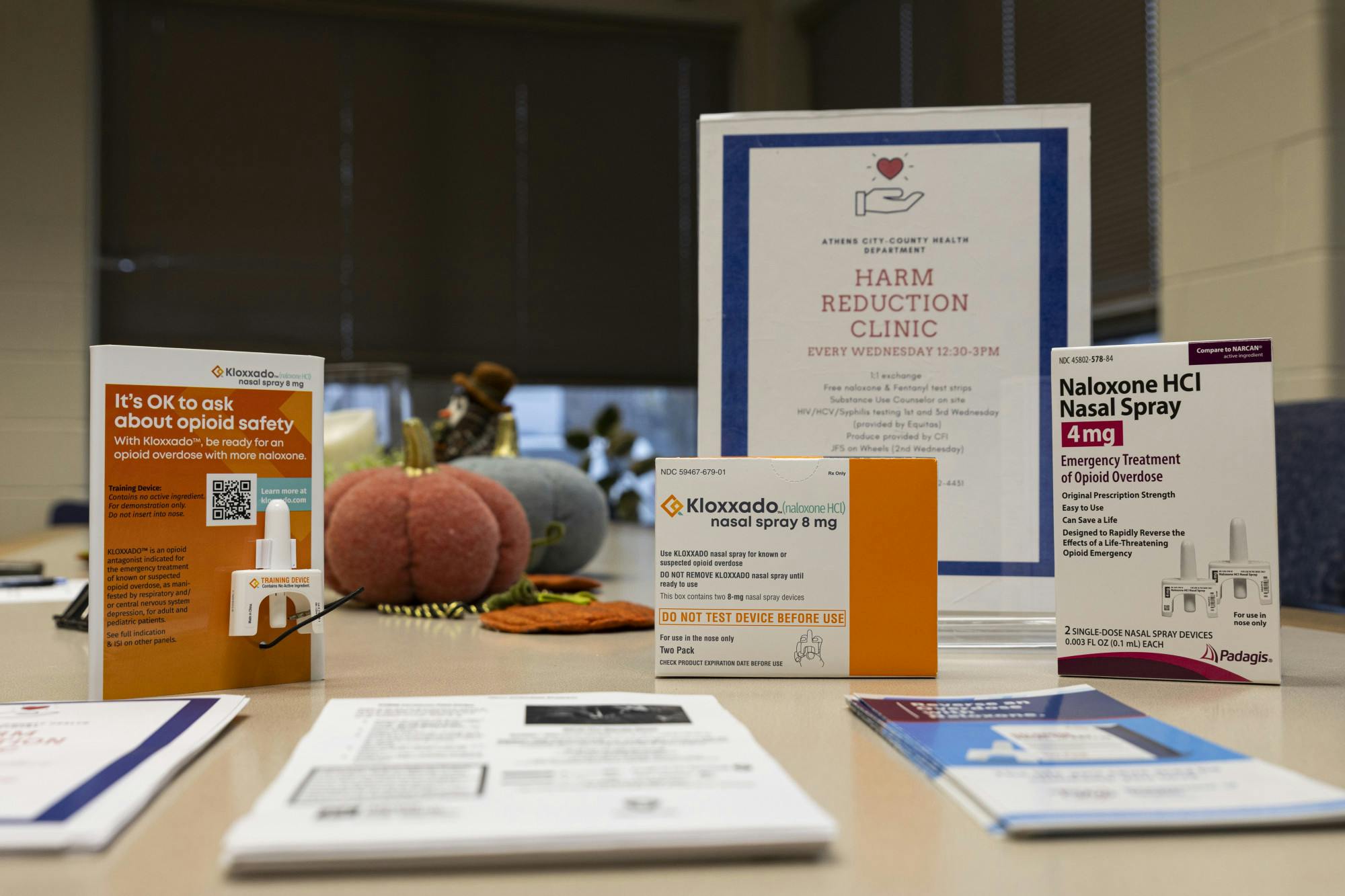
Franz said it took a long time for people to embrace harm reduction efforts like Narcan, but as the opioid epidemic grew, acceptance of naloxone increased as a growing number of people began having firsthand experiences with overdoses. In 2023, the number of people who died from an opioid overdose was 10 times the number of people who died from an opioid overdose in 1999, according to the Centers for Disease Control and Prevention.
“I think there’s a lot of good evidence on this in social science that having a firsthand experience with something makes you less judgmental,” Franz said. “You’re less likely to hold stigma toward something, and so I think, unfortunately, that so many people have had that kind of contact with the opioid epidemic that it has made people more understanding.”
As this acceptance began to permeate across the state, the benefits of Narcan continued to become more apparent.
“I would say it’s probably one of three of the most important tools in addressing the opioid epidemic,” Franz said. “Some (communities) will see a bit of a rolling off and reduction in overdose deaths because naloxone has really saturated communities in a really helpful way as more people have access to it.”
Although public support for Narcan has come a long way, other obstacles present challenges in overdose treatment. Narcan is effective for treating an overdose; however, Franz said people must call 911 before or immediately after administering Narcan.
“Some people make the mistake of administering it, and then somebody comes back and they think everything is fine, but naloxone actually has a very short mechanism of action,” Franz said. “So somebody can be fine for a minute and then go back into an overdose because it stops working.”
Franz said people are often afraid to seek medical attention and get in legal trouble for using illegal drugs, but it is necessary to seek treatment even after receiving Narcan. She said emergency departments are trained to treat overdoses in such a way that the focus is on the patient’s health and not law enforcement.
Franz said the average price for a Narcan kit in the U.S. is around $40, which can be a steep price for some to pay. Fortunately, there are several resources on campus and in broader Athens County offering free Narcan and other harm reduction tools.
Campus Resources
The Ohio University Office of Health Promotion provides Narcan resources and offers training for students, faculty and staff interested in learning to keep themselves and others safe from drug overdoses.
The programs were officially implemented in 2023. Ann Brandon, the office’s associate director of prevention and education, said OU uses a two-pronged method of prevention and support. The first prong is the training, which is meant to be an entryway into what students should do in these situations.
“(The training) is kind of a basic 101,” Brandon said. “This is what fentanyl is and what an opioid is and how it affects the brain. This is what the symptoms of someone experiencing an overdose would look like. This is how you use the Narcan … just a very brief 101.”
The 30-minute training also covers what to do in non-opioid-related emergencies, and can be requested at the Office of Health Promotion’s website, although many who request it tend to be faculty.
“A lot of times professors or faculty have us come into their classrooms when they're teaching substance use disorder or things like that,” Brandon said. “We’ll just go into classrooms and talk, but anyone can ask us to come and do it.”
The second prong of the prevention comes in the form of Narcan cabinets found across campus. Students and faculty in need of Narcan can head to the Alden Library, Baker University Center, Boyd Hall, Nelson Commons or the Ping Recreation Center, where cabinets filled with Narcan supplies can be easily acquired in case of opioid-related emergencies. The cabinets are free for anyone, regardless of whether they’ve taken training or not.
The cabinets were set up in partnership with organizations across Athens County and Southeast Ohio, including the Ohio Opioid Alliance and the Southeast Ohio Hope Center. OU works in conjunction with these organizations to ensure Ohioans are safe and prepared for any drug emergency that might arise.
However, the programs are not without road bumps. One of the biggest, Brandon said, is the lack of data on drug use at OU.
“You have to have a baseline, and a baseline would mean everyone would submit information on their drug use, and we don't have a baseline,” Brandon said.
The surveys OU conducts on topics such as drug use are largely self-reported by participants, meaning it is difficult to determine if the information is accurate. Without that data, it's hard to determine the definitive impact of training.
Another roadblock the program faces is the waning number of people taking the training.
“When we first launched it … we probably did about 300 folks, but I think it’s dwindled since then,” Brandon said.
Brandon estimates approximately 50-60 people take the training each year, representing less than 1% of OU’s total population. Meanwhile, there were 26 opioid-related deaths in Athens County in 2022 and 33 in 2023, according to the Athens City-County Health Department.
OHP also sees issues in the speed at which the drug market moves. Brandon said common drugs change all the time, and the usefulness of Narcan shifts depending on what is popular.
“Narcan is not going to have an effect on stimulants,” Brandon said. “It's not going to have an effect on cocaine overdoses. It's not going to have an effect on other drugs that are being used, and so we're going to need to stay on top of that.”
Brandon said OHP is committed to making sure it remains proactive in protection services. The staff is working to ensure their training is up to date with trends in drug use to keep harm to a minimum.
While issues remain with how much is known about these programs’ effectiveness, Brandon expressed she still sees how these programs make an impact. Educating people and helping them feel comfortable talking about drug use and providing help come with their own benefits.
“That's the important thing, to have a conversation,” Brandon said. “Destigmatize. We just want lives saved. If you've got (Narcan), you can save a life.”
Athens County Resources
In addition to resources provided at OU, students and other residents of Athens County can look beyond campus to find access to free Narcan and other harm reduction tools.
One of those resources is Integrated Services for Behavioral Health, which has locations across Southeast Ohio, including two in Nelsonville and two in Athens, located on 11 Graham Drive and 5 Charles St. Molly Chaffin has been the Substance Use Disorder and Peer Program Manager at ISBH for the past year.
“Our agency is built around harm reduction,” Chaffin said. “Harm reduction is what we take pride in. We don’t expect someone to be completely abstinent and perfect when they walk through our doors, and we know the reality is some people are still using. Just because they enroll in services doesn’t mean they automatically stop, that’s why we’re there.”
Since January 2025, Chaffin said the agency has distributed about 442 boxes of Narcan, including 90 kits in Athens County, a number three times larger than the reported opioid deaths in Athens County in 2023.
“We don’t have any barriers for anybody that needs Narcan,” Chaffin said. “We have an open door, if somebody in the community walks into our office and asks for it, no questions asked. We give it to you as many times as you need it.”
These kits are supplied by Project DAWN, a “network of naloxone and drug checking test strip distribution programs that provide opioid overdose education and harm reduction services coordinated by the Ohio Department of Health.”
“(Project DAWN) has increased community access to free Narcan,” Chaffin said. “It has directly contributed to more reported reversals or early interventions for those that are in use. Many families and individuals express feeling more empowered and supported.”
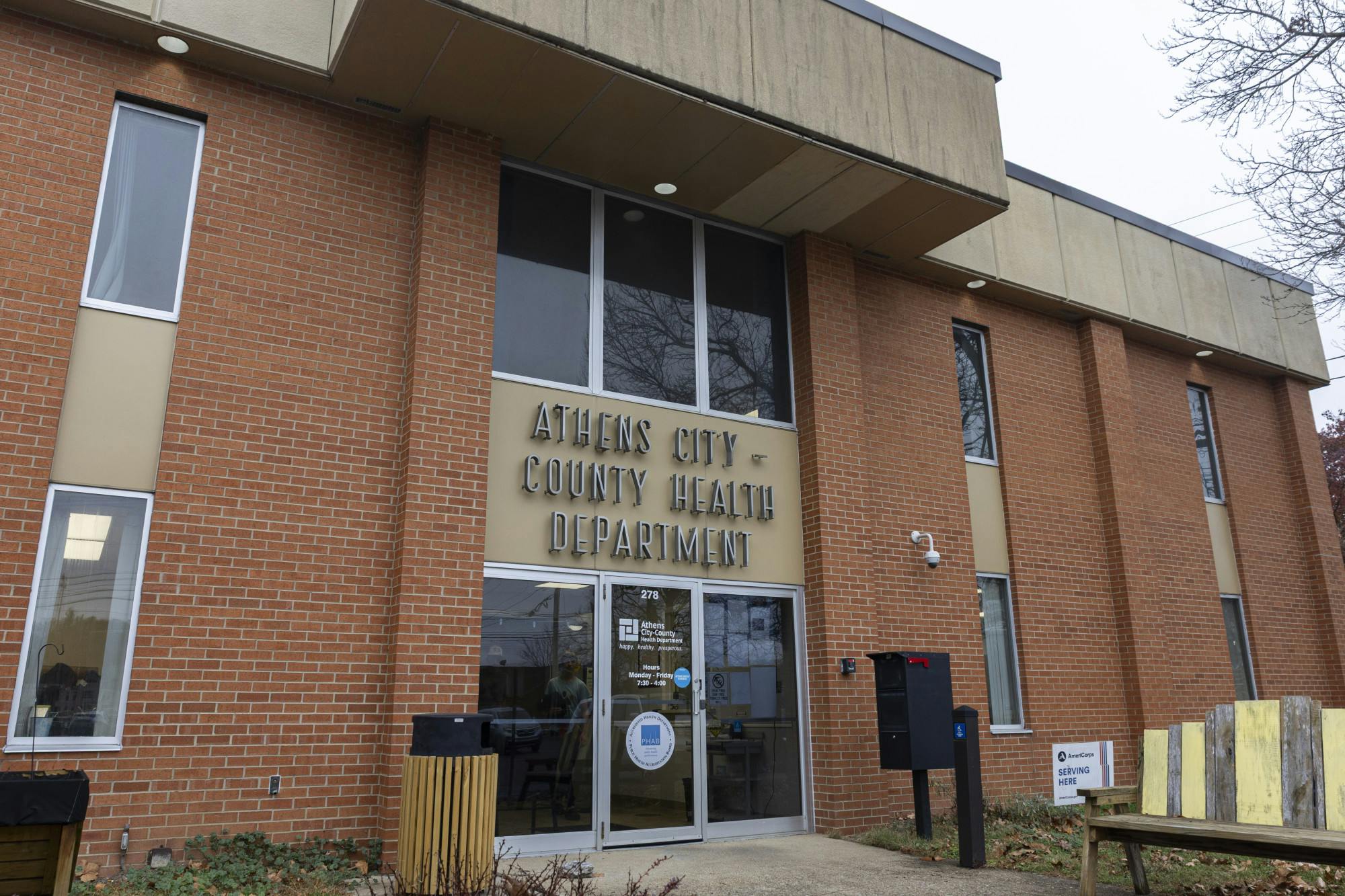
Project DAWN also has a location at the Athens City-County Health Department, located at 278 W. Union St.
Lauren Denner, a public health nurse, was put in charge of the Narcan program 11 years ago when she arrived at ACCHD. The free Narcan program looks incredibly different now from when it first began over a decade ago.
“You had to get a script from the doctor and then you would get that at the pharmacy,” Denner said. “You could get these little naloxone vials that you had to put an atomizer on and push it up and only do half in one side of the nose and half in the other, which is cumbersome, to say the least, when you’re in a situation that you’re trying to respond to an overdose.”
Since the FDA approved Narcan as an over-the-counter nasal spray in 2023, Narcan has become easier to obtain and use. People can come into the department and request the product, along with a short training in administering Narcan and the basics of CPR and rescue breathing.
The ACCHD supplies Narcan to many services across the county, including Health Recovery Services, The Carlson Center, local schools, uptown bars and Hocking-Athens-Perry Community Action, located at 3 Cardaras Drive in Glouster. Director of Community Services Jessica Stroh has been with HAPCAP since 2002.
“We have been in conversations around harm reduction and support of folks that are potentially affected by substance abuse disorders for a very long time … it became really apparent that so many people were being affected by the opioid crisis, whether it was parents and grandparents of kids or children whose parents are (affected) themselves, and harm reduction programming is a really important part of a community’s response to substance abuse and use disorders in the community,” Stroh said.
HAPCAP advertises its free Narcan services via a weekly newsletter and through word of mouth, but still faces limitations in finding people who are willing to ask for the resources.
“People are a little bit afraid of how to use it, and it’s actually super, super easy and there’s a little training video,” Stroh said. "I would recommend everybody … watch it whether you’re a friend, a grandma, a parent. I’ve heard of other parents in the community that just feel like if they have a teenage child they should have it in their home, just in case.”
Narcan is a valuable resource to keep on hand, not only for those looking to be proactive but also for people in active addiction or in recovery. Chris MacNeal is the executive director for Recovery Connections of Southeast Ohio, a “recovery community organization … that is run and led by people with lived experience and recovery from substance use disorder.”
“There’s this intersection between harm reduction and recovery,” MacNeal said. “One of the ladies that worked very closely with us, she told me this one time: ‘Dead people do not recover.’ So, if we can save a life with Narcan, that gives somebody a chance to recover. It may take more than one of those chances, it may take two or three or 10 chances, but it’s a safety net.”
Recovery Connections provides free Narcan for anyone who asks for it, and also gives out the product when tabling at events and festivals.
“We got an order … of about 1,200 kits at the beginning of the summer, and through the summer and into the fall we’ve gone through most all of those,” MacNeal said.
Despite the success of its distribution, Recovery Connections has also seen free Narcan programs face pushback from various stigmas surrounding addiction and recovery.
“Our location in Nelsonville is actually in a house that we rent in a residential area, and we’ve got some pushback from time to time, like, ‘We don’t want those kind of people around here, we don’t want the Narcan being publicized,’ because that stigma is there,” MacNeal said. “That’s part of what we want to do is educate people in the community that we’re there to save lives, we’re there to help people.”
Similarly, Denner has noticed limitations at the ACCHD due to a lack of understanding about Narcan.
“We’ve had some backlash from people who just don’t like Narcan or don’t understand the purpose of it, and that’s fine, you can have your opinion,” she said. “But our job here is just to make sure everybody has access to it, so that’s what we do.”
Chaffin has seen similar stigmas at ISBH, but she believes Project DAWN is invaluable to combating those misconceptions.
“Project DAWN’s expansion has normalized overdose response training in the community,” she said. “There is still some stigma but … people are understanding the need of (it) and I think their presence and being in the communities has shown that.”
Through Project DAWN and other resources, free Narcan programs across Athens County exist to continue destigmatizing recovery and providing residents with life-saving tools.
“Athens … has such an amazing network of providers and organizations that are working on this, helping to make sure that people go from using this to the bridge to actually getting help,” Stroh said.