

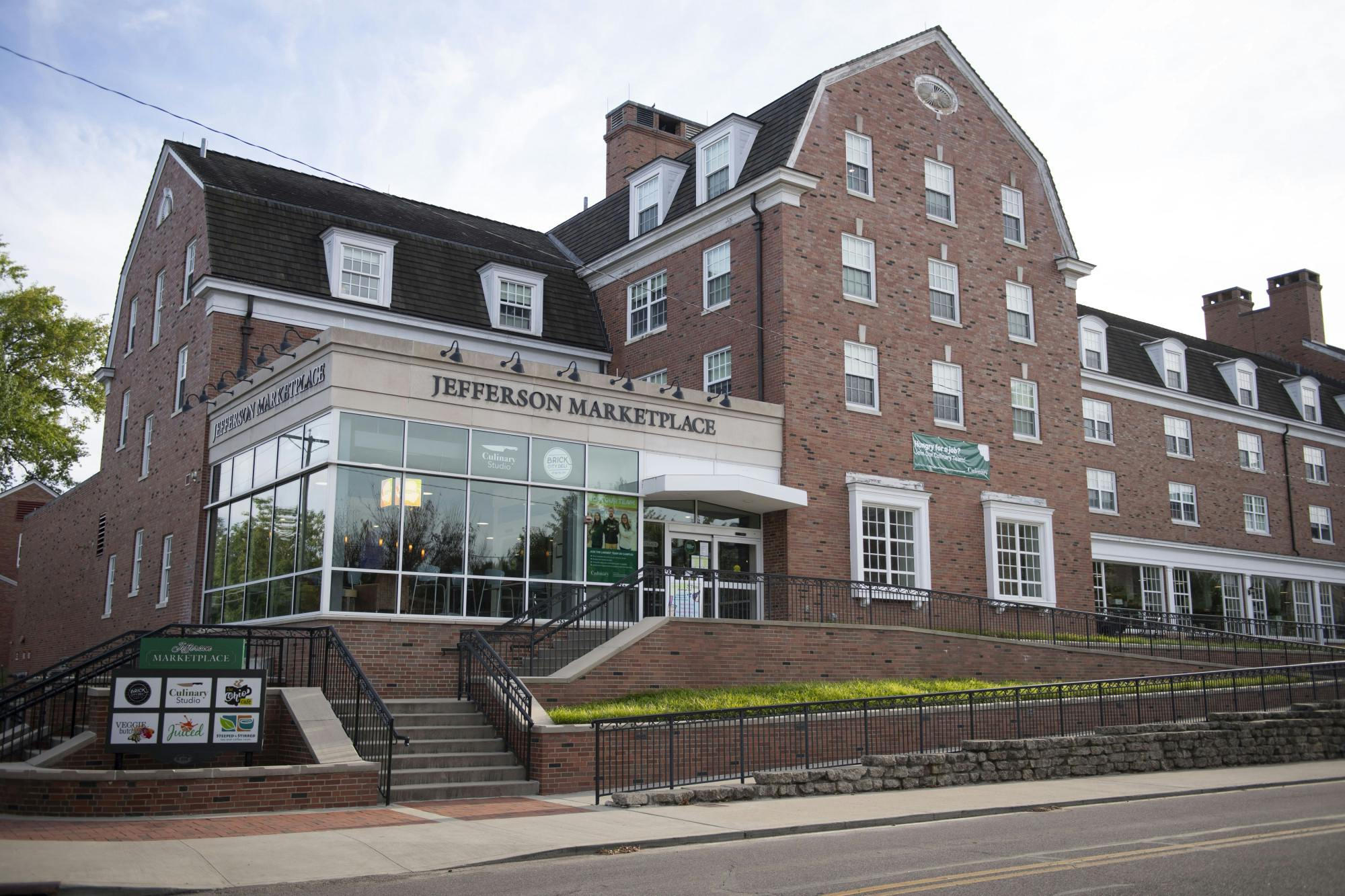
In the past year, U.S. tariffs on imported goods have caused significant disruptions in global supply chains, contributing to the rising prices seen at Ohio University on-campus markets.
Chito Trinidad, the assistant director of retail operations for culinary services, said the culinary team has recently taken a strategic approach to pricing.
“We try to align (our prices) with what the market is saying, so we’re not pricing ourselves out of the competition,” Trinidad said.
Trinidad thoughtfully selects the products to offer at on-campus markets. He recalled a specific instance when the price of a single tub of cream cheese skyrocketed to $8, prompting him to seek out a different brand that allowed him to bring the cost down to $4.
A 2023 report by The Post revealed university markets resemble convenience stores more than grocery stores due to their restricted purchasing power.
Frank Pazzanese, the executive director of culinary services, said the university markets could never maintain price parity with a retailer like Walmart, which has approximately 4,600 locations nationwide.
“We just can’t buy like that,” Pazzanese said.
The prices of items in campus markets are influenced by more than just the cost of the goods themselves. Additional expenses, including packaging and transportation, also determine pricing.
“There are a lot of secondary costs that people don't realize,” Pazzanese said. “The biggest one is petroleum.”
Petroleum, a type of fossil fuel, is a primary component in the production of plastic packaging for food. Pazzanese said an increase in oil prices leads to higher grocery costs.
There are significant price disparities between university markets and Kroger, particularly for items such as Jack Lynx, Chips Ahoy and Oreos. However, specific brands like Little Debbie and Frito-Lay establish their own prices.
“Our local distributor for Frito-Lay is the same distributor for Kroger, and therefore, they're pretty much about the same pricing on the large bags," Trinidad said.
Although it can feel like the university is pricing goods much higher than what you would find at Kroger, markets operate more as convenience centers than as value providers. The setup still offers benefits to students, albeit in a more indirect way.
“Every profit we make goes back to the university,” Pazzanese said. “We're not a corporation.”
Pazzanese said the profits from the markets help support school programs and fund millions of dollars in scholarships.
“We have to maintain this balance, to take care of you, the student, and take care of the student that needs some funding from us, or whatever the case may be,” Pazzanese said.
Krystle Lupardus, the director of retail operations for culinary services, said students can influence the way markets function. She also highlighted an instance where a student’s feedback prompted the reduction of the overpriced $8 cream cheese in favor of a more budget-friendly alternative.
“They were like, ‘Hey, this is $8 and something.’ So that’s whenever we look for a different distributor to get those (lower) prices,” Lupardus said. “So we’re always listening to our students and customers when it comes to that.”
Pazzanese mentioned that the culinary team has monthly meetings with the Culinary Services Developmental Committee to gather feedback from students. The next CSDC meeting is scheduled for Feb. 16 at Latitude 39 from 4-5 p.m.


