

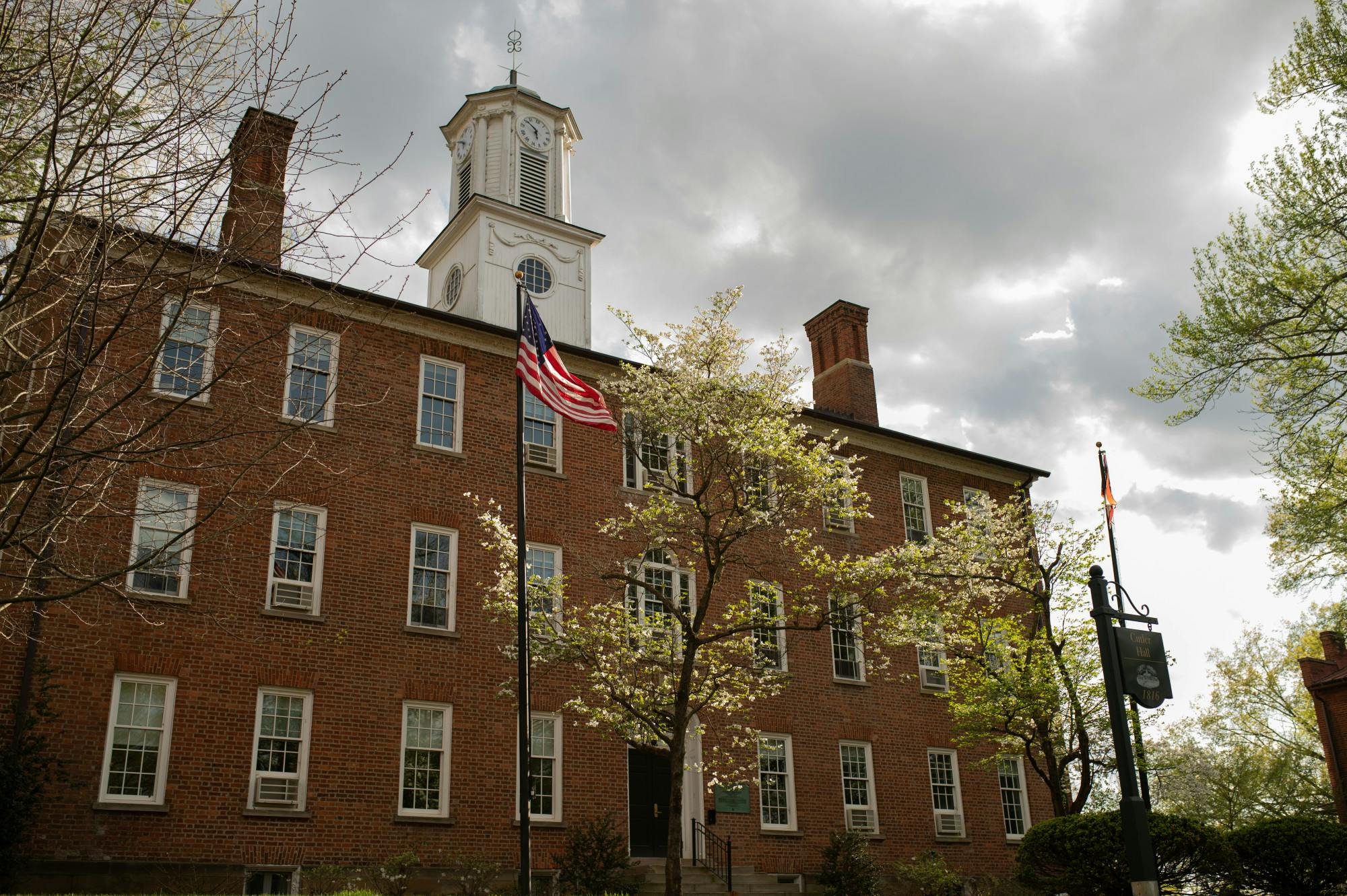
Students in Ohio University Honors and the Cutler Scholars Program are addressing food insecurity in Athens. Partnering with Hocking Athens Perry Community Action Program, students in HC 2905: Food and Power are hosting a food drive for the public to drop off items on Wednesday from noon to 3 p.m. in front of Baker University Center.
The food drive benefits the Southeast Ohio Foodbank, which HAPCAP owns. It strives to alleviate local food insecurity.
Valerie Stillson, chief development officer for HAPCAP and the Southeast Ohio Foodbank, discussed the process of receiving donations.
“Our job is to source and store food, and then that food is distributed to food pantries ... and the food pantries distribute that food to the people,” Stillson said.
The drive’s most-needed items are protein sources, canned vegetables, hygiene items, formula and kid-friendly snacks. Monetary donations through a donation website are also encouraged, as every $2 provides three meals, according to Stillson.
Charles Lester, director of academics for the Cutler Scholars Program, associate professor of instruction for the Honors Tutorial College and professor of HC 2905, is bringing lessons outside of the classroom. Lester teaches students concepts of food deserts, food insecurity and more.
Lester said a food desert is geographically located; there are food deserts in rural areas of Southeast Ohio due to the lack of local grocery stores.
“Independent grocery stores are up against the buying power of Kroger and Walmart, and so a lot of those independent grocery stores that used to serve rural areas went bankrupt since the 1980s, and so a lot of the places to buy food in rural areas are like Dollar General,” Lester said. “It’s all processed stuff, there’s no fresh produce.”
Despite being surrounded by farmland, fresh food can be less accessible for those located in food deserts. Lester said food insecurity is an umbrella term.
“Food insecurity is more of a broad term, and it speaks to not just people who have trouble getting access to food, but it also speaks to food affordability,” Lester said. “You can have food one day and not have food the next, right? Which is why we talk about food insecurity, because it comes and goes based on availability and budget.”
In his class, students recognize the bigger issues surrounding food insecurity in America.
"It’s opened up the students’ eyes to something that seems so abundant (that) isn’t available to everybody,” Lester said.
Lester explained recent changes to the SNAP benefit program can worsen these already concerning issues.
“It’s essentially going to make the food insecurity problem in Southeast Ohio worse, because it restructures the program, and so instead of a lot of federal dollars going to fight food insecurity, it puts the onus on the state to basically come up with money,” Lester said.
Taking action against these issues is something Lester has instilled in students.
“The other takeaway that I hope the students walk away with is that there’s lots of bad things going on in our country and in our world right now, but we’re not helpless,“ Lester said. “There are things that we can do to try to help others."
Students in the course see how these pressing issues affect their own community. Isabella Scott, a senior studying political science, is a student in Lester’s class. Scott discussed the importance of raising awareness and taking action.
“I feel like this food drive is important, and it’s important to raise awareness about poverty and food insecurity,” Scott said. “I think a lot of people tend to place blame on individuals in that situation. I think it’s important to recognize that it’s a greater systemic problem.”
Ella Publicover, a senior studying English literature, is also a student in Lester’s class.
“There’s a lot of poverty in this area, but I had never thought about it in the way we’ve talked about it in class,” Publicover said.
Publicover also said involvement in community issues, such as the food drive, is crucial for students.
“I think it’s a good way to get involved with the community,” Publicover said. “Sometimes you can feel isolated as a student from the actual community of Athens beyond what the students are doing, so I think it’s a way to really feel ingrained in the community itself beyond the university.”


