Correction Appended: A previous version of this article stated that 13,137 people filed opposing public comments. A correction has been made to correct 1,337 filed opposing public comments.
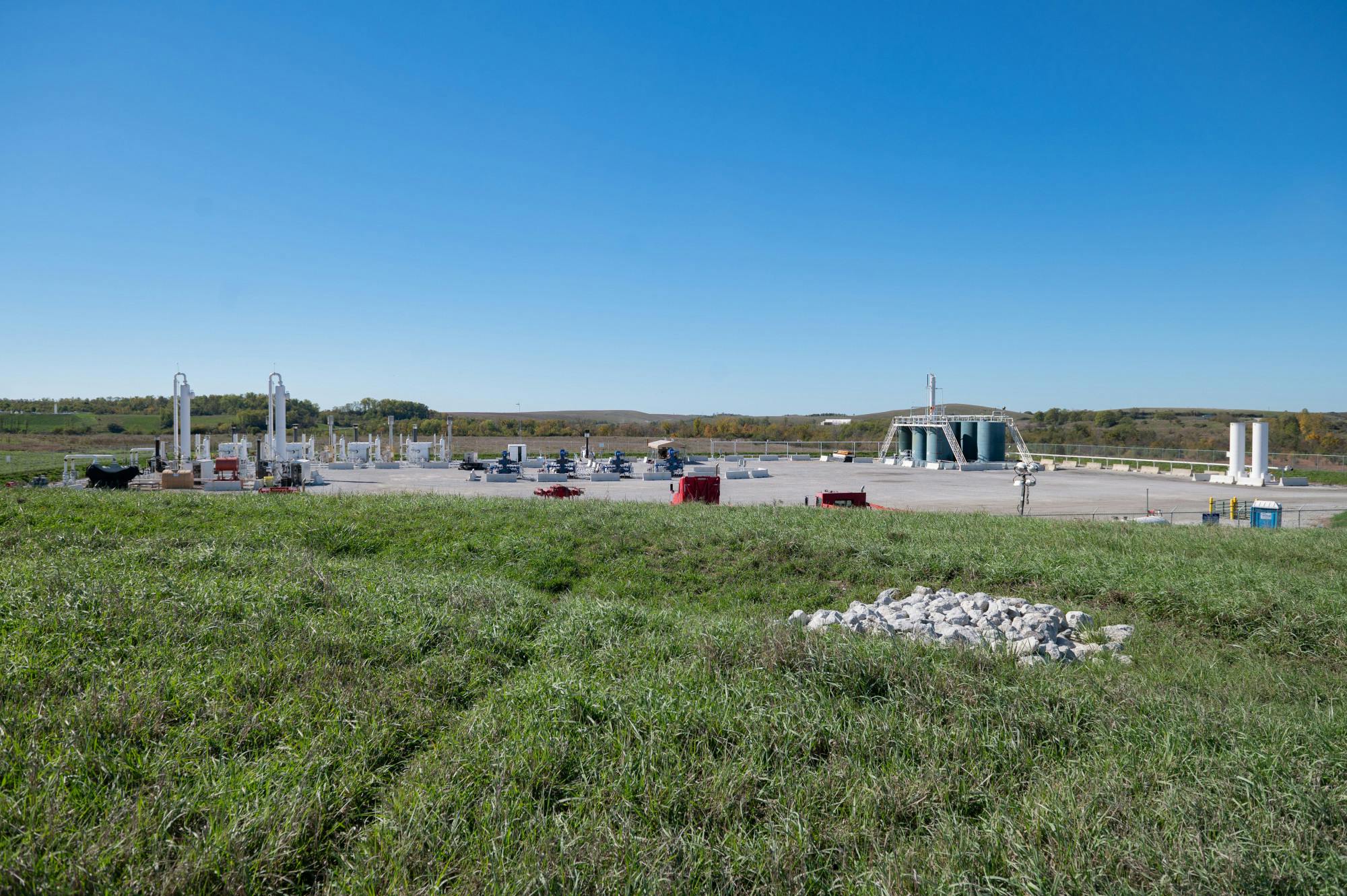
The Ohio Oil and Gas Land Management Commission approved more than 8,500 acres of state land for fracking in a 20-minute meeting on March 27. The approvals included 8,233 acres of the Egypt Valley Wildlife Area in Belmont County and 513 acres of Salt Fork State Park in Guernsey County.
Hydraulic fracturing or fracking is a process that forces a mixture of water, sand and chemicals into the earth to crack rock formations and extract natural gas and oil, according to the National Institute of Environmental Health Sciences.
Now that the nominations are approved, the bidding process begins. Karina Cheung, press secretary for the Ohio Department of Natural Resources, discussed what that process will look like.
“If a bid is selected, a lease is executed between the selected company and the state agency that owns the property,” Cheung said via email. “The lease currently has a primary development term of five years, with an option to renew the lease for an additional three years by paying the state an additional lease bonus.”
The decision angered many environmental activists across the state. By way of Ohio law, the commission is mandated to listen and consider all public comments. Cheung said public comment is one of the nine factors that members of the commission must consider before approving nominations.
“So for these last five nominations, the four of Egypt Valley and the one of Salt Fork, 1,337 people filed public comments opposed to this, and this commission took about 13 minutes,” Cathy Cowan Becker, board president of Save Ohio Parks, said. “It takes 13 minutes to decide to approve well over 8,700 acres.”
Becker said Save Ohio Parks is deeply concerned with the process the commission engages in, saying they simply rubber-stamp whatever they are told.
“Our tax dollars pay for it,” Cowan Becker said. “We use it, we're the ones who use our parks and wildlife areas. And this land was set aside in the public trust. It is supposed to be protected for future generations, and this is not doing that. This agency is not doing that.”
As it stands now, ODNR has lease agreements for a total of about 6,251 acres. Four units have wells that have been drilled on acreage, including seven wells at Valley Run Wildlife Area, two wells at Zepernick Wildlife Area and four wells at Salt Fork State Park.
A concern shared by many environmentalists with fracking procedures is water contamination and brine migration. That is when the fluids used in the injection process unintentionally migrate to existing gas wells or drinking water aquifers.
John Stolz, a professor of biology and environmental science at Duquesne University, previously worked as the director of the Center for Environmental Research and Education. Stolz has conducted studies across Ohio, recently looking at injection wells.
“The industry will claim that there's never been any evidence of water contamination; this is false,” Stolz said. “And secondly, that what goes on at depth never impacts the surface. Well, that's wrong too, because we know that … there are incidents of failed casings.”
According to Stolz, he has recorded times when fluids have migrated and posed a risk to and damaged public and private drinking water.
Athens experienced issues with water contamination in 2024, when ODNR conducted well water testing after discovering toxic waste from fracking injection wells might have spread underground, according to a previous report from The Post.
The Environmental Working Group found the water in Athens complied with federal health-based drinking water standards, but discovered 12 contaminants, 11 of which are cancer-causing.
Stolz commented on the danger posed to drinking aquifers when fracking goes wrong, discussing a recent case in Pennsylvania.
“I've had numerous publications and peer-reviewed journals on things that have gone terribly wrong,” Stolz said. “The latest was an incident in New Freeport, Pennsylvania, that happened in 2022, where a company was fracking a well at 7800 feet depth, and it communicated, in other words, fluids and pressure communicated with an abandoned gas well to the surface … and there were fluids that were spewing out at the surface. And as a result, the watershed was basically destroyed.”
Stolz also discussed how state lands were created to provide recreational enjoyment for everyone. He said putting fracking operations and other industrial development removes that.
“The purpose of your state game lands and parks were created for a reason, and it's not okay to have industrial development within these facilities,” Stolz said. “And lastly, it is just ignorance at this point to think that nothing bad could happen, because it does happen, and it happens repeatedly, so that there are things that will happen during the development within you know these areas.”