

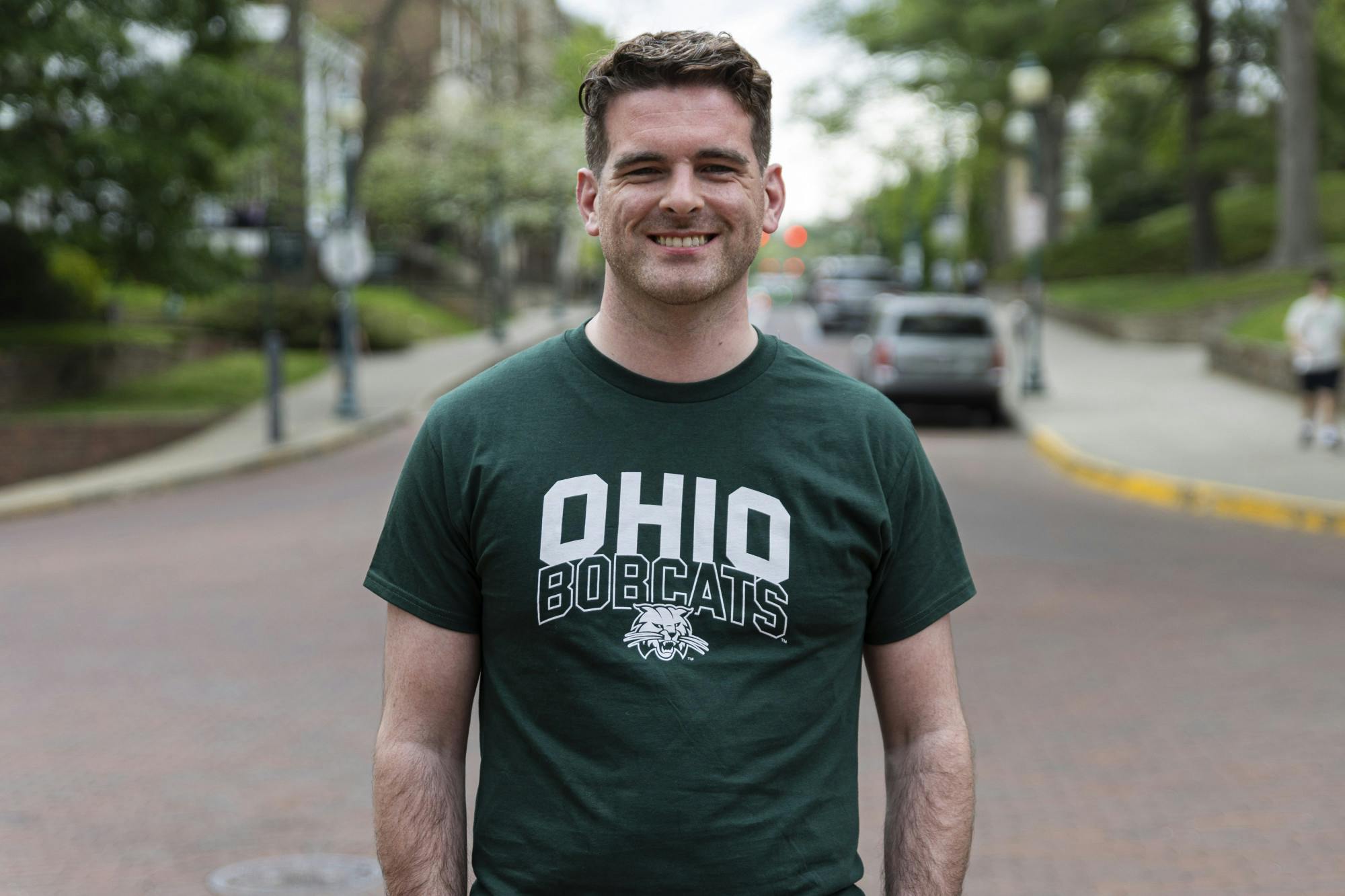
Ohio Treasurer Democratic candidate Seth Walsh visited Ohio University on Thursday on the first stop of his university tour. He will also be visiting Kent State University, Ohio State, Miami University and the University of Cincinnati.
The university tour was prompted after Republican gubernatorial candidate Vivek Ramaswamy said Ohio universities and colleges need to be consolidated.
“We wanted to get out here and go to these college campuses because they're important to the backbone of Ohio, not just from how you attract talent and educate youth and young people and try to keep them here,” Walsh said. “It was really important for us to get out here and actually engage with people that would be impacted by that.”
In an interview with The Post, Walsh highlighted what he wanted the voters to know about him and his policies.
“I think the most important thing is, I'm running for state treasurer, not because this has always been a dream and ambition, but because I really see the ability the State Treasurer's Office can have on helping all of Ohioans and rebuilding the communities,” Walsh said.
Walsh mentioned Ohio has been a prevalent state in America’s history, putting the first man in flight and on the moon, and leading the country in presidents, but he said lately it feels as if politicians have abandoned Ohioans and it is time to get people back in office who aim to help.
Political disillusionment has long been a theme, but has become all the more prevalent in recent years, especially among younger generations of voters, according to Walsh.
Sean Michael, president of the OU College Democrats and a junior majoring in political science, met Walsh outside of Baker Center while Walsh was passing out pizza and speaking to students. Michael said he had heard of Walsh before and that he liked Walsh’s policies, adding he is mainly tired of the Republican-run Ohio General Assembly.
“I think anyone would be better than a Republican in that office,” Michael said. “The most corrupt statehouse in the nation, it’s a pressing issue here. Finance is part of that situation.”
Walsh is running uncontested in his primary, but will face off against Republicans Jay Edwards or Kristina Roegner in November.
Edwards, who visited Athens during the Pledge of Allegiance debate around the City Council, wrote on his campaign website that “As State Representative, Jay served as the House Finance Committee Chair where he sponsored and passed a 3.2 billion dollar tax cut, and universal school choice.”
Edwards, a Nelsonville native, got his bachelor’s degree from OU and was endorsed by Vice President JD Vance, according to an Instagram post from Vance.
Roegner said on her campaign website that “As a legislator, Kristina has worked to strengthen Ohio’s economy by creating an environment inviting to business. Kristina has championed tax policies that keep money in the pockets of those who earn it. With strong family values, Kristina has also led the way to ensure that every child in Ohio has access to quality education.”
When asked if he had spoken with either Republican candidate, Walsh said he had opened up about a conversation, but had not received a response.
“I think they're very distracted by each other right now,” Walsh said about the primary.
Edwards and Roegner did not respond to The Post for comments.
Lauren Worley, campaign director for Walsh for Treasurer, said the campaign aims to make connections with people and be personable.
“Too much of politics is a one-way conversation,” Worley said. “We think the way to change that up is to make it an actual conversation with people.”
Walsh also mentioned the state of Ohio has a $280 billion budget, and if one person had that amount of money, they would be the second-wealthiest person in the world, behind Elon Musk.
“I want people to know that we're going to the state treasurer's office, because it does matter,” Walsh said. “It's a lot of money to oversee. It's a lot of money that, if invested properly, can really transform Ohio again.”
Worley said the campaign is spending a lot of time in small towns because the Democratic Party needs to get back to listening to the people.
“It’s not so much about what the policies were, but maybe we should actually start listening to people and what they are thinking and saying, and stop assuming we know what people think their best interests are,” Worley said. “The best way for us to do that is to spend a lot of time in small towns.”
The campaign has been utilizing social media more, and the videos have gained a lot of traction, Walsh said.
“What we're trying to do is just engage with people in the really human way that we all want to be engaged with,” Walsh said. “I think as the year goes on, we're really going to see some benefits of that, as we continue to just explore the state and find some really cool places.”


