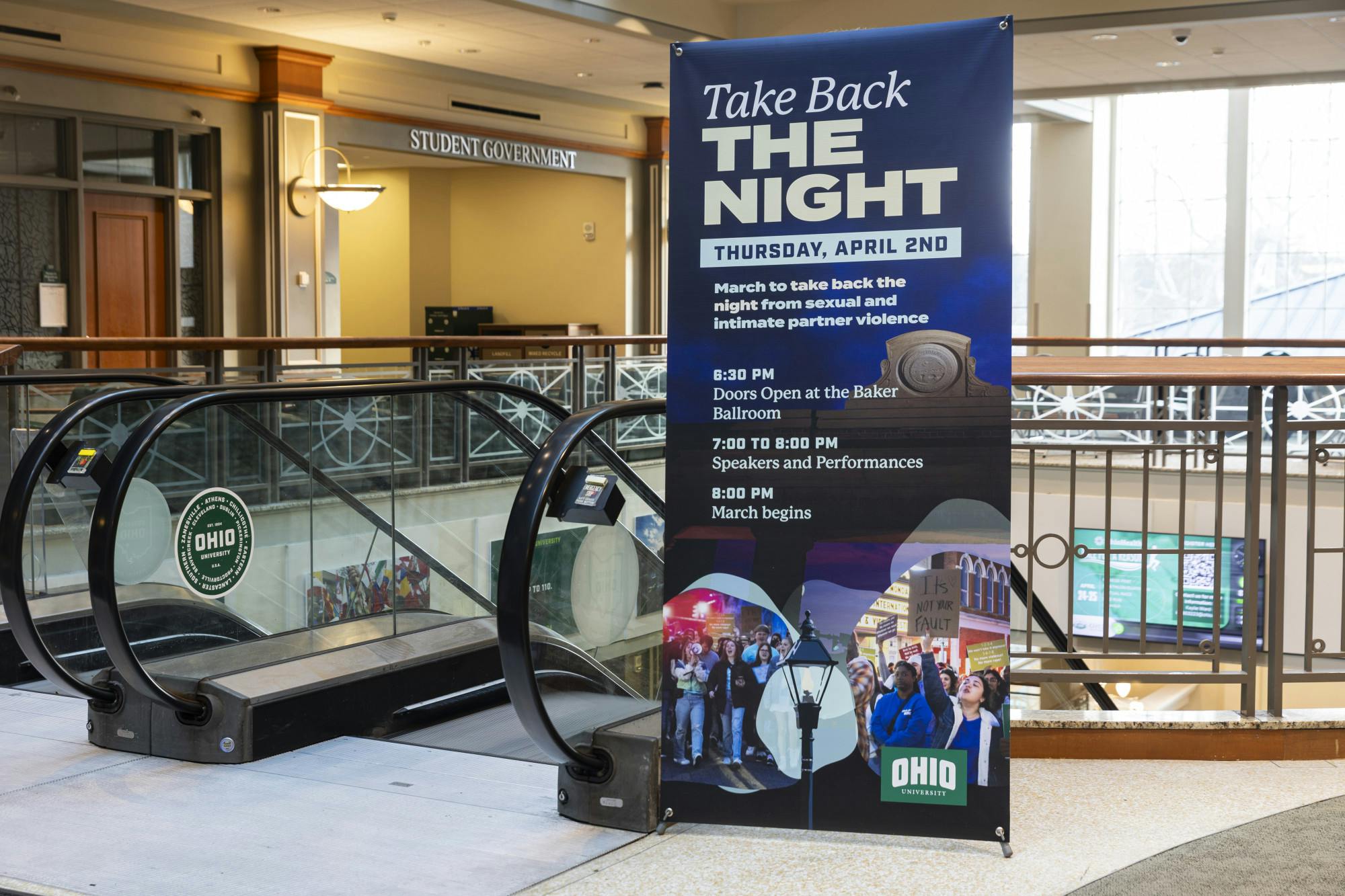
Ohio University’s Office of Health Promotion is hosting its annual Take Back the Night event Thursday in Baker Ballroom from 6:30 p.m. to 8 p.m., with opportunities to hear from survivor speakers, witness performances and march in honor of the “resilience” of survivors.
Take Back the Night, which began in the 1970s, is an international event that spreads awareness about sexual assault and offers survivors of all gender identities the courage to speak out about their stories.
Taylor Bauer, assistant director of peer health education and empowerment, said that sexual violence happens across all genders and sexualities.
“We welcome anyone to march with us because it's not just a woman's issue,” Bauer said. “Unfortunately, within our LGBT community, transgender populations, those rates of violence are high and we need to be a space that's inclusive to all people. We need men engaged. We need women. We need everyone to really know about violence, to work to prevent violence across our communities.”
According to the National Sexual Violence Resource Center, one in five women in the U.S. experience completed or attempted rape during their lifetime, with 24.8% of men in the U.S. facing forms of contact sexual violence in their lifetime.
As of January, Break the Cycle reported nearly 50% of transgender people experience sexual assault in their lives. Additionally, 61% of bisexual women report experiencing rape, physical violence or stalking by an intimate partner, with 48% of LGBTQ+ individuals being raped for the first time between the ages of 11 and 17.
“I think (TBTN) is still relevant because there's still violence, unfortunately, that we're facing across our communities still to this day,” Bauer said. “I think it’s always just been a way for us to bring women, to bring the community together, to march together, to stand in solidarity against violence across all of our communities and just really support one another.”
OU’s TBTN event organizers hope students and attendees understand that conversation and advocacy are important ways of pushing through traumatic events.
“By hosting Take Back the Night each year, we're encouraging more of that open dialogue,” Bauer said. “Friend to friend, or within your family, within any of the communities that you're a part of, to still say, ‘Hey, this is an issue that impacts us.’”
TBTN is not just for survivors; it can be for anyone looking to gain knowledge and resources about the topic. Lillian Garner, a senior studying political science pre-law, is the women’s affairs commissioner of OU’s student senate.
“It (TBTN) can be super informational for the average person who probably doesn't know a lot about this; you're able to hear firsthand experiences which can be super heavy, but it's also super beneficial for anyone,” Garner said. “Students and people in general (and) women need to feel supported.”
TBTN also offers many resources to students, if needed.
“I would like for students to leave knowing that safety on campus is vital,” Garner said. “I know it sounds so scary, but going to an event like this kind of lets a person know that it's not that far away and it's not impossible. It can happen to anyone … if it did or does happen to you, there are resources and places you can go and people you can speak to.”
OU’s health and safety resources include, but are not limited to, the survivor advocacy program, a confidential support system and the crisis and emergency service department.
Taylor Ebert, an OU alumnus who works for the survivor advocacy program, said TBTN can help people realize sexual assault can occur in different settings.
“I think we think … that it always looks a certain way,” Ebert said. “It's a stranger that grabs you off the side of the street, and there are all these things you could do to prevent it. But a lot of times it is someone you know or even someone you trust. Giving survivors an opportunity to share those stories really makes other people not feel alone.”
The NSVRC states about 51.1% of female rape victims are raped by an intimate partner or acquaintance. More than half of male victims report being raped by an acquaintance, with 15.1% by a stranger.
With April being Sexual Assault Awareness Month, the Office of Health Promotion hopes the “solidarity” event educates attendees and encourages survivors to share their story if comfortable.
“Giving (survivors) that empowerment to share their story on a platform with the campus and community, and then knowing that there's people in the audience that might resonate with that story … they're able to know that there are people that support them and people that have been through similar experiences,” Ebert said.