

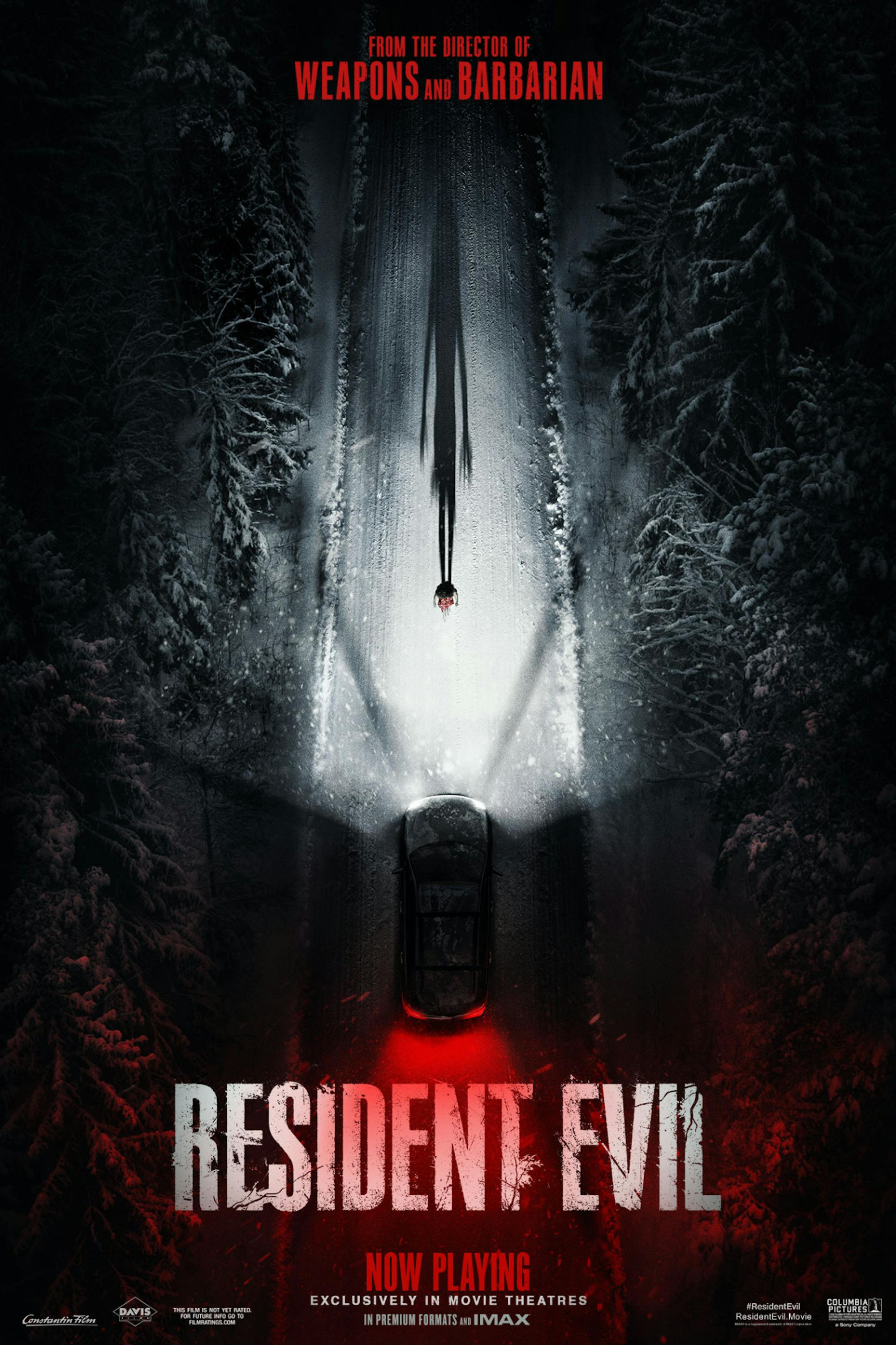
Review contains major spoilers for “Resident Evil”
Few game-to-movie franchises had as rough of a track record as Capcom’s “Resident Evil.” The original film series ran from 2002-2016 for a total of six movies, helmed by Paul W.S. Anderson with Milla Jovovich as Alice, a character invented for the films. Critics never warmed to the series; the best-reviewed entry, series finale “Resident Evil: The Final Chapter” capped out at a whopping 39% on Rotten Tomatoes.
Zach Cregger’s “Resident Evil” (2026) had nowhere to go but up, and it makes the most out of that opportunity. Framed as an alternate-universe reimagining of “Resident Evil 2,” the film follows medical courier Bryan (Austin Abrams) trying to survive the outbreak plaguing Racoon City to deliver a last-minute package whose contents matter more than he realizes.
By stripping the franchise down to one unmarkable guy having the single worst night of his life, Cregger delivered something that felt like the games at their core while telling a story entirely its own.
The little touches are what immediately sell the movie. The Easter eggs are scattered with real affection for the games rather than shoehorned in for a wink at the camera. There’s the first-aid spray sitting in the barn Bryan seeks refuge in, the green herb tucked away in the quaint farmhouse he finds. A lock that persists through being shot and run over, its specific diamond key falling from the van’s dashboard to taunt the courier. Fans of the “Resident Evil” franchise all know those quirks well, and the film trusts they’ll catch them without pointing a spotlight each time.
Other Easter eggs come less from physical objects and more from Cregger’s sharp eye for iconic player behavior. Bryan wastes bullets and whiffs shots he needs to land, the kind of panicked misfire many “Resident Evil” players have lived through firsthand. At one point, he even circles a parked police car to keep a zombie at bay, a stalling tactic anyone who’s played these games has resorted to more than once. Both are small touches but also say a lot about how much Cregger truly understands “Resident Evil”; that it isn’t just about getting the tone and atmosphere right, but the lived experiences of the fans who adore the franchise right too.
Where the movie gets genuinely inventive is its lore. Instead of pulling one “Resident Evil” B.O.W (bio-organic weapon) straight from a single game, Cregger instead mixes and matches traits across the franchise, building creatures that feel like composites of the series’ most memorable monsters.
The iconic T-Virus is covered in the standard shambling zombies seen throughout the film, particularly the turned woman who Bryan hits with his car in the beginning of the film, and later in the wave of infected that come crashing down from the rooftops as Bryan makes his desperate run to the hospital.
But where Cregger truly differs is Bryan himself, who at the peak of his infection, pulls infected attributes from multiple games. The courier has a G-Virus foundation crossed with the parasitic tentacles and split-faced grotesquerie of Las Plagas from “Resident Evil 4,” laced with the hive-mind, fungal dread of the Mold from “Resident Evil 7: Biohazard” and “Resident Evil Village.” It’s not a faithful translation of Resident Evil 1-3’s depiction of the G-Virus, but as its own creation, it works to give the franchise's iconic monsters even more brutality.
Tonally, the film’s humor walks a tightrope, occasionally slipping into outright goofiness. Ultimately, the comedy landed more often than it didn’t. Bryan’s quips carried a lot of Leon Kennedy's smart-mouthed energy from “Resident Evil 4,” filtered through a mentality reminiscent of Ethan Winters’ "regular guy screaming through hell” energy from “Resident Evil 7: Biohazard” and “Resident Evil Village.”
Structurally, the film’s smartest choice was treating Bryan like a findable NPC, not the hero. Anyone who’s played these games knows the feeling of stumbling on a dead stranger’s journal or final recorded message, piecing together a tragedy that already happened. The film flips that familiar dynamic on its head, showing fans the before instead of the after: Bryan recording a phone message for his girlfriend, a final goodbye one can only hope survived the Racoon City bomb so someone, anyone, could eventually find his story.
In the end, understanding Bryan was never going to be the one who survives to tell the tale makes his tragic end land with a real weight fans have felt across the game whenever they’ve stumbled upon someone’s unfortunate circumstances, materialized yet abandoned.
Another highlight of the film was the scenes that felt stripped directly from the games. The maternity ward drenched in blood and exploding red passes of tissue, the barn’s snarling dog whose face split open with tentacles and teeth, a sewer sequence that echoed the infamous "Resident Evil 2 Remake” mega-sized crocodile, swapped here for another massive beast; the burning white creature shown in the trailer shown in April. Bryan’s transformation itself, culminating in a body riddled with limbs and one massive red eye, called back directly to William Birkin.
The Umbrella Corporation comes across as both incompetent and outright cruel, a dual portrayal that is faithful to the games. Fans have watched Umbrella’s negligence unleash outbreak after outbreak, from the mansion incident to Raccoon City and beyond, all while characters like Albert Wesker manipulated the chaos from behind the scenes for their own ends. Cregger captures that same rot in “Resident Evil,” nameless corporate suits who let a city die rather than risk the paper trail, cruelty dressed up as procedure.
Visually, the film is gorgeous as well, and its emotional beats hit just as hard as its horror. The standout scene involves the abandoned kid Bryan finds in a trailer, infected and terrified, in pain. It’s a clear echo from the remake of “Resident Evil 2”‘, which showed an infected daughter, and the film earns the comparison by forcing Bryan to do what Leon couldn’t bring himself to, putting the poor little girl out of her misery. Cregger doesn’t just borrow the beat, though, letting it breathe long enough to hurt and show the despair and agony inherent in the games.
Grading purely as a horror film, it lands at a solid 9/10. As a “Resident Evil” movie, however; Cregger’s film falls more towards an 8.5/10. The Umbrella logo is never actually shown, which was a bit of a letdown, and while it’s understandable for Cregger to have avoided the established game characters, a passing glimpse or mention of the police station would have been a nice nod for longtime fans.


