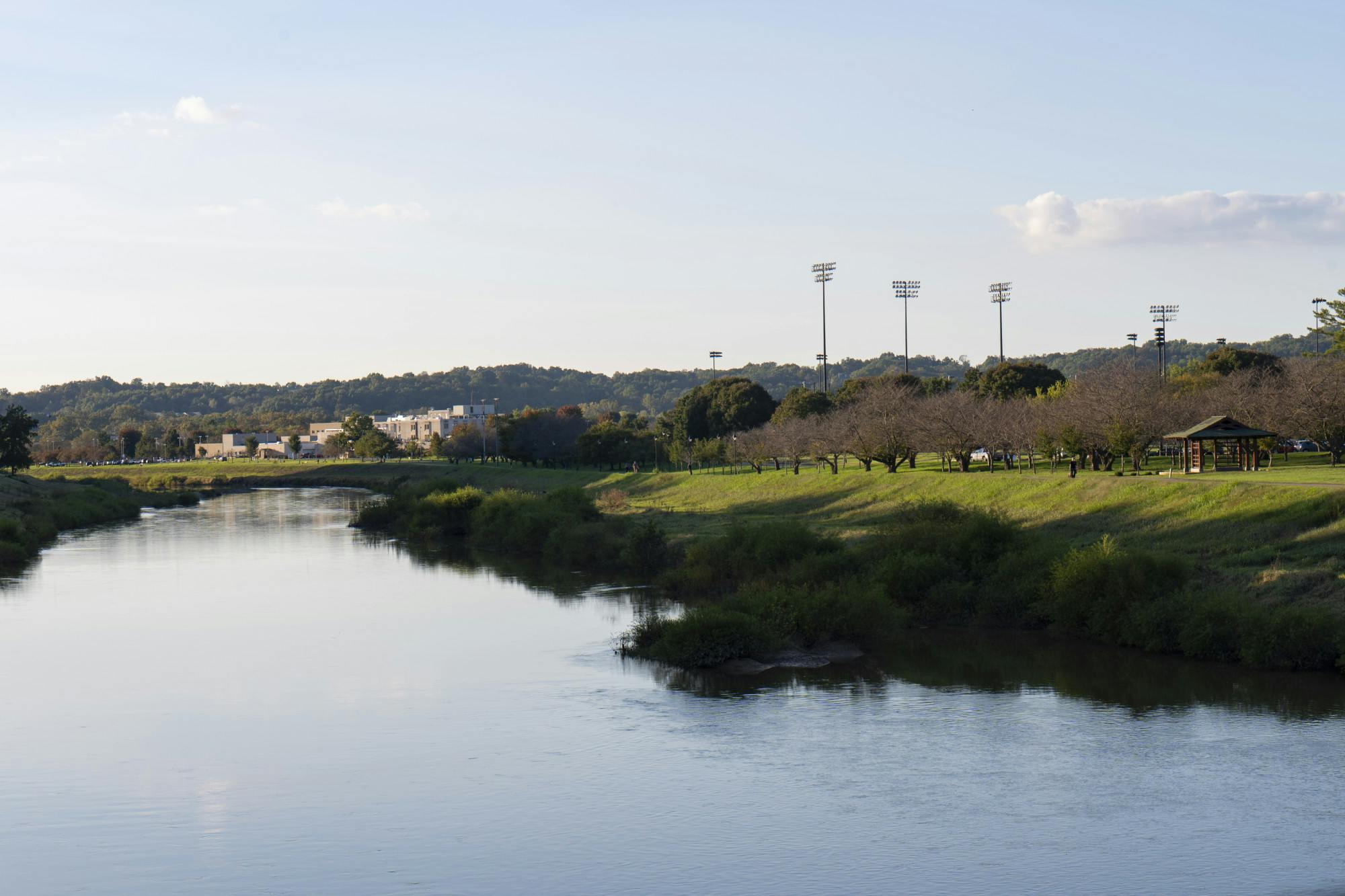
On Sept. 28, the Athens City Transportation Committee met with Dr. Natalie Kruse Daniels, the director of the environmental studies program at the Ohio University Voinovich School of Leadership and Public Service, to discuss plans to decrease the impact of flooding in Athens, particularly on Richland Avenue.
According to a previous report by The Post, the Athens City Council discussed the recent flooding on Richland Avenue, East State Street, Congress Street and Highland Avenue during their last meeting on Sept. 21. Councilmember Michael Wood, D-3rd Ward, claimed floods were affecting road accessibility due to clogged storm drains.
Also on Sept. 21, the Athens Police Department posted a flood alert to Facebook, warning residents of high water on Richland Avenue and East State Street.
According to the City of Athens website, Coates Run, Margaret Creek and the Hocking River are the three main sources of flooding in Athens. Floods can happen anywhere along these waterways, especially when the ground is saturated with water and when stormwater stalls above the Hocking River Watershed.
Councilmember Beth Clodfelter, at-large representative and chair of the Athens City Transportation Committee, said residents and business owners on Richland Avenue are particularly impacted by flooding.
“Richland Avenue has gotten the most attention because that is affecting probably the highest number of people, and businesses that other people want to go to, so even more people indirectly,” Clodfelter said.
Over the summer, there were three flash floods on Richland Avenue, the frequency and intensity of which are abnormal to the area, according to Kruse Daniels.
Kruse Daniels said infrastructure along Richland Avenue has increased over the last 20 years.
Clodfelter said the recent increases in building and parking lot construction decrease the amount of water that can be absorbed by the ground, thus causing more storm runoff and flooding.
Despite that, Kruse Daniels recommended several ways that flooding along the avenue can be reduced.
“I've worked in watershed restoration and stream and wetland mitigation and things like that,” Kruse Daniels said. “But for flooding, there are a lot of ways that we can combine both traditional and what we call gray infrastructure and nature-based solutions to reduce the effects of flooding.”
For flooding from Coates Run, Kruse Daniels recommended a detention basin at certain points, which is an excavation that would act as a pond to hold stormwater when the watershed overflows, reducing runoff.
“We need to figure out ways that we can hold water in the landscape and slow it down so it doesn't reach Coates Run as quickly or with the same intensity,” Kruse Daniels said. “So some of the ways you can do that are things like detention basins.”
Kruse Daniels said tactics that reduce runoff can lessen the need for storm drains, which ultimately send water back into the watershed and can cause flash flooding.
“In some of the neighborhoods that are up above Richland Avenue, there again is the potential to use some of the existing space to add space to hold water up on the hill,” Kruse Daniels said. “Rather than having it, you know, go rapidly downhill through storm drains to reach Coates Run more quickly. The minute we put water in a pipe, it’s going to get downhill much more quickly.”
Kruse Daniels also said the buildup of sediment near Coates Run, which reduces the space under the bridge that water can go through, is a risk factor for flooding.
According to Kruse Daniels, a vortex hydraulic separator could be implemented during construction on storm drains to address that issue. The machine separates stormwater from sediment, reducing the amount of sediment that goes back into watersheds.
However, Clodfelter said the city would need grant money to carry out many of Kruse Daniels’ recommendations. She said Kruse Daniels recommended the city write a report on flooding and its plans to combat it, which she hopes will prompt a large amount of federal grant money for the city.