

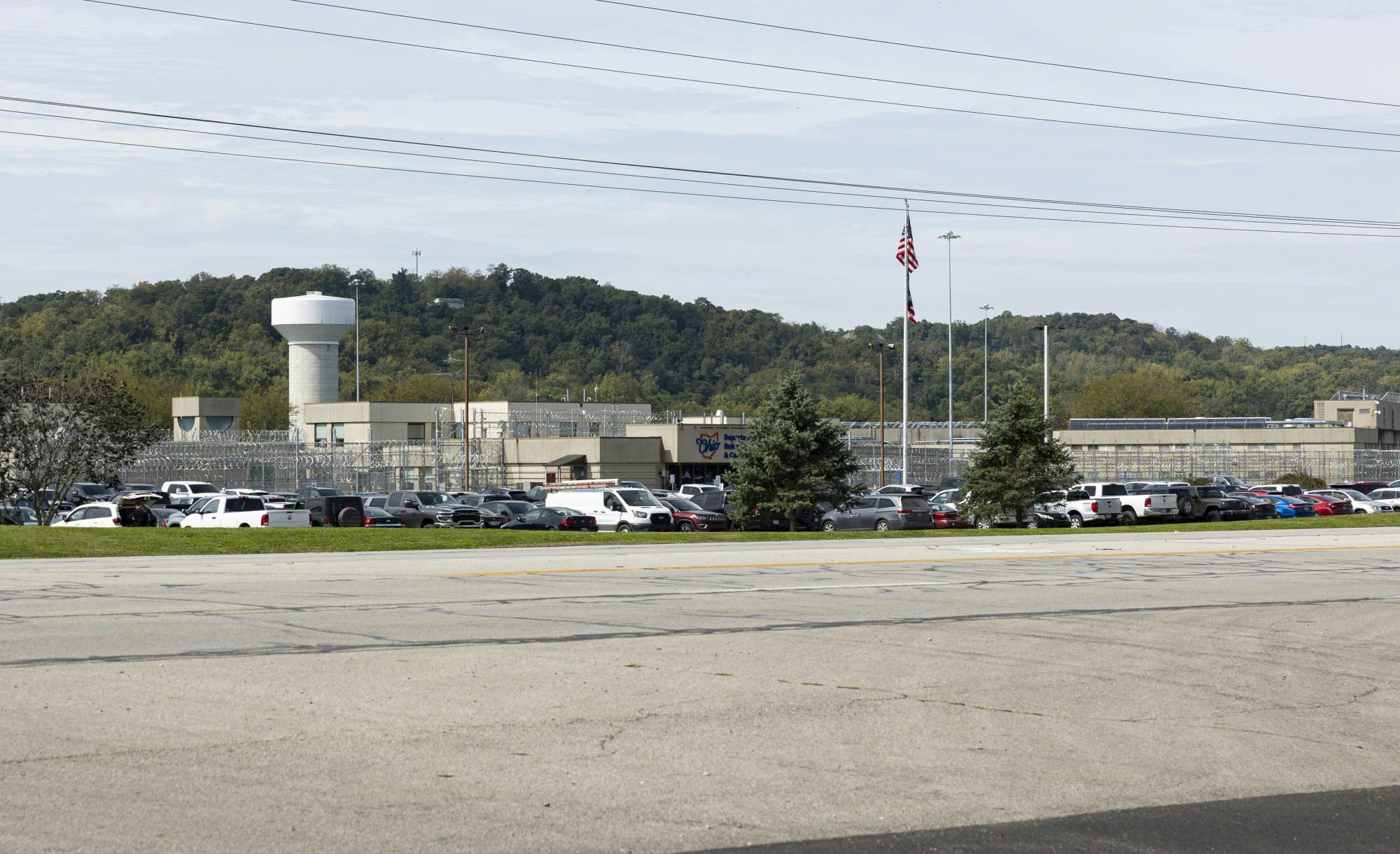
Ohio House Bill 338, also referred to as “Andy’s Law," proposes stricter criminal penalties aimed at reducing violence against correctional officers and reduce inmate drug possession in high security prisons. However, critics argue the bill’s potential changes to educational and vocational training in prisons could achieve the opposite effect.
Primary sponsors of the bill, Republican Representatives Mark Johnson and Phil Plummer, developed it following the death of correctional officer Andrew Lansing.
Lansing died after an inmate assaulted him in December 2024 while working at Ross Correctional Institution in Chillicothe.
The legislation passed the Ohio House of Representatives in November 2025 but remains stalled in the Ohio Senate Judiciary Committee after being referred in February 2026. The bill’s last hearing in the committee was June 10.
In an Ohio House press release after the bill passed, Johnson described it as “a great first step to restoring respect to our officers and to reward good behavior within the inmate population.”
However, critics of the bill, including liberal organizations such as the American Civil Liberties Union of Ohio and Policy Matters Ohio, say the bill’s policy on vocational and educational programs for inmates is counterproductive.
Bill 338 would only allow inmates with a sentence of six months or shorter the ability to participate in educational and vocational programs if they have had no serious violations. Those with a sentence of six months or longer would need to be free of serious violations for at least six months before the start of any educational and vocational programs.
The bill describes a “serious violation” as all violations of the inmate rules of conduct that are violent or of a sexual nature, as outlined in the Ohio Administrative Code.
It also includes a provision that requires all high-security institutions to perform a cost-benefit analysis of their educational and vocational programs. That would require Ohio’s prison system to evaluate whether the financial and security costs of job training programs are worth the benefit they provide.
Lawrence Arnold, a former Ohio inmate, served time in two medium security prisons, where he participated in multiple vocational programs.
Arnold took part in four programs over the five years he spent in prison, including small engine repair, landscaping, correction and psychology.
Arnold said his experience with the programs occupied his time while incarcerated and gave him a chance to prepare for his release.
Though Arnold did not finish every program he was involved in, he said he still uses the knowledge he gained while in prison, specifically, his psychology education.
“I use it out here on the streets to help people get through their problems and think about it in a different way,” Arnold said.
According to a study conducted by Crime and Justice Research Alliance, individuals in prison who earned a General Educational Development certificate, an equivalent to a high school diploma, or completed college classes were less likely to engage in violence during incarceration than those who were not involved in any educational programs.
The study indicated that individuals in prison who completed vocational training were not more or less likely to commit any type of misconduct.
Arnold said getting rid of those programs would not only fail to reduce violence but might make inmates more violent.
“It’s already hard as a felon to get ahead in life,” Arnold said. “And then to take away the things that you’re supposed to be giving away to feed people’s minds and give them different ways out, you’re taking it away so eventually it's just going to go back to how it used to be: felons in there acting crazy because they don’t have anything to do to pass their time and enlighten their mind.”
Chad Williams, a former inmate at Dayton Correctional Institute, earned his GED and participated in a culinary arts program while incarcerated.
He emphasized the importance of vocational and educational programs to prevent inmates from going back to prison.
“I think it gave people hope, especially with the HVAC class, like people knowing they have a skill when they come home,” Williams said. “(They have) less opportunity to go back.”
A study conducted by RAND, a nonprofit research organization, revealed inmates have 43% lower odds of recidivating, or returning to prison after release, when they participate in education programs versus those who do not.
Williams also said educational programs are important for the mental well-being of inmates.
“So I think the more opportunities they have to better themselves instead of sitting in a cell all day would be, mentally, it would be better for you,” Williams said.
Rep. Mark Johnson’s office did not respond to a request for comment.
@joselynduff48


