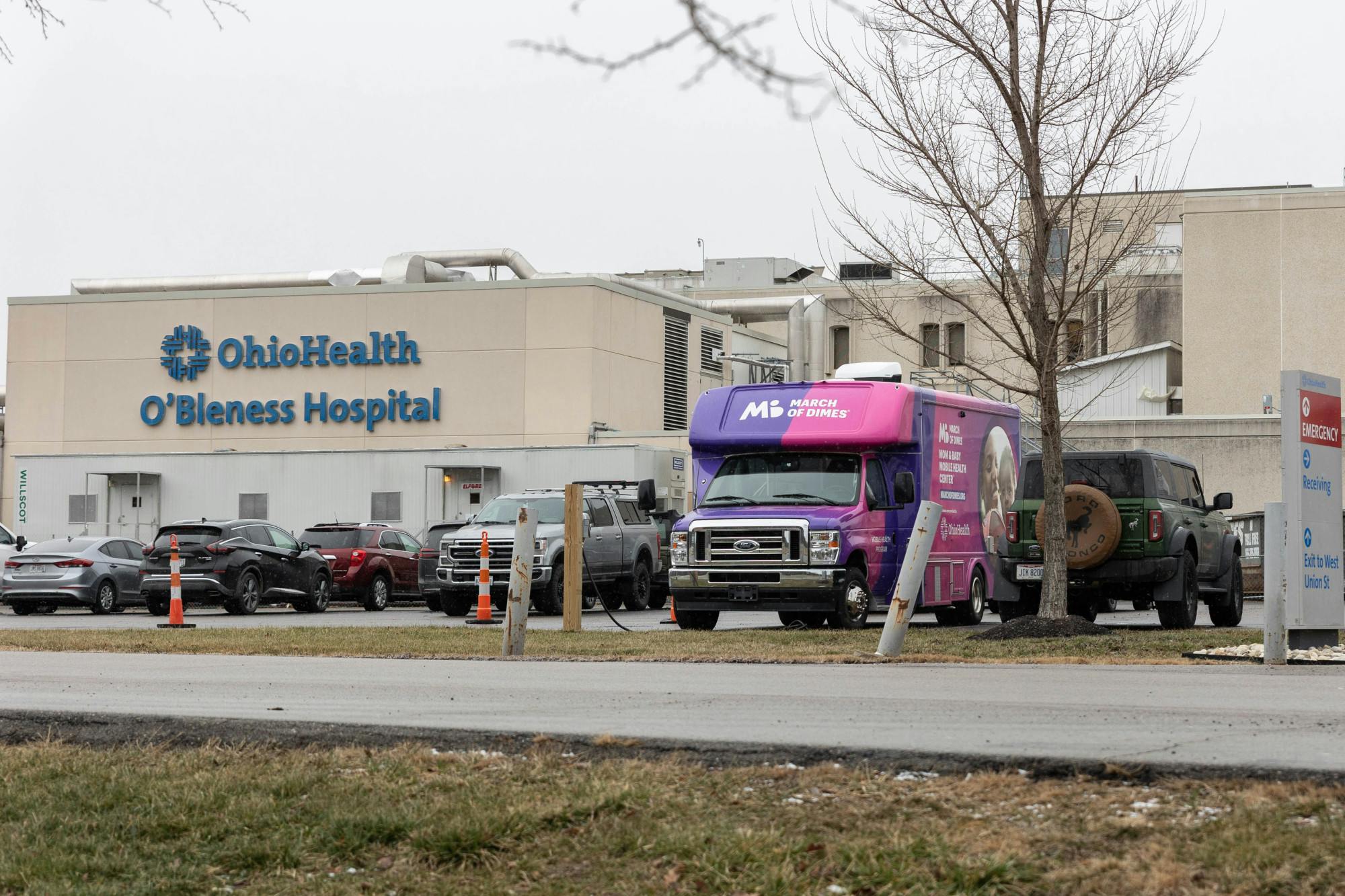
Rural doctors and patients suffer from several unique struggles and difficulties in access to care. Ohio is no exception to those healthcare disparities, with 83 of Ohio’s 88 counties having over 50% of the area classified as rural, according to Wexner Medical Center at the Ohio State University.
To address rural healthcare issues experienced across the country, the U.S. Centers for Medicare & Medicaid Services administered the Rural Health Transformation Program. Authorized in the One Big Beautiful Bill Act, the $50 billion program is designed to provide funding for over five fiscal years to support healthcare access, quality and outcomes.
The application was open to all 50 states, with Ohio receiving $202,030,262, according to the Health Policy Institute of Ohio. Now, the plan is to implement its own Rural Health Transformation Program.
Richard Hodges, former director of the Ohio Department of Health, works as an assistant clinical professor at Ohio University, the director of the Ohio Alliance for Innovation in Population Health and the executive director of the OU Health Collaborative. Hodges discussed how healthcare expenses play into the disparity in care access across the state.
“In the end, healthcare is very expensive. It's getting more expensive, and we live in communities where the economy, the income, is not growing as fast,” Hodges said. “There's a real tie between income and health outcomes … and also we live in an area where Appalachia has depopulated over the decades due to causes everybody mentions, yet we still have people living in these remote communities that maybe once upon a time had a doctor in their town.”
Hodges said the two primary gaps in rural healthcare that should be addressed are care extension and care coordination.
“Let's try to grow our population of providers,” Hodges said. “Certainly, we never want to forget that. But in the meantime, let's figure out the ways to extend the care that we have to places where people can actually access it.”
Hodges mentioned bringing back house calls, where para-professionals can come directly to someone's house when they require care. He also discussed holding periodic clinics at libraries and other public spaces.
The Ohio Rural Health Transformation Program plans to support rural communities by investing more in school-based health centers and expanding evidence-based home visiting models, according to a press release.
Another issue for rural care is a doctor shortage. The current number of physicians in rural areas is expected to only meet 68% of demand by 2037, according to The Commonwealth Fund.
Randall Longenecker previously served as the assistant dean of rural and underserved programs at Ohio University. Longenecker stated there is an aging physician workforce and discussed how the physician shortage came to be.
“It's a trajectory that started about the time that I started in practice, or maybe in the 1990’s, where the density of family physicians, particularly in rural places, has decreased relative to urban places,” Longenecker said. “Although there's been a slight leveling of that in the last several years because of all of our efforts in training doctors in rural places, it's still trending downward.”
Ohio’s plan will focus on supporting two programs to address that issue: the Rural Healthcare Workforce Pipeline and the Rural Patient Health Innovation Hubs.
The Rural Healthcare Workforce Pipeline will create partnerships between universities and healthcare providers to encourage providers to recruit students studying healthcare to work long-term jobs in rural communities.
The program will also initiate Rural Patient Health Innovation Hubs, which will provide integrated care for rural residents by partnering hospitals, community health centers and behavioral health specialists together. Those partnerships are expected to offer high-quality care closer to residents' homes.
Longenecker discussed a potential downfall of the rural transformation program, stating it is likely that much of the funding will actually make its way into urban parts of the state.
“My prediction is that not as much will get to rural places as you would hope,” Longenecker said. “That much of the money will actually end up disappearing somewhere in the city, funding administrative things, even funding telehealth efforts that are anchored in the city and primarily benefit the urban place, even as they do provide a service to the rural community.”
The program is still in very early stages. Ken Gordon, press secretary for the Ohio Department of Health, commented on the state of the project.
“It’s still very early in this process, and many details are being worked out,” Gordon wrote in an email. “As Governor DeWine said when he announced the award, we are very grateful to have received this money, and we will have much more to say in the future about how it will be used to help Ohioans.”