

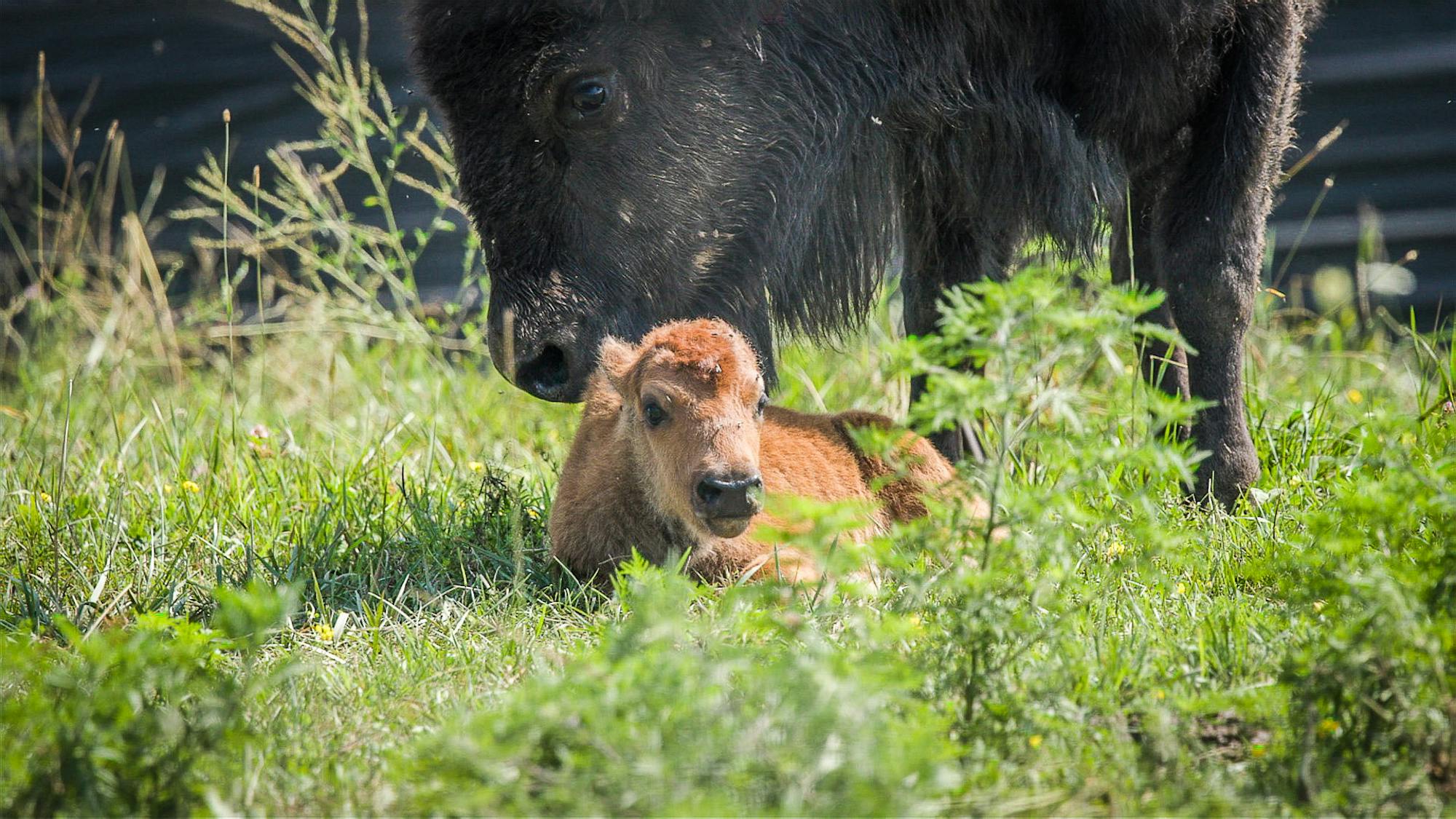
The Appalachian Hills Wildlife Area welcomed a baby bison Sept. 1. The new bison herd at the wildlife area is currently on loan from The Wilds, a wildlife preserve in Muskingum County.
The bison herd arrived at the wildlife area during the second week of April, according to Jordan Skates, the AHWA area manager. The visitor center at the wildlife area later opened April 24.
Skates said the bison herd consists of nine cows, or females, and one bull, or male. Since the bison herd arrived at the wildlife area, there have been six calves born, the most recent in September. The first calf on the property was born on July 20, and all the births have had zero complications, according to Skates.
The AHWA is a 54,525-acre property that spans portions of Guernsey, Muskingum, Noble and Morgan Counties. The facility is located near the Jesse Owens State Park and contains a visitor center, where the bison are held.
The AHWA and visitor center’s purpose is conservation and education. Skates said the bison in the herd will never be released into the wild, but that they are a symbol for grassland preservation and management.
“As far as the bison go, they've been a great attraction for us,” Skates said. “They definitely focus on grassland management. They talk about prairie management, and they are a wonderful conservation success story for our nation.”
Bison, at one point, were a prevalent part of the Ohio ecosystem, but were largely eradicated by the early 19th century, according to The National Park Service.
Diego Alvarado, an associate professor in biological sciences at Ohio University, said bison are a keystone species, and their importance was seen in how ecosystems changed after their elimination from the Appalachian region.
A keystone species is a species in an ecosystem that is critical to the survival of other species in that ecosystem, according to National Geographic.
Moreover, when bison were eradicated in the U.S., the lack of grazing meant there was less water absorbed in the soil and new plant shoots were not growing as quickly, according to the World Wildlife Fund.
However, Alvarado said it would be nearly impossible to reintroduce the bison to this part of Appalachia.
“These are big animals, cannot move easily through the landscape,” Alvarado said. “Also, the kind of grasses that they need … you won't find them in some of these forested areas that are currently dominated by sugar maple, primarily, which is not great nutrition for them.”
Alvarado highlighted if bison in general were to be reintroduced to the wild, it would require a specific type of landscape.
“If you find the right kind of habitat, they're going to completely transform the landscape because they are selective grazers,” Alvarado said. “So basically, they are like farmers; they decide what grows and whatnot. And as a consequence, you're going to get change in the species that are found in the landscape.”
For those who are interested in visiting the AHWA, more information can be found on their website. The wildlife area, in addition to housing the bison herd, also offers public land for hunting, fishing, wildlife watching and hiking.


