

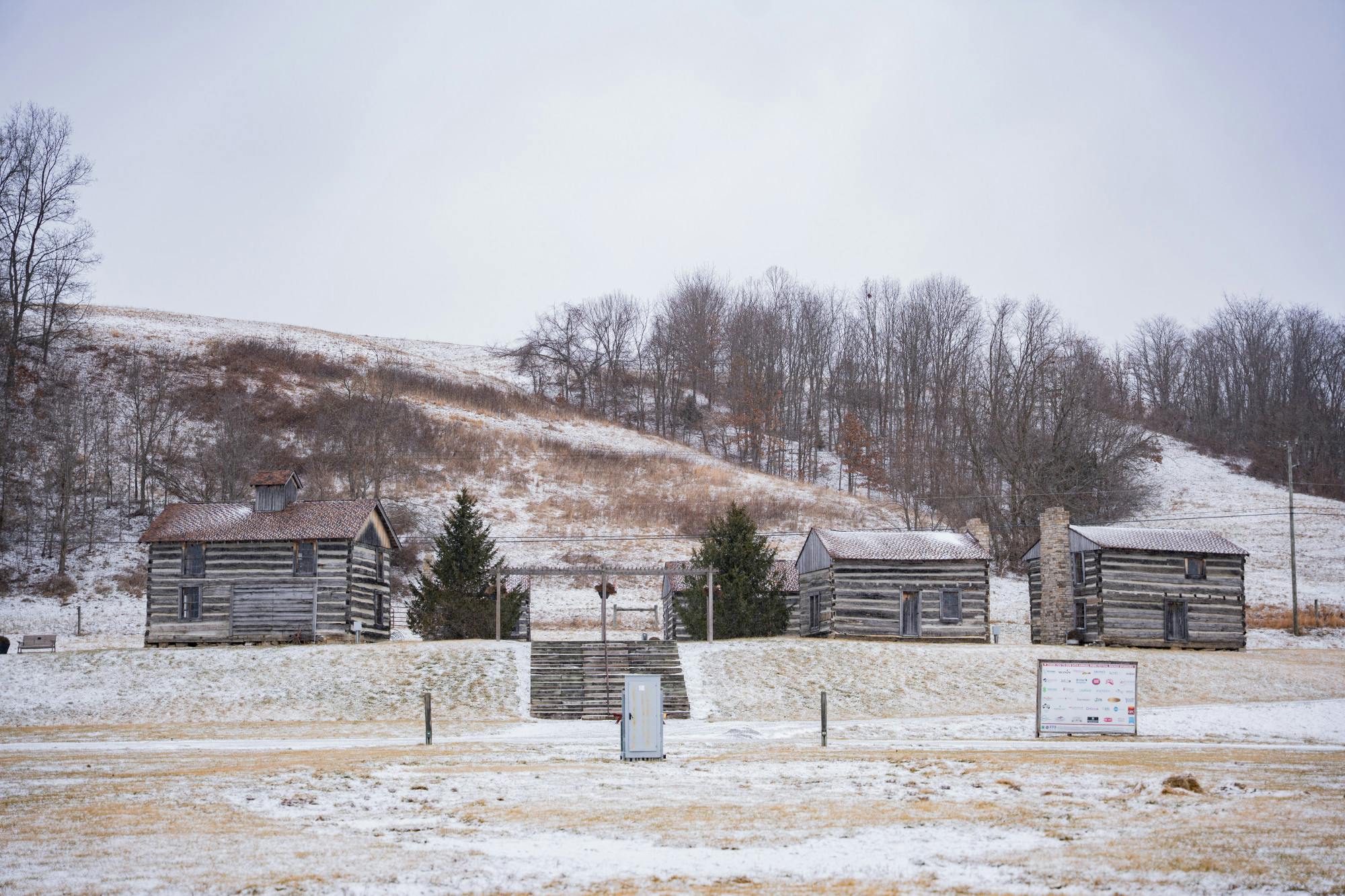
Many people grew up learning the important history of the Underground Railroad, reading first-hand accounts about the treacherous journeys people faced, and visiting museums to observe artifacts and exhibits. However, some people don’t know how rich the history is here in Athens County and across Appalachia.
The National Park Service’s National Underground Railroad Network to Freedom program promotes and honors the people who fought for freedom since 1998. Through this program, more than 800 sites in 40 states have been recognized as stations and sites on the Underground Railroad.
New listings were added to the NPS site map last month, including the Union Baptist Church of Blackfork in Lawrence County, the Joe Logan and West Union Underground Railroad Network in Adams County and Payne’s Corner in Gallia County.
Two enslaved brothers, Pleasant and Dave, escaped from Greenup County, Kentucky, in the fall of 1845, after hearing they were to be sold downriver. They crossed the Ohio River and traveled to Payne’s Corner Store and Post Office, owned by George and Harriet Payne, according to the listing description for the Payne’s Corner site.
Harriet Payne sheltered the men while she notified a conductor, a person who assisted enslaved individuals to escape, who helped Pleasant and Dave travel safely to Lee Township in Athens County. The Ohio River was an essential pathway to freedom for many during this time, and in Ohio, there were 10 commonly used “exit ports,” or the final, safe location where enslaved people could reach freedom, according to Touring Ohio.
Robin Muhammad, department chair and associate professor of history in the African American Studies Department at Ohio University, said the Ohio River attracted a myriad of people, including farmers and those looking to escape slavery.
“It was really about a sense of place that the Ohio River served as a major economic thoroughfare, transporting goods and people,” Muhammad said. “That made it well known to people of African descent and others who were looking to travel, either for purposes of escape or to assist those for purposes of escape.”
The Network to Freedom listings were made possible by dedicated research done by a team of historians and researchers with Lawrence Economic Development Corporation and Shawnee State University.
The Appalachian Freedom Heritage Tour was awarded a $1.5 million grant through the Appalachian Regional Commission, according to Cicero Fain, the assistant provost of access and opportunity at Marshall University, and assistant director for research and outreach for freedom heritage initiatives.
“I was brought in because I'm at Marshall and I'm a historian who was recognized as an authority within Black Appalachia and the tri-state region,” Fain said. “So they brought me, they solicited me, and I was excited to join on board.”
Fain said the team worked together to research and organize 27 sites for the NPS Network to Freedom program. He said this was a nine-county, three-state initiative, and hopes to “elevate the rich history” of the Appalachian region with its contribution.
Even though Fain grew up in the area and was taught about the Underground Railroad in school, he was unaware of some things about his local history and culture.
Muhammad also spoke to this issue and said many people do not know enough about their local history, even with the resources and information available.
“I often assign for students to consider historic sites on campus and in Athens where you can go and visit,” Muhammad said. “There's one outside of Baker Center. There's a set of plaques on the Templeton Blackburn wall in the portico. There's one down by the Athens County fairgrounds.”
Fain spoke about a site in West Virginia the team researched, which has not yet been published by the NPS. Fain said Joshua, Moses and Joe escaped Green Bottom plantation, which later became the Jenkins plantation, the largest in West Virginia, with 4,400 acres. The men escaped through the Ohio River and made their way to Lawrence County.
“These are just examples of the remarkable ingenuity and courage of these folks,” Fain said. “The Underground Railroad was an interracial collaboration. Both Black and white risked their livelihoods, their reputations.”
Along with visiting nearby historical markers and sites recognized by NPS, Ohio residents can visit the many museums in the state dedicated to the Underground Railroad and African American history.
The National Afro-American Museum and Cultural Center in Wilberforce is home to one of the largest collections of African American manuscripts and artifacts in the country, with over 10,000 historical pieces.
Kevin Lydy, education specialist at the National Afro-American Museum and Cultural Center, told the story of Joseph Dozier, who is detailed in manumission papers from the museum’s national archives.
“The interesting thing about those freedom papers is that they're fake, and so it kind of helps the students understand an often overlooked component of the Underground Railroad,” Lydy said. “Those papers were created by three African American men in Washington, D.C., that had kind of a ring or an outfit where they were cranking out these counterfeit papers.”
Lydy said anyone can schedule an appointment to visit the museum and learn more about African American history with its archives and collections. He said understanding this history is important for everyone.
“That may not be the history that your ancestors necessarily went through, but understanding that experience helps you relate to people on a completely different level,” Lydy said. “Having that knowledge and that understanding, it kind of fosters a sense of empathy. It helps people just kind of see each other as human.”


