

A Seattle radio station, KEXP, published an in-studio band performance that garnered over 8 million views. This particular show was stranger than its usual artist in-studio.
Clad in polka-dotted papier-mache outfits with massive noses, wielding a double-necked guitar and music that sounds straight out of a fever dream, is the French-Canadian band Angine de Poitrine.
Although the anonymous duo has been around since 2019, this performance brought them into the limelight. Aside from its striking looks, Angine de Poitrine breaks the conventions of contemporary music, using odd time signatures, looping pedals to layer sounds in real time and microtonal notes not found in Western music.
It’s not the only band to do this, but the band's viral success is telling of the current state of music.
In the comment section of the band’s KEXP video, many viewers shared a similar sentiment.
“Eat this, AI,” one comment said.
“Crazy how this is the most human thing I’ve seen this year,” another comment said.
The band's absurdist nature drew in millions. In an age when record labels are embracing generative artificial intelligence and formality, the human urge to push boundaries is acting as a breath of fresh air for many.
Over the past 200 years, art movements have shifted in response to new technologies. After the advent of the camera, painters like Claude Monet began to move to impressionism, an art style straying from hyper-realistic paintings and into abstraction. A few decades later, around World War I, came movements such as Dadaism and Surrealism. The more technology advanced, the more abstract art became.
Angine de Poitrine describes itself as a “Mantra-Rock Dada Pythago-Cubist Orchestra,” thus aligning with Dada’s “rowdy revolution.”
In the age of fewer and fewer companies taking greater control of the media landscape, our collective culture is becoming more uniform, more conformed. As a society, we have more possessions and entertainment media at our disposal than ever, both material and immaterial.
Despite this, our culture feels empty and bland; nothing noticeable distinguishes one singer from another, one movie from another. Cars are monotone colors, films lack the substance they once did and music does not have the same cultural impact. When everyone has access to the same content through social media, society becomes a drab conglomeration of sameness.
This is why generative AI music can slot itself into the mainstream; AI is formulaic, and so is modern music. It’s trained on music that does not push boundaries, music that all sounds the same. Record labels and streaming services know this. They know they can pump out AI slop that sounds like modern music because they have already made modern music disinteresting.
In a November 2025 article in The Atlantic, W. David Marx wrote, “What’s missing now is a veneration of the artistic mindset, which possesses the imagination to reject kitsch … and pursue work that expands the possibilities of human perception.”
As the powers that be push toward uniformity in our creative outlets, human weirdness and creativity are a direct threat to the cultural consistency the music, technology and other industries push for.
Human ingenuity and weirdness have been a key factor in why we as a species and culture are able to function. It’s the driver of innovation, art and invention. Angine de Poitrine, and the growing pushback against the AI-centered world Silicon Valley promotes, is proof of this. The band pushes the boundaries of modern music because it breaks the mold. The mold that record labels and tech executives push.
To paraphrase a variation of the 1979 IBM statement, “a computer can never be held accountable,” a machine cannot feel, and therefore cannot create art. Pushing human work to the wayside in favor of AI slop that can quickly generate profit is the complete antithesis of art. Art comes from the strangeness and creativity of people, nothing less.
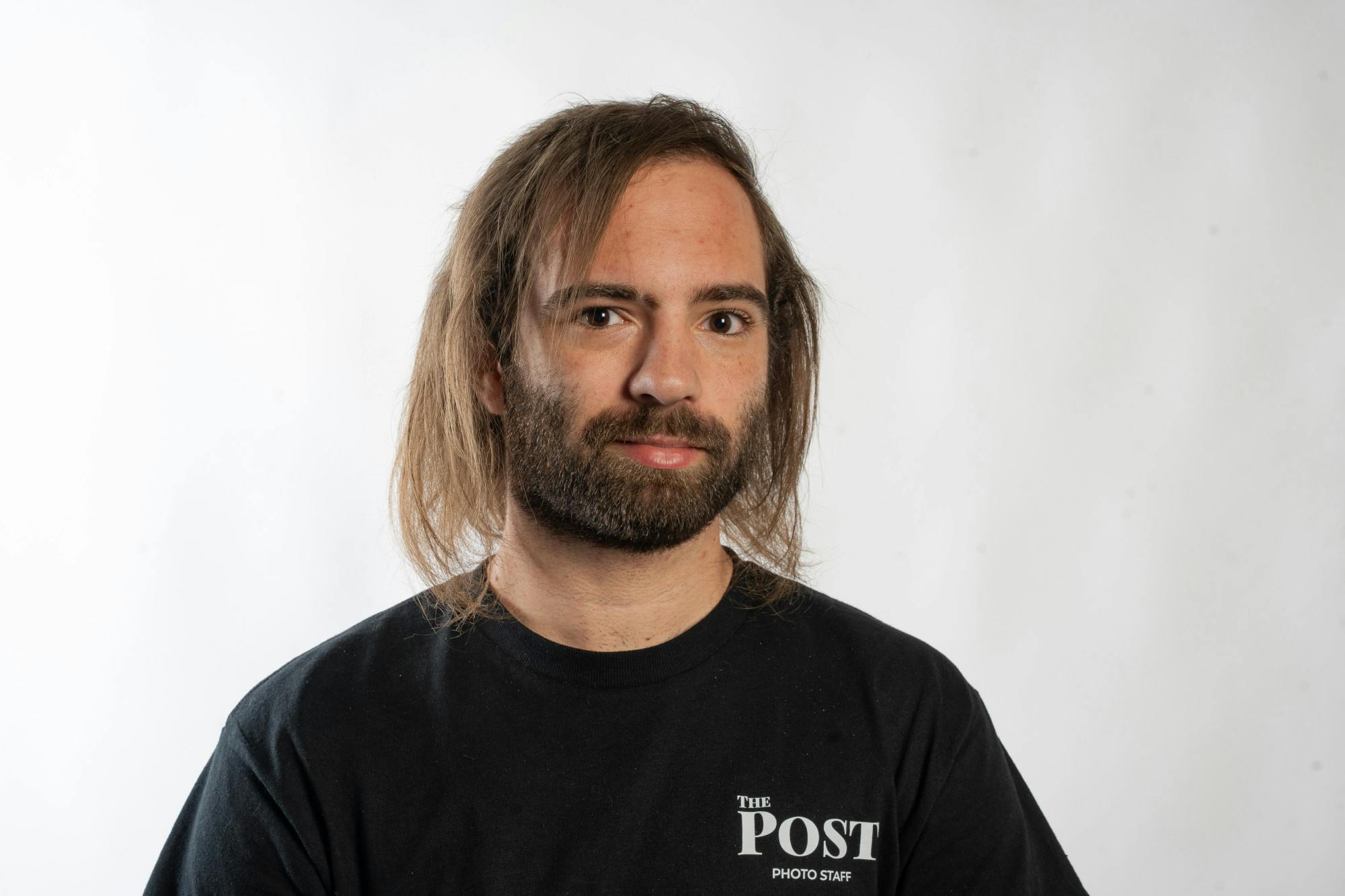
Ethan Herx is a junior studying photojournalism at Ohio University. Please note that the views and opinions of the columnist do not reflect those of The Post. Want to share your thoughts? Let Ethan know by emailing or finding them on Instagram at eh481422@ohio.edu or @ethanherxphoto.


