

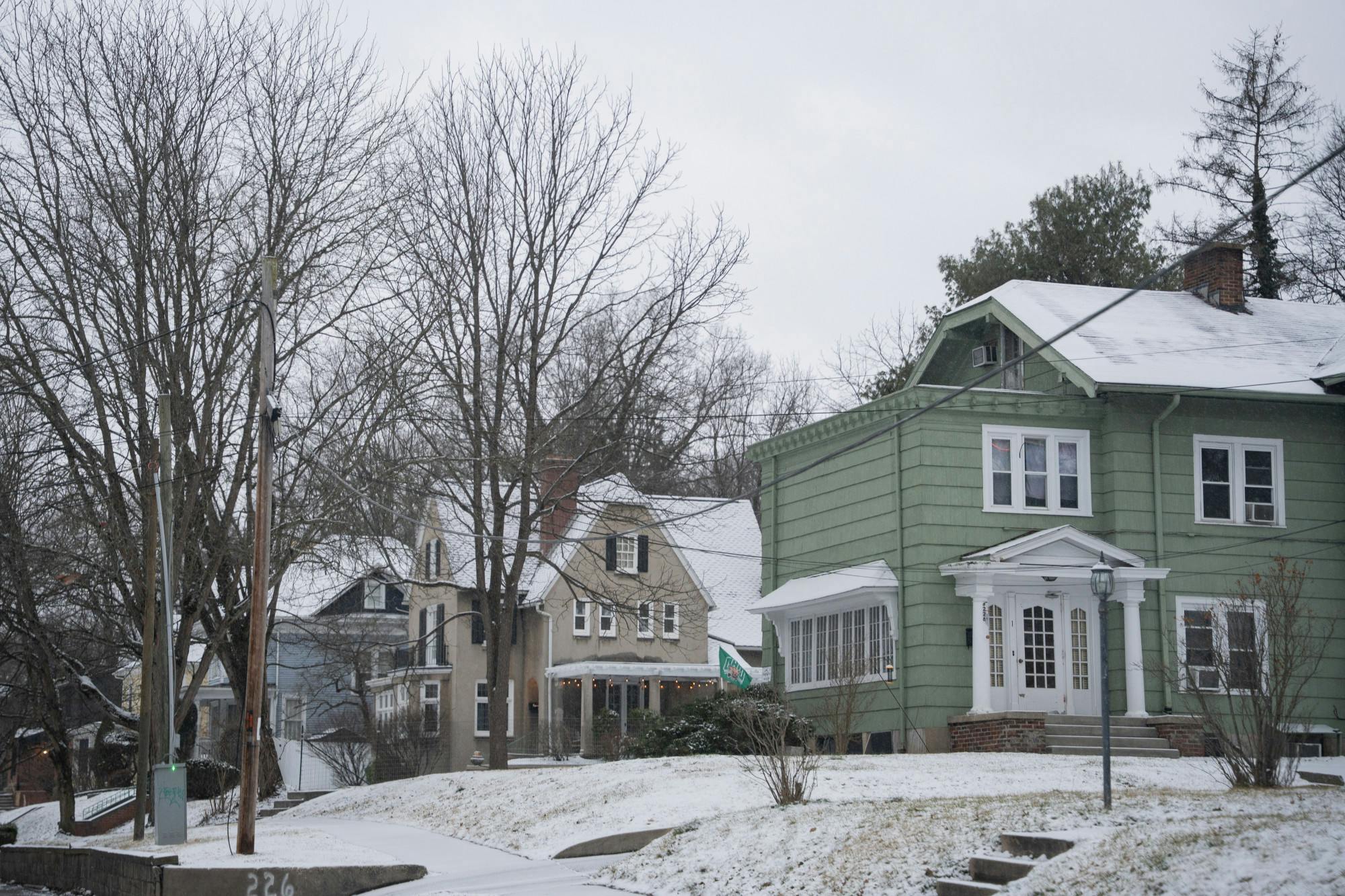
The Committee to Abolish Property Taxes, or Ax Ohio Tax, is a grassroots organization campaigning for a state constitutional amendment on the 2026 ballot to remove the property tax in Ohio completely.
Leonard Gilbert, a committee member and a resident of Mentor in Lake County, said the movement began about 10 years ago when he published an editorial on the topic. Since then, Gilbert has worked with a colleague, Brian Massey, founder of the Committee to Abolish Ohio’s Property Taxes, and looked into the issue until it became what it is today.
“Phase one was just to get it approved by the Secretary of State,” Gilbert said. “And then phase two, just to make sure there's one amendment, and what is happening right now, this little grassroots effort that we have is now turned into a full-fledged movement.”
However, many opponents raised concerns about the potential ramifications of removing property taxes. The Tax Foundation, an international research think tank based in Washington, studies tax policy on both the national and state levels, according to its website.
Nicole Fox, a policy analyst at the Tax Foundation, discussed what property taxes fund, and why people tend to dislike them more than others.
“Property taxes work to function local units of government,” Fox said. “So, municipalities, counties, schools and basically, they work to fund the services that they provide. And property taxes are probably one of the most hated taxes, and that's most likely because they're very transparent. We get a property tax bill every year, and we see the taxes that we're paying.”
In 2023, the property tax rate in the state was 1.31%, placing Ohio as the eighth highest in property taxes, according to the Tax Foundation.
According to the Statehouse News Bureau, Ohio residents paid a total of $16.7 billion in property taxes in 2024.
Republican Rep. Kevin Ritter, representative from District 94, covering parts of Washington, Meigs and Athens Counties, attributed the rise in property tax values partly to COVID-19 era inflation. He said that caused homeowners to pay the inflation rate taxes on their homes even if they initially bought the house at a lower cost.
Ritter also discussed immigration as a cause and said the increased number of immigrants let into the U.S. caused more competition for the housing market, thus raising prices. He also discussed his third reasoning.
“There is a trend going on in our country where we've got investment groups like BlackRock that are buying up single-family homes, tens of thousands of single-family homes, and turning them into investment properties,” Ritter said. “Well, what that does is it removes them from the market, again, causing a shortage and driving prices up.”
Fox discussed what would happen to communities across Ohio if property taxes were completely removed.
“When you get rid of one funding source for local services, the money has to come from somewhere … We have to fund schools somehow, and again, roads and public safety,” Fox said. “And so if the property tax is eliminated, then the two main other sources of revenue for the state of Ohio are sales tax and income tax.”
Public officials have agreed with this sentiment, warning that if Ohioans abolish property taxes, there will be severe repercussions. Gov. Mike DeWine, among others, expressed if property taxes are removed, sales tax could go up to about 17%-20%.
Gilbert responded to those claims, offering a different solution.
“My contention is government size needs to be reduced, the spending needs to be reduced, and then the taxes will follow accordingly,” Gilbert said. “So now these ridiculous numbers, you're throwing out 20% sales tax and all this other stuff. That's ridiculous, because how can you say that when you haven't even sat down to look at a budget realistically to say to myself, ‘What can I do to improve on the situation that I have so that I can reduce the government cost?’”
Ritter expressed concern about removing property taxes overnight and advised a more incremental approach to decreasing costs. He said the government would need to replace about $24 billion in revenue.
“Property taxes stay local, so they're one of the only taxes that does not go to Columbus and get spent by us in Columbus; they're spent by the locals,” Ritter said. “So if that citizen initiative were to pass, it would defund local services … It's the police, it's the elderly services, it's your welfare-type programs. Everything that runs through job and family services, all of those local services get defunded overnight.”
Gilbert could not comment on the number of signatures collected, but said the efforts are well-organized and energized.


