

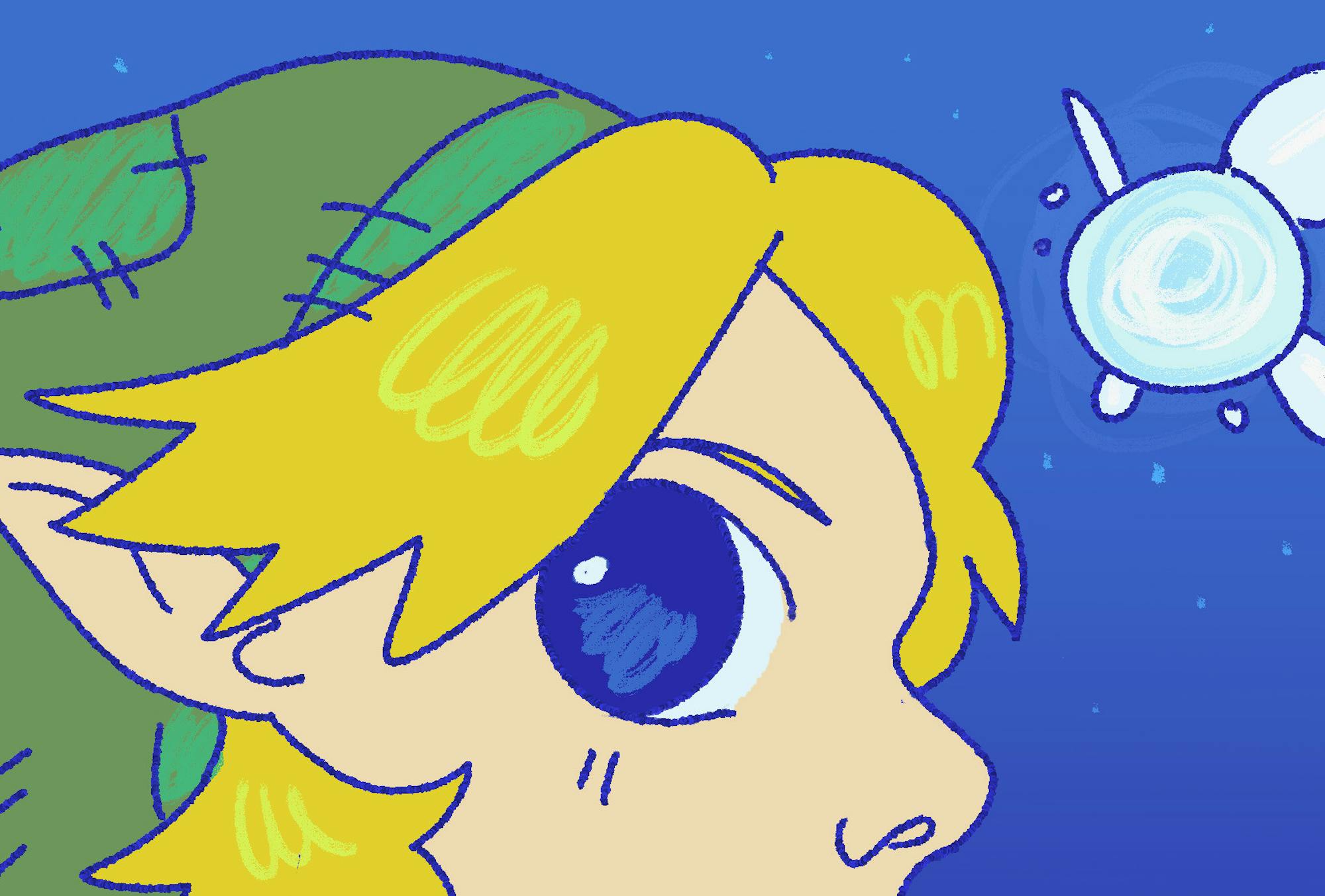
When Nintendo teased “The Legend of Zelda: Ocarina of Time” remake during its June 9 Nintendo Direct presentation, the reveal was little more than a brief, moody clip that left fans more confused than excited. Early reactions were skeptical, with some comparing the resigned character models to AI-generated visuals or the hyperrealistic fan remakes that have circulated online for years.
When Nintendo later dropped an extensive new gameplay trailer on Sept. 8, during the franchise’s 40th Anniversary Direct, it was clear they wanted all doubts to be erased just as cleanly as Link’s memory was in “Breath of the Wild.” Fans, at last, got a proper look at what is (arguably) the most iconic and defining Zelda game, igniting hope that its new, modern look wouldn’t take away from its classic and enduring charm.
For those unfamiliar, “Ocarina of Time” first released on the Nintendo 64 in 1998, following a young hero named Linkas he travels through time to stop the warlord Ganondorf from seizing the sacred Triforce and plunging Hyruleinto darkness. It was the first game to bring the series into full 3D, introducing mechanics like Z-targeting, lock-on combat and context-sensitive controls that would go on to shape how countless action-adventure games handled combat and movement for years afterward.
The game’s influence on the industry, combined with its emotional storytelling, beautiful scores from legendary composer Koji Kondoand inventive dungeon design, cemented it as a critical and commercial success. Decades later, it remains the game most fans point to when asked to define what a “Zelda game” is supposed to feel like, which is exactly why Nintendo revisiting it carries so much weight, and why the internet had such a visceral reaction to seeing it reimagined.
The trailer starts with Zelda’s lilting lullaby, played as the camera pans over lush green grass and a cloudy blue sky, Death Mountain looming in the back. Glimpses of Hyrule are shown, each scene rendered in a picturesque, high-quality style that captures the beauty of Hyrule in all its wonderful, whimsical glory. Next, the Hero of Time comes riding in on his beloved companion, Epona, arm outstretched as if ready for any danger that might cross his path.
Kid Link is also shown, stout and adorably baby-faced, a nice contrast to his sharper, older self. The two stages of Link are featured in a back-and-forth dance, giving fans a better look at how the gameplay will shake up between Link’s past and future selves. Overall, the core gameplay looks faithful to the 1998 original: the same puzzles, lock-on combat and rhythm of exploration, but with smoother movement and seemingly better responsiveness.
What’s most reassuring, though, is that the leap to modern graphics hasn’t sanded down what made these characters so memorable in the first place. The exaggerated proportions, the odd little quirks, the faces that always look just slightly off in the best way are all still there, just rendered with far more detail. That distinct look, it turns out, wasn’t an accident of the visual upgrade, either.
Takaya Imamura, the longtime Nintendo artist behind “Star Fox” and “Majora’s Mask,” weighed in on the design choices for “Ocarina of Time” shortly after the reveal, tracing them back to celebrated Nintendo designer Shigeru Miyamoto’s lifelong fascination with ningyogeki, traditional Japanese puppet theater. Once fans heard that context, the “uncanny” character models many had written off started to read differently, less like an unfinished art style and more like a deliberate, stylized homage.
Beyond the visual overhaul, the remake brings a handful of meaningful gameplay updates as well: a dedicated jump button and free camera replace the original game’s fixed angles and edge-running, rolls slow directly into dashes, and the once-clunky item menu has been streamlined into a scrolling layout. Perhaps the biggest change, though, is the addition of full voice acting for major cutscenes. Matthew Mercer returns to voice Ganondorf, alongside Patricia Summersett as Princess Zelda, reprising their roles from “Breath of the Wild” (2017) and “Tears of the Kingdom” (2023).
Overall, the remake looks to be a genuine reimagining of a beloved classic, allowing for a whole new generation of fans to experience the wonders of Zelda.
“The Legend of Zelda: Ocarina of Time” releases Nov. 5, exclusively on Nintendo Switch 2.


