

The Invisible Ground Project allows visitors and locals alike to learn more about the rich history throughout Southeast Ohio.
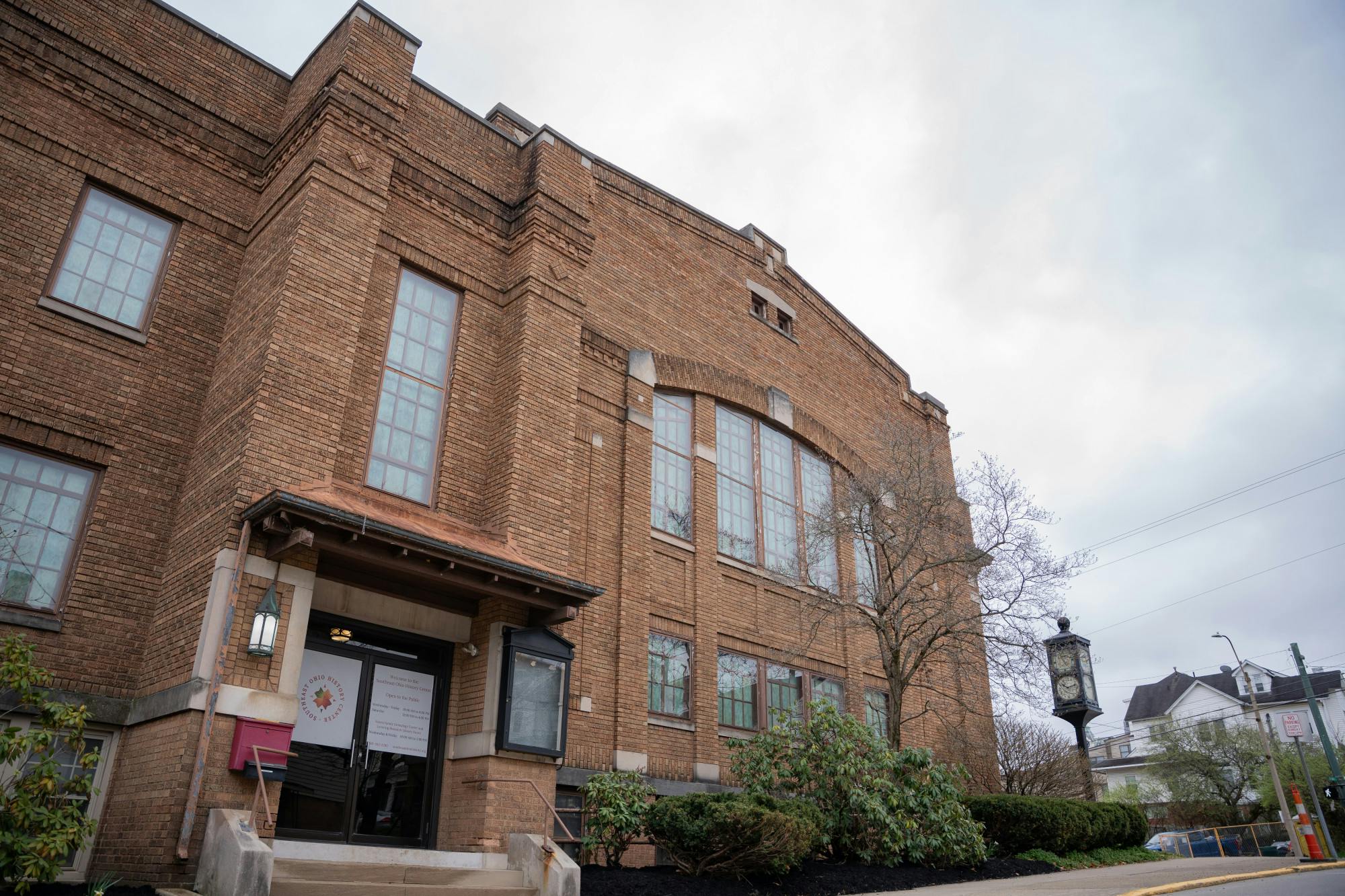
Invisible ground is a multimedia project involving audio, visual elements and storytelling tied to the physical marker of the historical site. The Southeast Ohio History Center serves as Invisible Ground’s fiscal sponsor for project funding and is collaborating on a “series of nine immersive historical markers” in Athens.
Immersive historical markers, including but not limited to the Mount Zion Baptist Church, Chauncey and Stuart’s Opera House Theater in Nelsonville, can be explored through the Invisible Ground app available on Apple and Android devices.
Upon first glance, the Invisible Ground app holds the information and virtual reality for the sites with physical historical signs. When the app’s camera is pointed towards the site, it displays historic images and stories paired with audio to create an immersive experience for the user.
Invisible Ground is focused on connecting local history to the present day. The Invisible Ground Project now has 17 total markers that can be found in and around Athens County in Nelsonville, Chauncey, Shawnee, Perry and more.
“When you have the app and go to one of the physical places … you can see through your camera view at the spot the actual historic event or building that was once there,” said Brian Koscho, founder of Invisible Ground and project director.
Koscho has lived in Athens since 2001 and earned his undergraduate degree from Ohio University in 2006. He returned to school in 2019 to acquire a master’s in fine arts in communication media arts, where the idea of this project came to life.
Koscho teaches podcasting at the university in the spring and summer semesters.
Invisible Ground also offers a documentary-style podcast series for historical landmarks available on Apple Podcasts, Spotify and the app.
“The idea is kind of like a funnel,” Koscho said. “Hopefully, you can sort of involve yourself in it at your own pace and your interest.”
To create this immersive experience, Koscho learned more about the history of the area in close collaboration with the Southeast Ohio History Center.
One of Koscho’s closest collaborators is Jessica Cyders, executive director of the history center. Cyders said that the collaboration started with a grant to test the feasibility of the app technology.
“We wrote an Ohio Humanities grant that was successful … this is a way to get history to people in a different way that is innovative and engaging,” Cyders said.
Cyders said after the grant was received and the technology worked, a second grant was written to expand the project.
“(The grant) paid for three additional Invisible Ground markers, and it’s taken off,” Cyders said.
Cyders said she has enthusiasm for working with outside organizations.
“It’s very much a no-brainer, and absolutely a part of our mission,” Cyders said. “We don’t have the capacity or technology to do this ourselves, so why would we not work with somebody who can do that?”
Cyders said the project’s first marker was the Berry Hotel on 18 N. Court St.
As the project continues to expand, Koscho and collaborators hope it encourages people to look beyond the surface of the places they pass every day.
“I think the whole idea is to get people to look at history a little bit differently,” Cyders said. “History is personal. History is around you all the time … and those stories are important because we are also making history.”


