

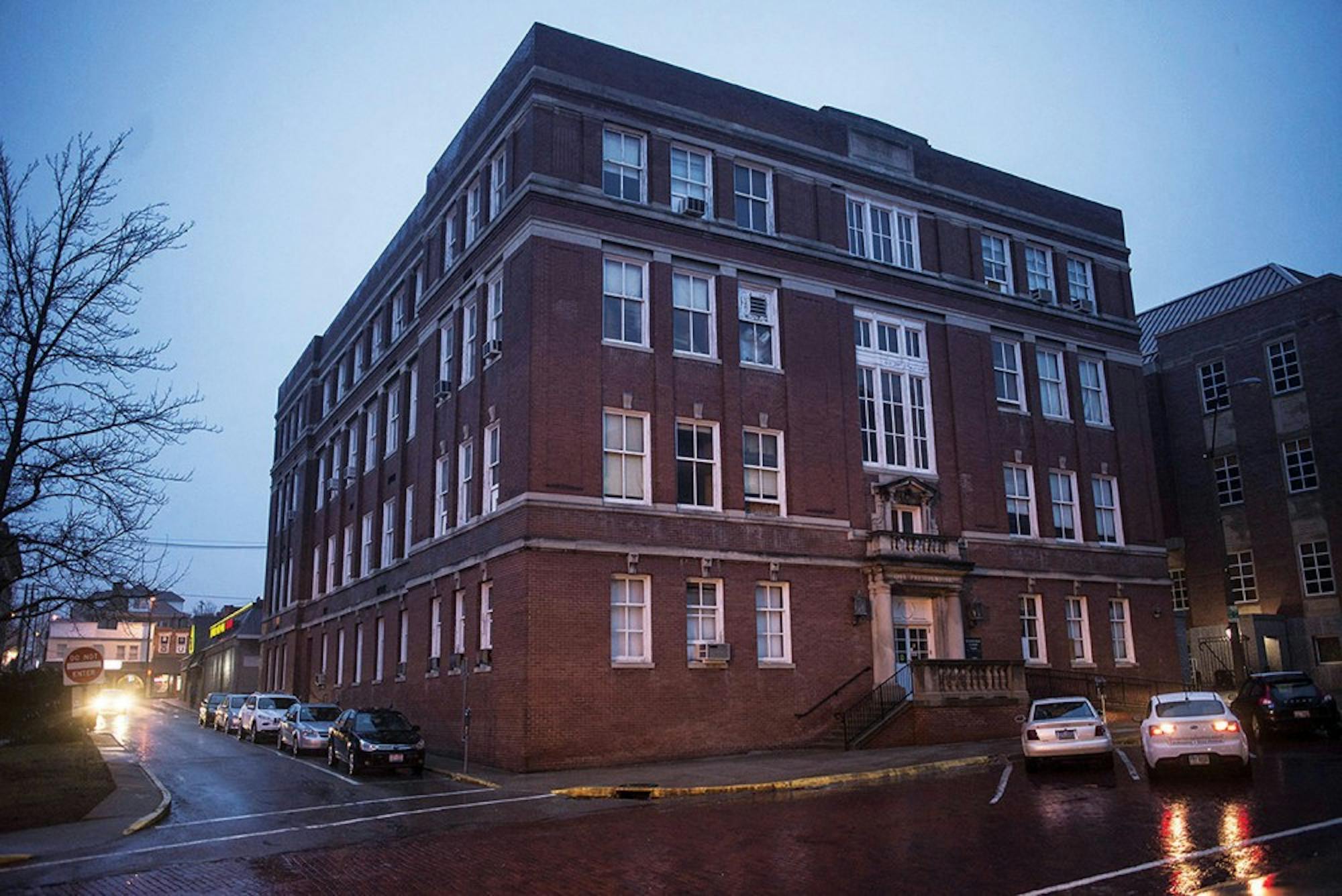
Although university officials did not explicitly state an intention to demolish the President Street Academic Center, support from the College of Business' dean was voiced.
Disagreements surrounding the future of the President Street Academic Center between the city and university continued at Thursday's Board of Trustees meeting.
The Athens City Council voiced its concern Tuesday about the historical aspect the building —which was built in 1911 — holds for the community. A resolution passed at that meeting in hopes to postpone any university decision about the building.
Hugh Sherman, dean of OU's College of Business, told the board Thursday he felt keeping the existing structure would be "a significant investment." Whether the building is demolished, or a new one is built, the College of Business would likely have primary use for the space.
In a previous Post report, email records were obtained that mention demolishing the building could cost anywhere between $15 million and $20 million. But renovating could cost $8 million to $10 million. The emails from Sherman did not state where those numbers came from. The university has paid $15,000 a year since 2003 to heat the building, which totals roughly $180,000.
The board will vote Friday on whether the demolition will take place.
“I am respectful and appreciative of the outside voices as we are going forward and will be respectful of our historical buildings,” McDavis said. “But we are an academic institution.”
McDavis said he had a meeting with Patterson on Wednesday about the city’s concern toward the historical value of the building.
"Once the Board of Trustees make that decision ... at that point, I believe OU will proceed down that path," Patterson said. "I don't know that anything city and citizens say can change that."
{{tncms-asset app="editorial" id="8891d6d2-c0a8-11e5-8014-d793b6acf2cb"}}
Council members passed the resolution Tuesday after the Athens County Historical Society expressed concerns over the possible demolition.
“We asked to postpone the decision so it could be taken with more thought or input,” Councilwoman Chris Fahl, D-4th Ward, said. “This is why we have a historical preservation commission.”
Fahl added that situations similar to the PSAC are why the city has a historical preservation commission in place.
“As much as we respect the historical significance, it does not fit the way we teach,” McDavis said.
Sherman, who wants to use the space to expand the business college's executive education, voiced why he feels the building needs to be demolished and built from scratch.
“The building is in very poor condition. We had a roof that failed.” Sherman said. “It would require a significant investment to bring it back to its safe condition.”
Problems, including low ceilings and a need for space to accommodate for class sizes, need to be addressed, Sherman said.
The College of Business uses Copeland Hall, which sits adjacent to the PSAC, as one of it’s primary spaces for academic purposes.
“We’re left with the same kind of needs for flexible space.” Sherman said. “The traditional classrooms are just not working for us.”
Sharmaine Wilcox, a senior student trustee, said low ceilings in Copeland Hall also limit student creativity.
“As a student myself in the College of Business, Copeland is not suitable,” Wilcox said.
@Fair3Julia
Jf311013


