A temporary injunction was granted Sept. 14 to put the Department of Homeland Security’s new student visa regulations on hold. The regulations would eliminate the Duration of Status rule for non-immigrant students, exchange visitors and foreign media visas, complicating visa regulations for students completing an education in the U.S.
The new regulations were set to go into effect Sept. 15. They would establish a fixed period of admission, giving non-immigrant students and exchange visitors admission into the U.S. for only the duration of their academic program, which could not exceed four years.
According to a DHS press release, the new regulations were enacted to combat “rampant visa abuse” within the U.S. and strengthen national security.
The change would also reduce students’ allotted time to prepare for departure, transfer schools or change immigration status after graduation from 60 to 30 days.
U.S. District Judge F. Dennis Saylor IV in Massachusetts granted the injunction, which blocks the rule from taking effect while a lawsuit challenging its lawfulness is in progress. The plaintiffs are seven organizations representing colleges, universities, educators, laborers and journalists.
Saylor directed both sides to submit their positions on the next steps and related procedural questions by Oct. 9. Diane Cahill, the director of international student and scholar services at Ohio University, said she hopes the Oct. 9 deadline will deliver more information regarding the future of DOS.
“Our hope is that they will recognize the long precedent we've had with Duration of Status and the value that it provides and we'll get to continue having Duration of Status, rather than a fixed time period,” Cahill said.
However, if the rule does get implemented, students would need to apply for an Extension of Stay through U.S. Citizenship and Immigration Services to remain in the U.S. and continue their education unless their current program end date is before Sept. 15, 2030. Their application would be reviewed by federal authorities, who would perform background checks, biometric vetting and fraud screenings, according to the DHS press release.
Cahill said her office currently provides those extensions and explained her concerns if the government were to take on that responsibility.
“There's rules, and so we would provide that,” Cahill said. “With this change, they will have to apply to USCIS and supply extra documentation and a payment in order to get their stay extended. So, in essence, I think one of the biggest concerns is that for PhD programs and honestly even undergraduate programs, four years is not a reasonable amount of time.”
Cahill estimated that there are currently about 1,000 international students enrolled at OU that would be affected by the change.
Though Cahill believes that applications have been stable in some respects, she said last year’s graduate student application rate decreased.
Cahill linked that trend to other changes in immigration rules over the last few years, including changes to the system that regulate how many months a visa stamp counts for and the implementation of a ban on visitors from certain countries.
“So that changed, and then we had a lot of countries put on a banned list where they couldn't come, so that also impacted, and those are outside of the university's control by a lot,” Cahill said.
According to a 2023 Entry/Exit Overstay report by the DHS, 2.69% of students with F category, or non-immigrant student visas, and 3.36% with J category, or exchange visitor visas, overstayed in 2023.
However, NAFSA: Association of International Educators, one of the plaintiffs in the lawsuit against the new regulation, said that number is unreliable because they allegedly used comparison data from different years to get those percentages.
Azarakhsh Shafieikadkani, a first year interdisciplinary arts PhD student, is from Iran. She began her visa process in 2022, when she travelled to the nearest U.S. embassy in Dubai to complete an interview.
Shafieikadkani said the constant changes to visa regulations can make being an international student particularly challenging.
“It's so stressful for international students,” Shafieikadkani said. “All the time, they have to make sure about their status, and changing the policies in the middle of your program is going to be really, really tricky.”
Shafieikadkani said she decided to come to the U.S. with the goal of being hired as faculty with tenure, expanding her knowledge and improving her resume.
Cahill believes the removal of the DOS rule will continue to disadvantage international students.
“There are a lot of other rules that go along with this that make being a student in the United States much more complicated,” Cahill said. “There's so many tiny pieces, but generally, I think it just makes it more complicated, more hoops to jump through and a lot of uncertainty. If I were considering coming here, it would make me think twice.”
Aaron Sandow, a first year African studies graduate student from Ghana, explained the benefit he believes international students provide to the U.S.
“Once you have worked hard for yourself and you really thrive out, and as such, in the long run, you are sort of helping the country in the long run gain its global image, as U.S. quoting that world power that we've seen a long time,” Sandow said.
Sandow compared the U.S.’ stance on international students to that of South Africa.
“You can see this case happening in South Africa, where you see the indigence of the country fighting or sending away all immigrants in the country,” Sandow said. “ Now, everyone in Africa, nine out of 10 Africans who see South Africa as a very bad place to settle.”
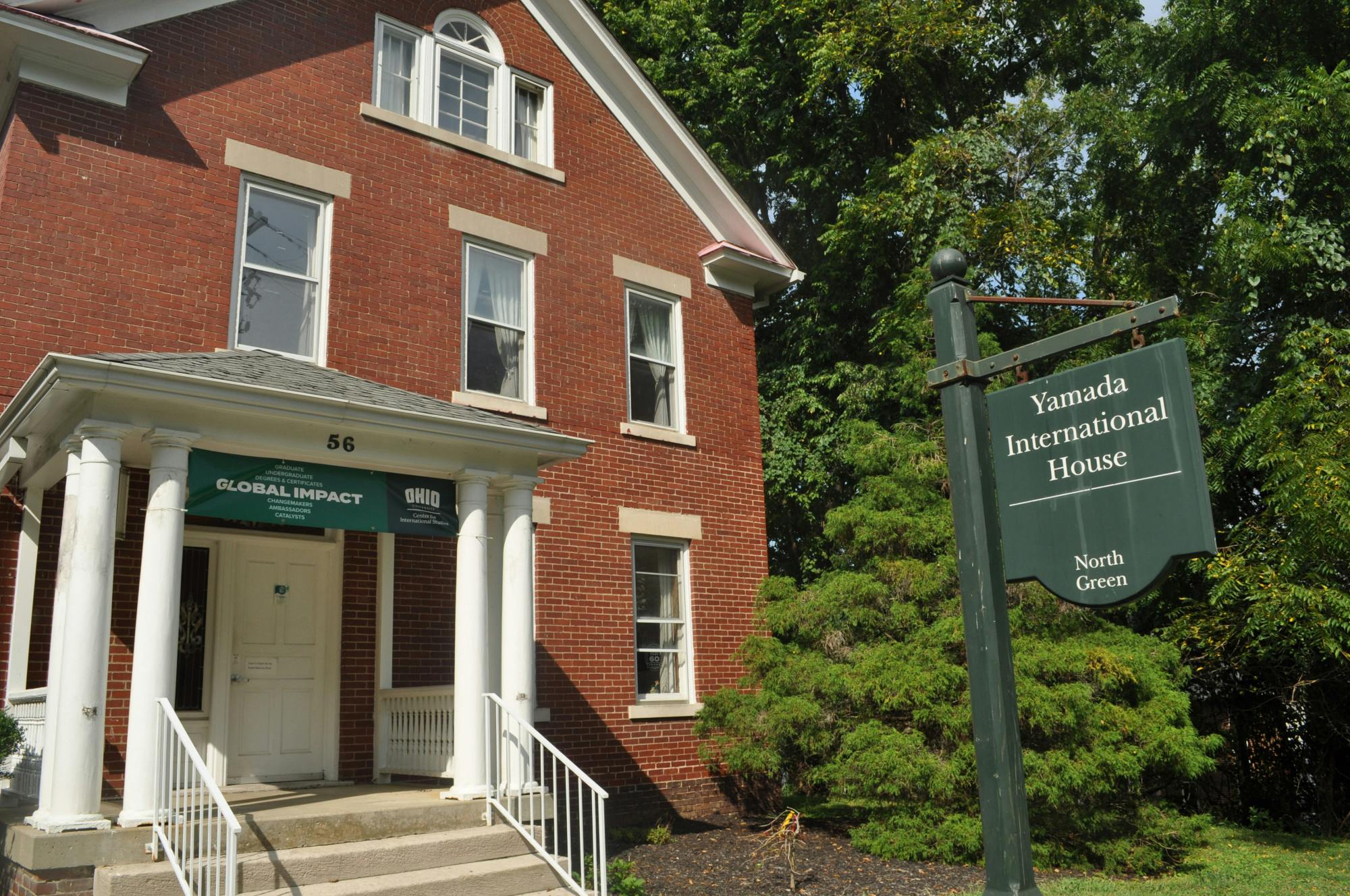
As ISSS awaits further DOS litigation, Cahill emphasized that the Yamada International House, located at 56 E. Union St., provides advising and support for international students.
“Like the rest of us, I think even when there's chaos around you, sometimes you just focus on the things in front of you that you can control,” Cahill said. “And, you know, some of these things are just out of their control, and they just have to keep going because their goal is to get their degree and move forward in life.”