

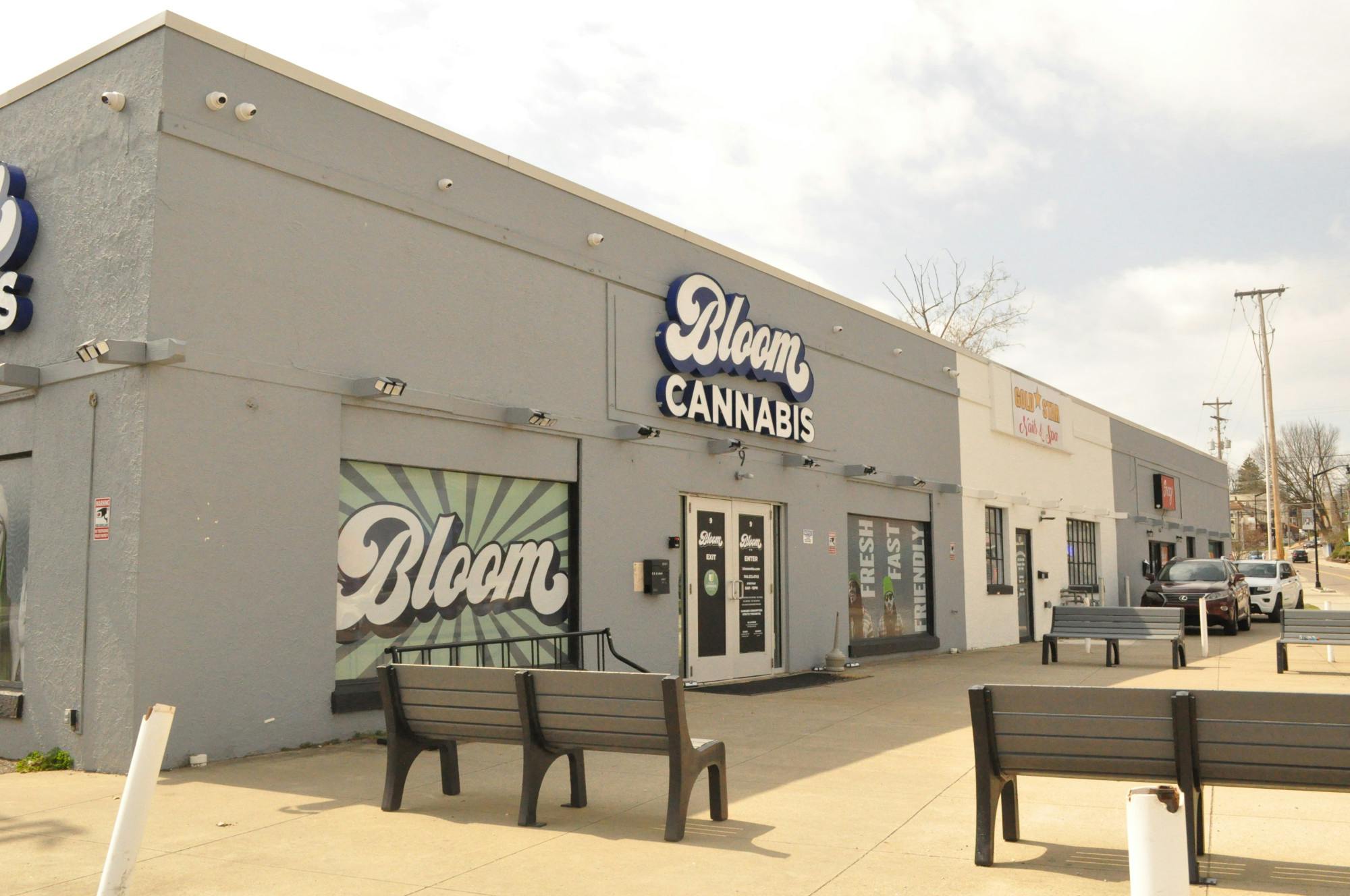
Senate Bill 56 went into effect March 20, banning the sale of intoxicating hemp products without a dispensary license, as well as banning public consumption in the state of Ohio. The bill also prohibits the transfer of cannabis from out-of-state dispensaries or shops.
The Athens Smoke Shop, located on 12 E. Carpenter St., like many others in Ohio, had to stop selling its THC products after March 20. Mohamed Abdullah, a manager at the Athens Smoke Shop, said he simply has to tell customers the products are banned, and he recommends they visit a dispensary.
Abdullah said he feels for the folks who lost their access to THC and intoxicating hemp, especially because dispensaries are more expensive than purchasing products at a smoke shop.
“The reason why they banned it is because we were selling it so much cheaper than dispensaries, and it worked as good, if not better,” Abdullah said.
According to a previous report from The Post, businesses like Buddy’s Lounge have become “victims” of SB 56. Buddy’s announced their business closure on Monday in an Instagram post.
The bill is meant to protect young people from consuming intoxicating cannabis, as the bill is removing the products that are easily accessible and prohibits sellers from marketing to children, according to a previous report from The Post. In a news release from December, Gov. Mike DeWine said Ohio is making “good public policy” in implementing a state intoxicating hemp ban before a federal ban.
Around 30.7% of 12th graders reported they consumed cannabis in the past year, according to a study from the CDC in 2022, while 6.3% reported consuming it daily in the last 30 days. Teenagers using cannabis could harm their developing brains and cause negative effects such as problems with memory, learning, reduced coordination and difficulty maintaining attention.
According to the bill, smoking marijuana is subject to the same limitations as smoking cigarettes.
The bill states the public use of cannabis, including smoking and vaping, is prohibited anywhere other than privately owned property. It is a minor misdemeanor to smoke in a private residence that is a child-care home, a place of employment or a community transitional housing facility. It is prohibited to smoke on residential premises where smoking is against the lease agreement, but there is no criminal penalty.
Kenneth Whipkey, an Athens local, said he believes the ban on intoxicating hemp is going against the will of the people, but stated the fight is not over.
“It's going to take away our ability to medicate when we're in situations when we need to medicate, especially with anxiety or PTSD,” Whipkey said. “Someone goes into a flashback, and they can't bring themselves back down. It's going to hurt themselves and possibly other people.”
Adult-use cannabis, medical cannabis and cannabis paraphernalia must remain in the original container at all times when not in use. If transferring in a vehicle, cannabis products must be in the trunk or in the backseat, far from the driver's reach.
“I think the purchasing and the transportation are silly, to be honest,” Whipkey said. “You have to keep it locked in your trunk. It opens up more possibilities for the police to harass people, more oppression.”
Smoking while driving a vehicle remains illegal, and operators are subject to relevant OVI laws while under the influence and operating a vehicle. Former law stated passengers smoking while the driver has control of the vehicle was a minor misdemeanor, while SB 56 states a passenger is guilty of a misdemeanor of the third degree.
The bill caps the number of dispensaries in Ohio at 400 and decreases the THC maximum level for adult-use cannabis for extracts from 90% to 70%.
SB 56 also changes the definition of hemp, as the previous definition stated hemp held a delta-9 THC percentage of 0.3 or below. According to the final analysis, processors added other THC compounds, such as delta-8, to increase the intoxicating effects of the product while abiding by the law. SB 56 defines hemp as a cannabis product meeting a total THC of 0.3%.
Home-growing now faces restrictions, as home growers are no longer allowed to share their cannabis and must grow in their primary residence. Saraquoia Bryant, a local cannabis activist involved with The Athens Cannabis Ordinance, has been home growing most of her adult life. She said this new bill is not helpful for her and other home growers.
“Before, there wasn't really a provision saying that we could not share our homegrown, or that we could, but it was implied that we would be able to share our homegrown because it was not explicitly written out of the law,” Bryant said. “And with SB 56, they have specifically said no sharing outside of your home.”
SB 56 also defines seeds and clones as cannabis, which Bryan said supports the big businesses behind the cannabis industry, allowing them to have a “monopoly” in the industry.
“So now the dispensaries are going to be selling seeds and plants, and it's that typical thing where the big business comes in, does a bunch of complaining, takes away the profitability or the ability for a small business to compete or to, even in this case, get into the market,” Bryant said.
SB 56 will expunge the convictions of any convicted person of minor misdemeanor cannabis offenses if the crime occurred before March 20. To expunge one’s conviction, a person can apply to their sentencing court to have their record wiped of the crime.


