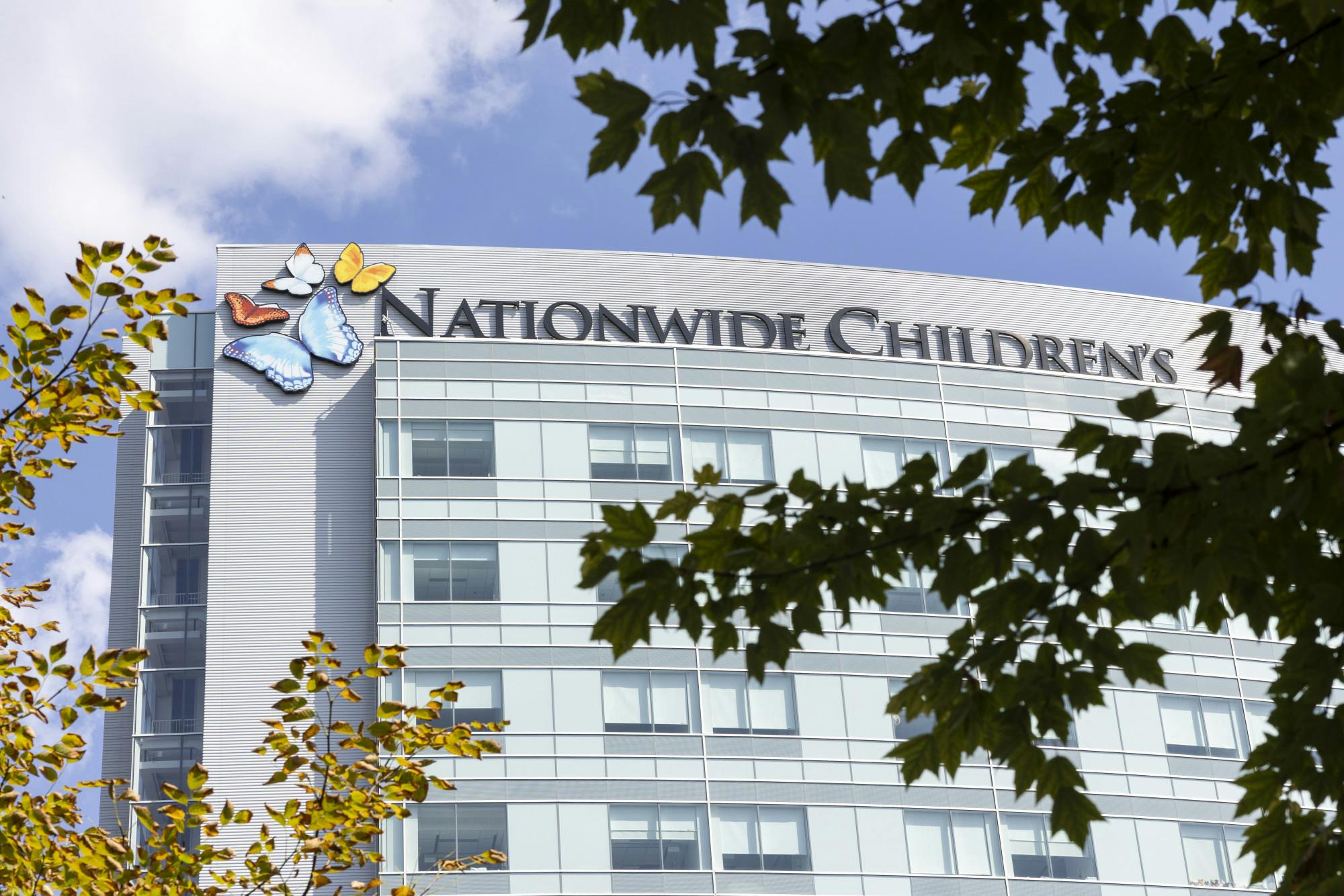
The Joe Burrow Foundation recently partnered with Nationwide Children's Hospital to develop the Burrow Blueprint, a program that aims to provide and support mental health treatment within schools in Appalachian Ohio.
The Joe Burrow Foundation is a non-profit established by NFL Cincinnati Bengals quarterback and Athens native Joe Burrow, and his parents, Jimmy and Robin Burrow. The foundation is built on two main missions: hunger relief and supporting youth mental health.
Robin Burrow, secretary-treasurer and director of program development of the foundation and Joe Burrow’s mother, taught in Athens City Schools before working as a principal in Meigs County. She said in the past 15-20 years working in schools, she noticed performance and behavioral issues in the classrooms. She said the rise of technology and the COVID-19 pandemic have contributed to the rise in students suffering from mental health problems, and those issues often cause challenges in the classroom that disrupt student learning.
Christine Suniti Bhat, professor of counseling education at Ohio University, is a licensed professional counselor and school counselor who previously served as president of the American Counseling Association. Bhat said students suffering from mental health issues are often not able to perform to the best of their ability.
“They may feel this sense of guilt that they're not doing enough,” Bhat said. “So it definitely compromises the learning environment and would affect students' learning, because a student that's struggling with depression or anxiety would find it very hard to concentrate on their schoolwork.”
Robin Burrow said children in rural schools often have difficulty getting an appointment with medical professionals to address mental health issues.
“The wait times for our students to get in to see a professional were months,” Robin Burrow said. “I mean, four months, six months, eight months, sometimes a year to get in to see a child psychiatrist.”
According to the National Rural Health Association, the rural physician population is aging and will see more difficulty retaining physicians, with a projected 23% decline in rural physicians by 2030, due to retirements.
Rural counties in Ohio have a lower percentage of primary care, dental and mental health providers per capita than the state average, according to the Health Policy Institute of Ohio.
Bhat said the issue can be tied to a lack of funding, as well as the difficulty in finding the resources that already exist.
Nationwide Children’s Hospital has been working to remedy the issue for over 10 years, and began with a pilot program that established school-based clinics to serve students and families of the surrounding community.
The school-based clinics were found to be extremely beneficial for local communities; however, many physicians felt unqualified to treat mental health issues. Mary Kay Irwin, senior director of school-based health at Nationwide Children's Hospital, commented on this issue.
“When somebody goes through training to become a primary care provider, it's within the scope of their license that they are allowed to do primary care mental health,” Irwin said. “A lot of the primary care providers say I just am not comfortable, even though my license technically allows me to do it, I don't feel like I have the expertise to do it.”
Nationwide approached the Joe Burrow Foundation and proposed a collaborative effort to develop learning modules to help school-based clinicians feel more comfortable diagnosing and treating mental health issues.
The Joe Burrow Foundation chose to fund the program, allowing Nationwide to hire an E-Learning developer to create nine virtual modules of mental health resources and content. Irwin discussed how these modules equip clinicians with the knowledge to diagnose and treat mental health issues within school systems.
“We also teach them how to do this embedded in a school system,” Irwin said. “So how do you work with the teachers and the school nurses and the school social workers. So they funded that.”
Each module is under 60 minutes long, and Nationwide recommends the physicians meet with Nationwide staff every two modules to discuss the content and take part in case discussions.
The Joe Burrow Foundation funded the development of the learning modules and the implementation of the program into school-based clinics. The amount of funding is undisclosed, but it covers the cost for schools and physicians.
Bhat expressed her excitement regarding the Burrow Blueprint.
“I think it's a game changer for rural Appalachia, because in addition to the mental health services, they are looking at an integrated care model so that medical, physical health and medical services are also available to students with whatever primary health care needs that they might have,” Bhat said.
Nationwide and the Joe Burrow Foundation announced the Burrow Blueprint on Aug. 12, and started with 20 school districts in the Appalachian region. As of Nov. 6, Robin said the number has increased to now 37 Appalachian schools.
Irwin said Nationwide is currently putting the cohorts together, and people are just getting started. She said the process will take months to ensure physicians fully understand the material.
Jimmy Burrow said the Burrow Blueprint ties back into the foundation’s overall mission, which is to battle food insecurity and mental health issues in the Southeast Ohio region.
“The whole thing started with the Joe Burrow Foundation because of Joe's speech at the Heisman when there were about 31 seconds where he devoted to food insecurity in Southeast Ohio, and Joe realized he had a platform to make a difference,” Jimmy Burrow said. “Then our family, Robin and I, realized that we could all have this platform to make a difference. There's a lot of food insecurity in Southeast Ohio, and a lot of times that leads to children's mental health issues, so it really was full circle for us.”
The Joe Burrow Foundation has already begun implementing the Burrow Blueprint program in Baton Rouge and is planning to do the same in Cincinnati.