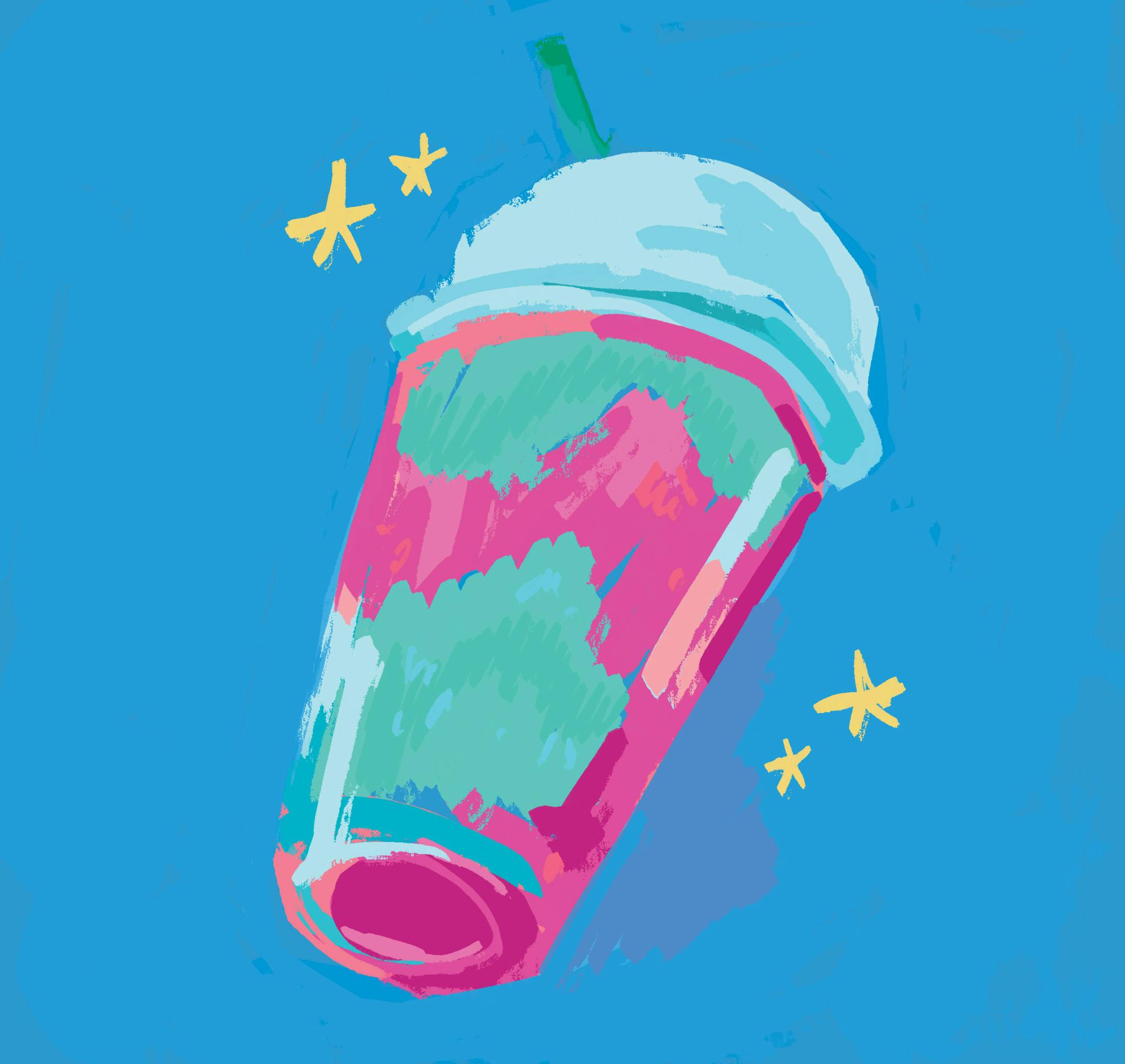
The original Unicorn Frappuccino was released April 19, 2017. This iconic Starbucks drink became a major cultural phenomenon, especially online on apps like Instagram, Facebook and X.
The release of the Unicorn Frappuccino capitalized on the popularity of unicorns in 2017, prevalent in fashion and food trends. With such a unique name, the Unicorn Frappuccino raised questions about what the drink tasted like and what unicorn-like qualities it had. The frappuccino’s pink cream base featured a mango flavor, with a sour blue drizzle. When the drizzle was mixed in, the flavor changed from sweet to sour.
Starbucks’ Unicorn Frappuccino was only available in stores for five days. However, many locations ran out of supplies, creating hype around the drink and cementing its spot in the collective memory on the internet.
Due to the nostalgia many have for the Unicorn Frappuccino, the drink returned to Starbucks locations from Aug. 15-16. A combination of internet buzz and sentimentality for the popular beverage led to the great success of the Unicorn Frappuccino.
Starbucks sold over 2 million Unicorn Frappuccinos during its limited-time rerelease. In fact, Aug. 15 was Starbucks’ largest Saturday sales day ever for its North American locations. Other regions sold lots of these drinks as well, with 75,000 sold in the United Kingdom alone.
When strange culinary phenomena like this occur, it can lead some to wonder what exactly causes so many people to be so enticed. For the Unicorn Frappuccino, there are several factors that led to its success.
Firstly, the drink’s neon pink and blue coloring is very novel. More importantly, it stands out extremely well on social media feeds. For large corporations like Starbucks, there is perhaps no easier and more effective way to market than to create something so attuned to social media that customers will promote the product themselves.
Additionally, the limited-time run of the frappuccino, both times it was released, creates an artificial scarcity of the product. Along with this, the drink’s divisive sweet and sour flavor built controversy, leading to more social media discussion. All factors considered, it is no wonder that the Unicorn Frappuccino was so popular.
However, many Starbucks baristas took to social media platforms to complain about the difficulty of making such a complex drink and the volume of customers. These complaints were prevalent both times the Frappuccino was in stores, and raised concerns for the sustainability of fast-food locations running intense short-term marketing campaigns.
Requiring extra steps and colorful, messy ingredients, the Unicorn Frappuccino has not secured a good reputation among baristas. Aside from this, baristas have also taken issue with the number of new drinks that have been added to the regular menu this summer: the Butterfly Drink, blended refreshers and the S’mores Frappuccino, just to name a few. Baristas have begged customers on social media not to order the Unicorn Frappuccino and other complicated drinks, which may seem to put a damper on the future of unusual food campaigns such as this one.
Despite this, it does not seem likely that such marketing tactics are going anywhere. Eye-catching food promotions are nothing new; take 7-Eleven’s Bring Your Own Cup Day, for example. This recurring stunt has been going on since 2015 and does not seem to be at risk of elimination. Similar stunts to the Unicorn Frappuccino occur regularly at many fast food restaurants to promote movie releases, especially children’s movies.
So, unfortunately for the fast food employees of the world, it seems that customers can look forward to more quirky marketing schemes for the foreseeable future.