

On Feb. 11, the Ohio University Turning Point Chapter held its first off-campus meeting to discuss the chapter and address several questions. According to Turning Point USA’s website, there are over 3,500 campuses represented across over 2,000 student groups.
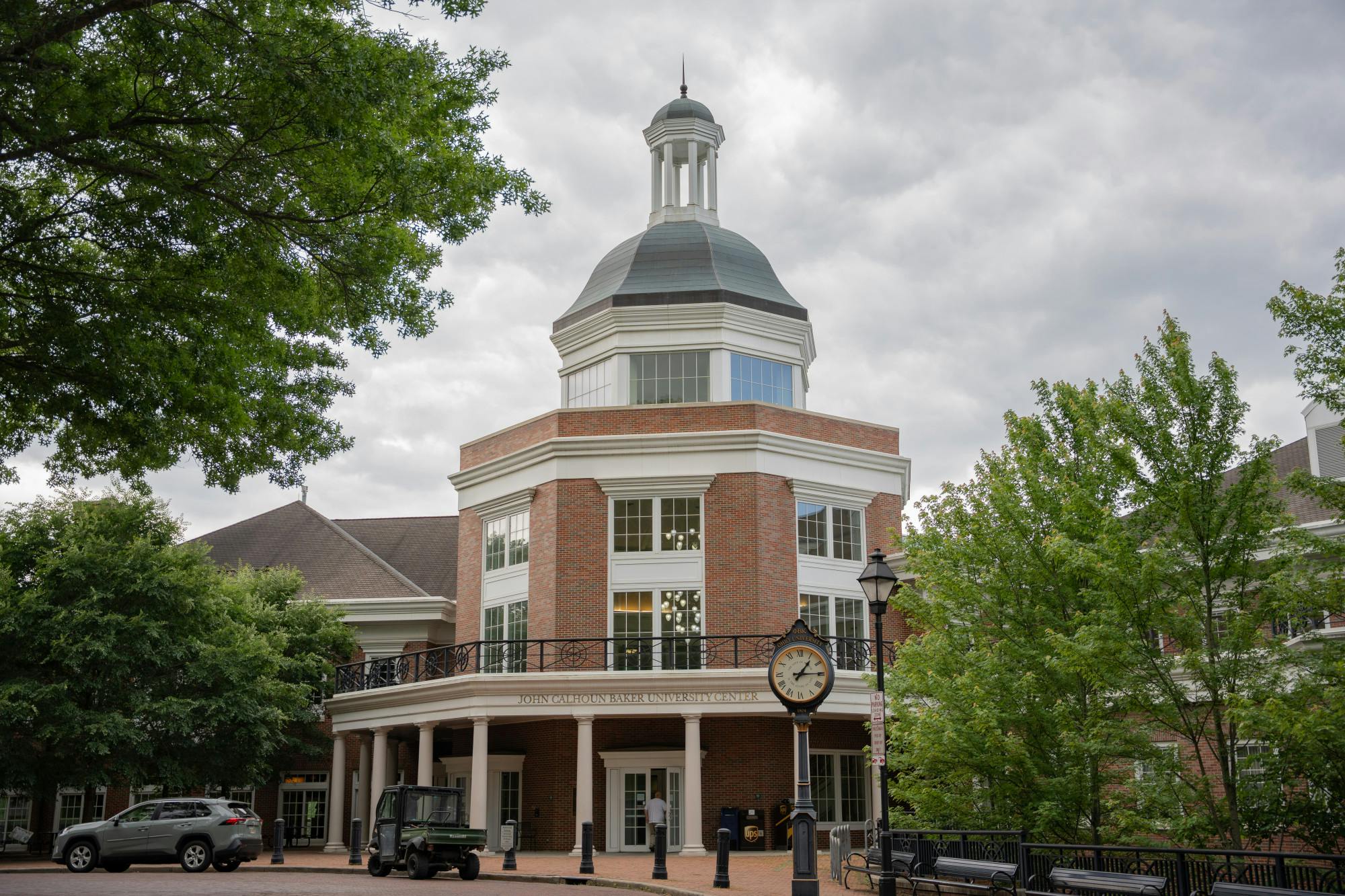
On Feb. 2, the Turning Point OU Chapter tabled in front of Baker University Center to recruit and inform Bobcats of its mission. On the platform YikYak, an anonymous messaging app for a region or college, students expressed their disapproval of the chapter, and some threatened the group with violent remarks.
The Ohio University Police Department released a statement via Facebook on Feb. 3 regarding the situation, and said it took a report the day prior and was actively working on investigating the case.
To start the chapter’s first meeting, the president, Mia Grossholz, a junior studying general studies, said the chapter is currently not recognized by OU as an organization. Grossholz said they are currently working toward holding meetings on campus.
“We’re trying to spread conservative values, but not trying to tell you who to vote for,” Grossholz said. “We’re nonpartisan, and that means we’re (not going to) side with one candidate.”
Vice President Sydney Ryan, a sophomore studying political science pre-law, Secretary Avery Barker, a junior studying communications, Treasurer Ben Smith, a senior studying finance, and Communications Director Reagan Daley, a junior studying political science pre-law, were the other executive members present.
At the first meeting, 11 attendees were present, including the executives, many of whom declined any comments or interviews with The Post.
The group discussed three questions related to their mission, and first asked the room whether they believed controversial speakers should be allowed on campus. Ryan said she thinks it is important to hear both sides of an argument to better understand where each person is coming from or to strengthen a point.
During the meeting, Daley said many people believe college students have the resources to be more intelligent and well-informed on political and social issues, so it makes sense to “pressure” students and debate their beliefs.
Barker said she thinks it is important to have controversial conversations in order to understand the other side, although there is a “fine line” between how two individuals might see a topic as controversial.
“Some of the comments that we were experiencing last week, that's unnecessary,” Barker said at the meeting. “I think that controversial topics and speakers are very important to have.”
The executives also asked the room if they felt students were self-censoring in terms of their political and conservative values. Grossholz said she thinks she must self-censor in order to keep the peace in her workplace.
Ryan said people often categorize others based on a statement or a single political opinion. She said people often assume things based on a portion of information, but they are unaware of where one stands on a particular issue from one opinion.
Ryan spoke about her own work experience, and said she works with “a lot of liberals” and expressed her frustration with not being able to respectfully share her own opinion without being attacked.
“I sat there and thought, ‘Why are they able to voice their opinion and what they think, but I have to sit here and be quiet?’” Ryan said at the meeting. “So then I voiced my opinion … I got called a fascist and a Nazi, and it wasn’t anything to do about the president. It didn’t have anything to do with the current administration, nothing, and it’s like categorizing off of one simple belief.”
Daley said she thinks it is interesting how Turning Point did not have a “bad label” before conservative activist Charlie Kirk was assassinated Sept. 10, 2025. Since the event, Daley said people are too focused on negative online opinions about Turning Point.
The final topic the group discussed was whether professors should reveal their political biases to their students.
Ryan said many sources are available to students for learning about specific topics, and if professors want to express their opinions, they should feel free to do so.
“The professor should make a point to say, ‘Although I believe this, I am still open to hearing what everyone has to say,’” Ryan said.
Barker said her father taught American history for 11 years and kept his political beliefs hidden. Barker said a professional’s job is to “guide” political debate and conversation in class.
The group also discussed Immigration and Customs Enforcement and media bias, talking about the importance of looking at multiple sources, as well as the full story. To wrap up the meeting, the executives expressed the importance of unity and getting along with those with different views.
Daley said all of her hometown friends hold liberal views, and it’s “insane” how some people lose friends over their beliefs. Ryan said many things are “not as deep” as they seem, and people should find peace in a disagreement rather than fighting, to live civilly.
Gunnar Isphording, a freshman at Athens High School, was present at the OU Turning Point meeting Feb. 11. Isphording said he heard of the meeting from a friend and wanted to connect with others of similar opinion.
Isphording said it was nice to attend the meeting, as he has been wanting a community like this.
“I think it's just important to hear people's opinions,” Isphording said. “Obviously, in Athens, it's a bit harder to find people similar to the way that I think, and it's nice to group up with those people and be around those people, because they're your people.”


