

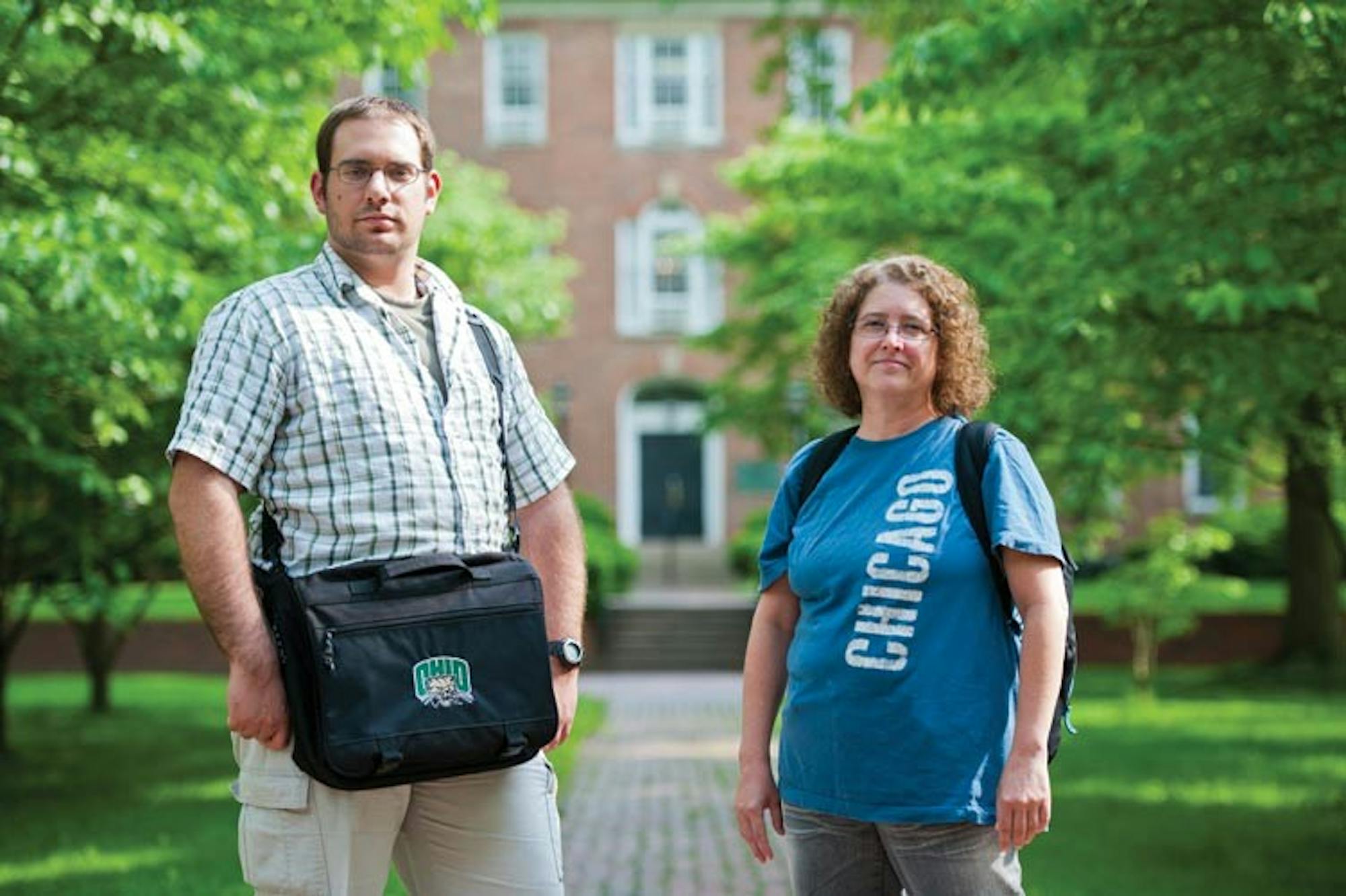
With differing lifestyles, making the grade as a non-traditional student may be more difficult than it is for the average undergrad.
Currently, non-traditional students make up 26 percent of the undergraduate student population — a number that has steadily risen over the course of the past decade. Grading how well the university has made acclimating to college life for those students can be just as difficult.
“Historically, we haven’t really focused on non-traditional students,” Ohio University’s Dean of Students Ryan Lombardi said. “We’ve really seen that growth in the last four to five years and we’ve been trying to catch up.”
Going from the real world back to college life changes the way peers view each other, said Ed Gaither, a senior studying specialized studies.
“The social aspect was highly different,” Gaither said. “I was dealing with the 18 to 20 year old age range while I’m at a different stage in life. You go from high school where you develop to college where you develop. You’re forced to go back to that level of maturity and now, you’re seen as more of the parental figure.”
Finding ways to integrate into the student campus was challenging and often frustrating, he added.
Some non-traditional students felt the university fell below par when it came to helping them transition into college life, said Shmuel Roth, a first year graduate student in the public administration masters program.
“I was put into the same orientation as freshman traditional students,” Roth said. “I was instructed like an 18-year-old that was moving out for the first time. I moved out eight years ago. The content that was covered at the orientation was not relatable to me at all. There was nothing of value to me.”
Recently implemented programs such as the Commuter’s Lounge in Bentley Hall are geared to help non-traditional students adjust, but efforts moving forward should be policy-based, said Lombardi.
“I think it goes beyond (lounges),” he said. “It goes with a change in mindset.”
For first-year graduate student Peggy Morgan, life prior to going to college for the first time brought perspective from what the real world was like.
“I entered college for the first time at 44,” said Morgan, who is in the environmental studies masters program. “When you’re a non-traditional student, you have priorities. I had to think about rent, putting food in the cupboard and taking care of a family.
“I married young and had a family after high school. I never had the opportunity to go to college. Now, I’m the first in my family to graduate.”
Forming friendships in school posed a different kind of challenge as most traditional students lived in residence halls, but there were some friendships that were established, said Morgan.
When it comes to changing policy, Lombardi said some of that can come from ideas brought forth by the non-traditional population.
“Often you try and figure out by how many students are going to be impacted by decisions,” he added. “The extent of that service might vary depending on what portion of the population is going to be affected.”
Though those suggestions do fall through, Gaither said there are programs that could be put in place to ease the transition.
“There should be a college adjustment program that tailors to non-traditional students’ needs because we do have different needs than traditional students,” he said. “There’s always room for improvement.”
hy135010@ohiou.edu


