Ohio’s new semester system might not be a hit with the student body, but it is working in the Bobcats’ favor when it comes to handling gridiron collisions.
Once players wrapped up their academic quarter under the university’s old system, some would take a step away from the gridiron, heading home to enjoy the holidays. Now, since the semester runs through the middle of December, John Bowman, Ohio director of sports medicine services, will have a better eye on Ohio’s student-athletes.
“If we went to a (Mid-American Conference) Championship game and then had a break, they went home and then you didn’t get to see them or do a lot with them, so this is a lot better for us,” he said, reflecting on the Bobcats’ quarter system schedule.
The 2012-13 season has been a perfect storm for the Bobcats’ sports medicine staff, as Ohio’s bye week came at an opportune time, as well.
A week eight lapse from play was just what the doctor ordered for the Bobcats, giving players a chance to spend time away from the field turf of Peden Stadium, which many used to soak up extra sessions in its athletic training facility.
Bowman said the bye week was used to treat injuries of varying severity and nature, as remedies ranging from ice baths and rest for nagging pains like turf toe to injections dealing with chronic pain were prescribed.
Ohio redshirt junior running back Beau Blankenship said that though he and his teammates like to avoid the training facility for obvious reasons, he appreciates the work that the trainers put in and the relationship they build with players.
“We spend so much time with them — hopefully you don’t see them too much — but they take care of us,” he said.
Five players also underwent MRIs to identify whether they would need postseason surgery for reoccurring injuries such as cartilage tears and the like.
The most positive impression left following the bye week was not on players requiring extensive care, but those who had nagging injuries resulting from a month of two-a-days and seven straight games.
“For the most part, it’s been a lot of rest and modality treatment that we would normally be doing with guys,” Bowman said. “We’ve just been fortunate that we had this time where we can rest them more than one or two days. We can rest them for four or five days, which has been really good for their bodies.”
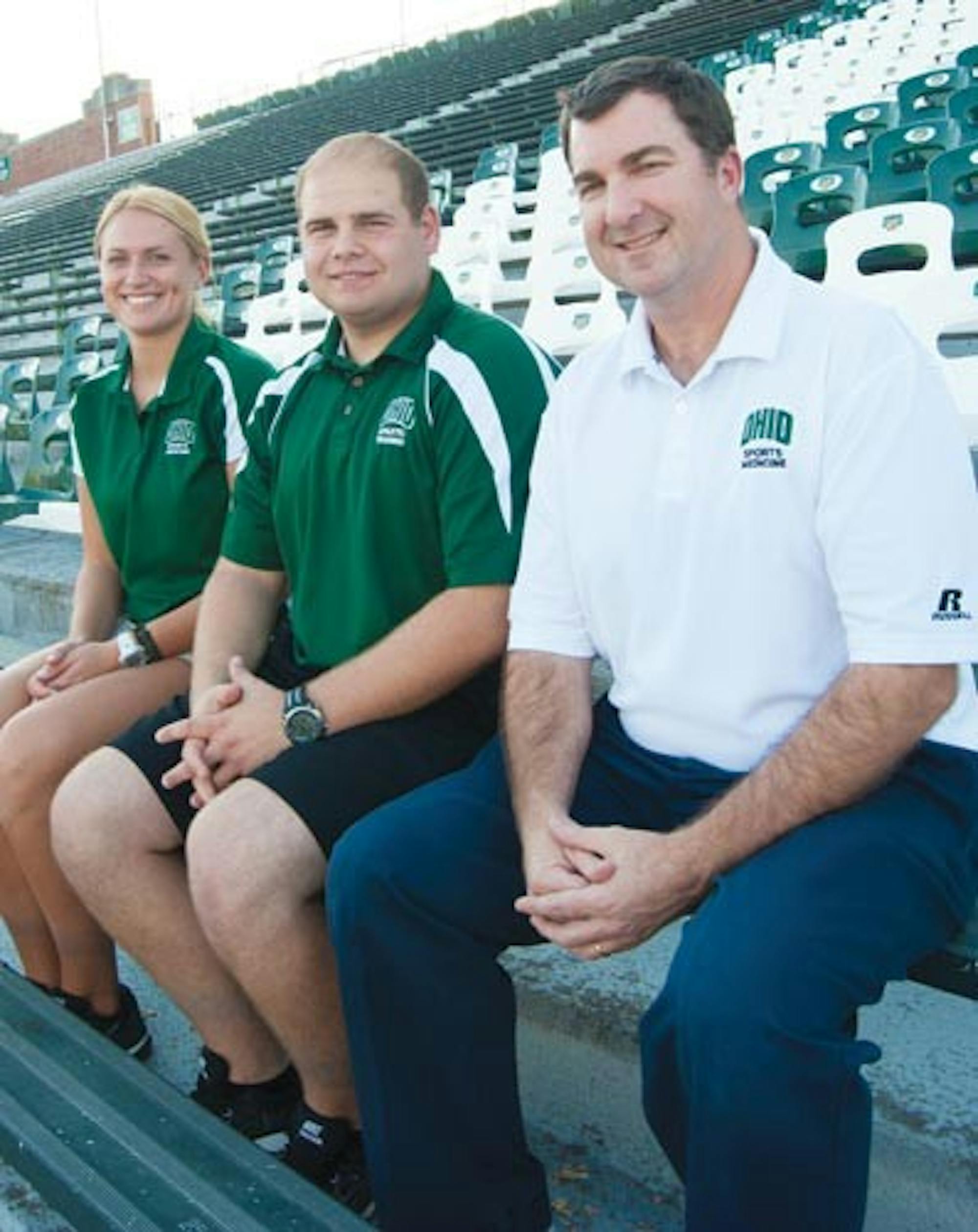
The Bobcats’ sports medicine staff employs just more than a dozen individuals, nine of which are undergraduate athletic training students. Only a handful of trainers travel with the team, where they set up what Bowman called “satellite athletic training” and “injury response” areas in hallways of opposing stadiums.
Kevin Silva, a second-year graduate student studying athletic training and one of Ohio’s two graduate assistants, said mentoring younger trainers is equally gratifying to the results he sees on the field.
“It’s rewarding to take students that haven’t necessarily had a lot of clinical experience and being able to show them what we do,” said Silva, who works primarily with Ohio’s defensive line. “It’s not only just skills, but everything else. It’s how to be an athletic trainer and act and take care of patients with that confidence.”
Amy Wyke, a first-year graduate student studying athletic training that works mostly with the Bobcats’ offensive lineman, said the players “kind of see me as a mom” — a role she has welcomed because of the relationship she has been able to develop with the team.
“You can’t really take offense to everything they say or really listen to everything,” she said, jokingly. “It’s a good experience athletic training-wise because you see the most injuries in football and get the most out of it.”
The bond between player and trainer is deep, especially between those who have a long history together. Eric Herman, a redshirt senior offensive lineman, called Bowman, who he has worked with for five seasons, his “go-to guy” and a primary reason he has been able to start a team-high 45 straight games.
“The training staff has 100 percent to do with why I’ve been in the game so long,” he said.
jr992810@ohiou.edu