

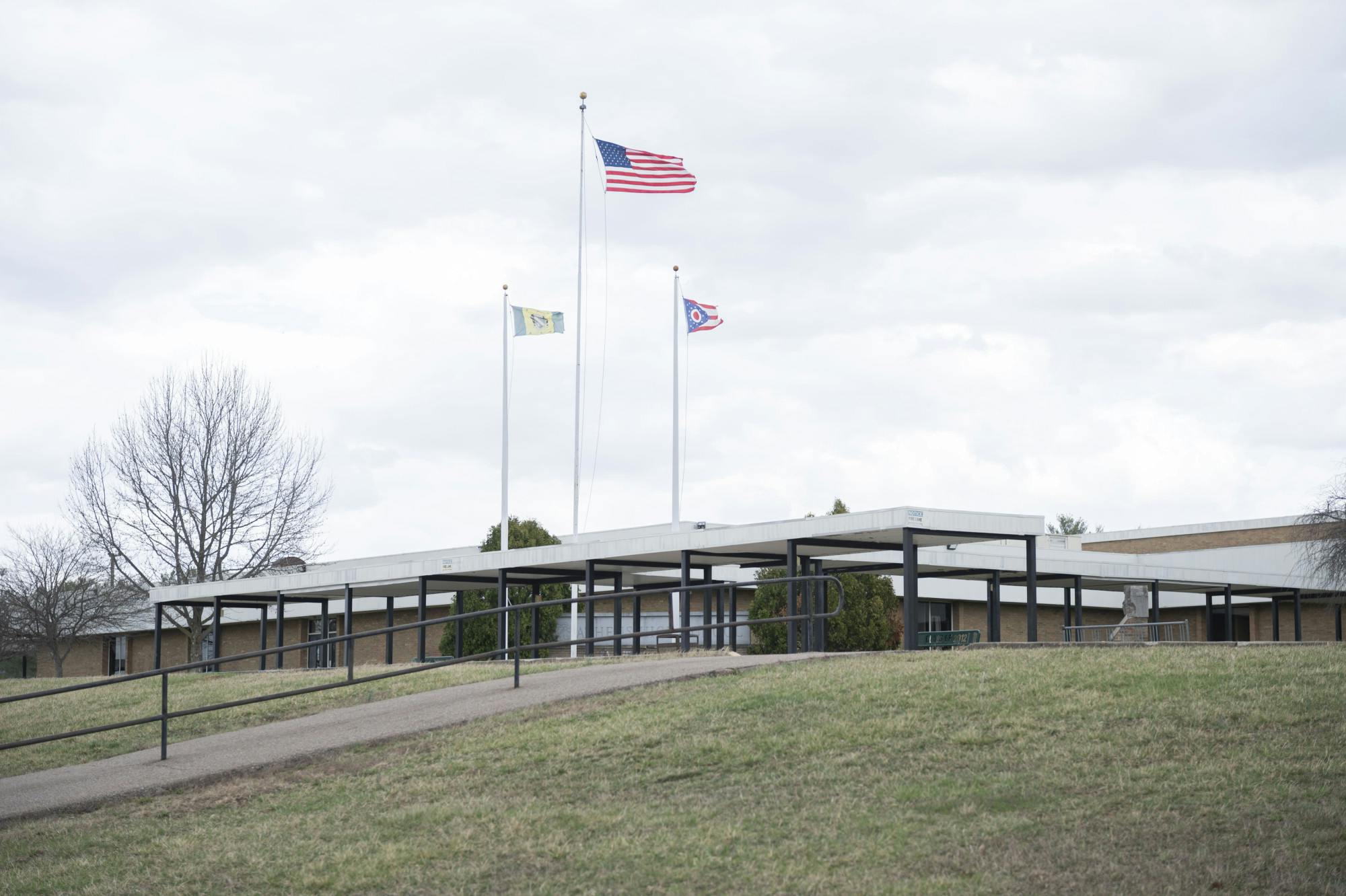
The Athens City School District is training staff on how to respond if Immigration and Customs Enforcement agents conduct operations near schools, following questions raised at the January school board meeting.
During the meeting, Superintendent Chad Springer was asked whether the district could provide training for teachers in the event they encounter ICE agents. Springer said the district has received questions over the past year about how schools should respond to ICE activity, concerns that intensified following Operation Buckeye in Columbus, ICE activity in Minneapolis and a recent statement from the Ohio Education Association.
The Ohio Education Association issued a press release Jan. 15 titled “Keep ICE away from public schools,” in which OEA President Jeff Wensing wrote the organization “strongly opposes any presence or enforcement actions by Immigration and Customs Enforcement (ICE) in or around Ohio’s public schools.”
The statement followed ICE activity in Minnesota, where attendance dropped significantly at some Minneapolis schools as families feared enforcement actions, according to the Associated Press. Reports of detained students, including 5-year-old Liam Ramos, heightened concerns.
The OEA statement was also released less than three weeks before the temporary protected status of Haitian immigrants was initially set to end. According to the American Immigration Council, between 12,000 and 20,000 Haitian immigrants live in Springfield, Ohio, where the community expressed concern that ICE would increase enforcement once TPS expired.
A federal judge has since extended TPS indefinitely, though the Trump administration has said it plans to appeal the decision, the AP reported.
Gov. Mike DeWine, who opposes ending TPS for Haitian immigrants, said the Department of Homeland Security would provide a 24-hour notice if there were a significant increase in ICE activity in Springfield, as reported by the Springfield News-Sun.
Concerns were further heightened in Ohio following December ICE raids in Columbus, known as Operation Buckeye, according to a previous report by The Post.
Concerns about ICE activity have also affected Ohio University students. Abby Haffke, a freshman studying political science, said international students were afraid to leave their residences during rumors of ICE presence on campus last semester.
“All students deserve the right to study here, regardless of where they’re from,” Haffke said.
In response, Springer emailed district staff outlining school policies for interactions with law enforcement, including ICE. The guidance states Springer is the district’s primary point of contact for ICE officers, and student records cannot be released without written parent permission, a judicial subpoena or a judicial search warrant.
The email also explains the reverse evacuation procedure, which directs students back into school buildings without initiating a lockdown. The measure is used to protect students from potential threats and unsafe situations outside.
Springer is meeting with staff at individual schools to review the procedures and answer questions. He also plans to meet with custodial staff and bus drivers to review the policies.
“When we do safety training, we always train with teachers, and not necessarily with custodians, who play a very vital role in this,” Springer said. “That's my process so far, and I'll finish those meetings over the course of the next week and a half.”
The guidance includes procedures for bus drivers who may encounter ICE activity while on routes. Springer said meetings with custodial staff and bus drivers are scheduled for Monday.
After meeting with all district staff, Springer plans to notify families about the district's procedures.
“What if I'm at dismissal, and a police officer or immigration officer says, ‘Hey, I need to talk to that kid?’ Those are the conversations we're having,” Springer said.


