

For some college students, the first legal document that they sign is a lease — a milestone that can be as exciting as getting a driver’s license.
But like a car, a house requires maintenance; yet some tenants have not had much luck receiving help from their landlords when maintaining their homes.
When taking legal action against a landlord, the process begins with at least one tenant sending a written notice to the landlord that something is physically wrong with the property, Athens County Municipal Court Judge William Grim said.
“It has to be something specified in the lease (and must be) remedied in a reasonable time or in 30 days, whichever comes sooner,” Grim said. “For example, if there is a flood, 30 days is not reasonable.”
He said that the municipal court typically sees an average of about a half dozen cases against landlords, known as escrow cases, each year.
Athens County Municipal Court Clerk Pam Walton said that there have only been two rental escrows since Jan. 1, 2013.
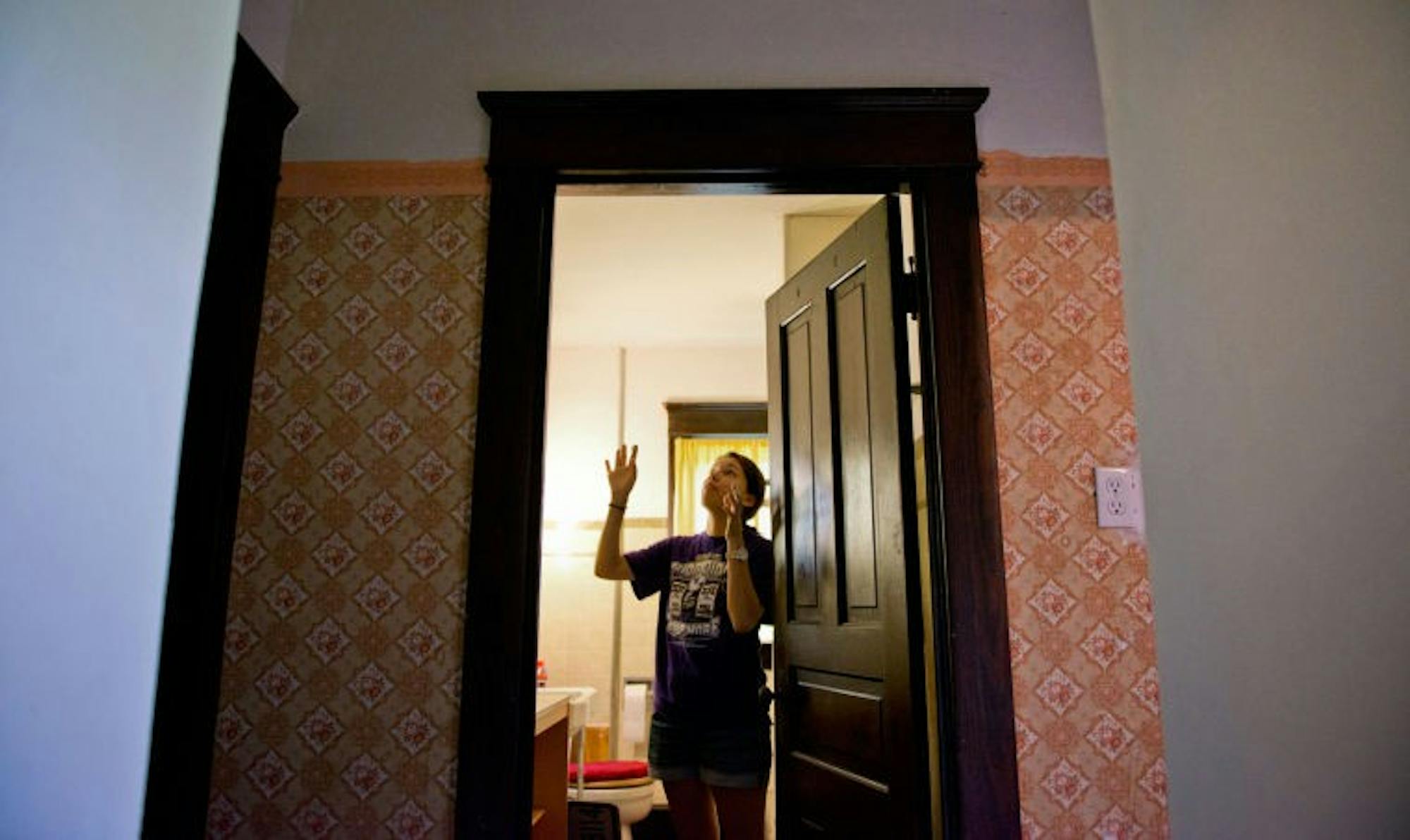
“Frankly, he didn’t seem to care,” Katie Spector, an Ohio University fifth-year student said in a previous Post article of her landlord’s attitude toward the problems in her Grosvenor Street home. “He doesn’t take initiative on anything.”
John Rinaldi of Rinaldi Rentals, Spector’s landlord, did not return The Post’s calls or emails by press time.
Spector, a former Post employee, and her two roommates, May Muth and Stephany Herman, took their escrow case to the Athens County Municipal Court on Oct. 31. According to court documents, the three women claimed $1,200 in damages. That was after Spector said a health code report discovered 28 health code violations in their house.
Although Spector did not say whether she received legal advice, the Center for Student Legal Services, 50 S. Court St., offers legal advice for students for a fee of $12 per semester.
Pat McGee, managing attorney of the Center for Student Legal Services, could not be reached for comment by press time.
Another option that tenants have is rent withholding, which means that the court can grant tenants the right to keep part of their rent from the landlord. Instead, the money would be used for the cost of repairs or simply because a judge rules that the tenant should have been paying less for rent because the condition was so severe, Grim said.
Cases against landlords “usually involve some type of repair that needs to be done to the property, (such as the) water line or heat,” Walton said.
After the landlord responds to the tenant, he or she will either try to argue that the tenant was not the current renter of the property at the time of the incident or that he or she did not receive a written notice of the problem.
A landlord might also say, “Yes, those (problems) did exist, but I fixed them. Here’s proof that I fixed them,” Grim said.
@KellyPFisher
kf398711@ohiou.edu


