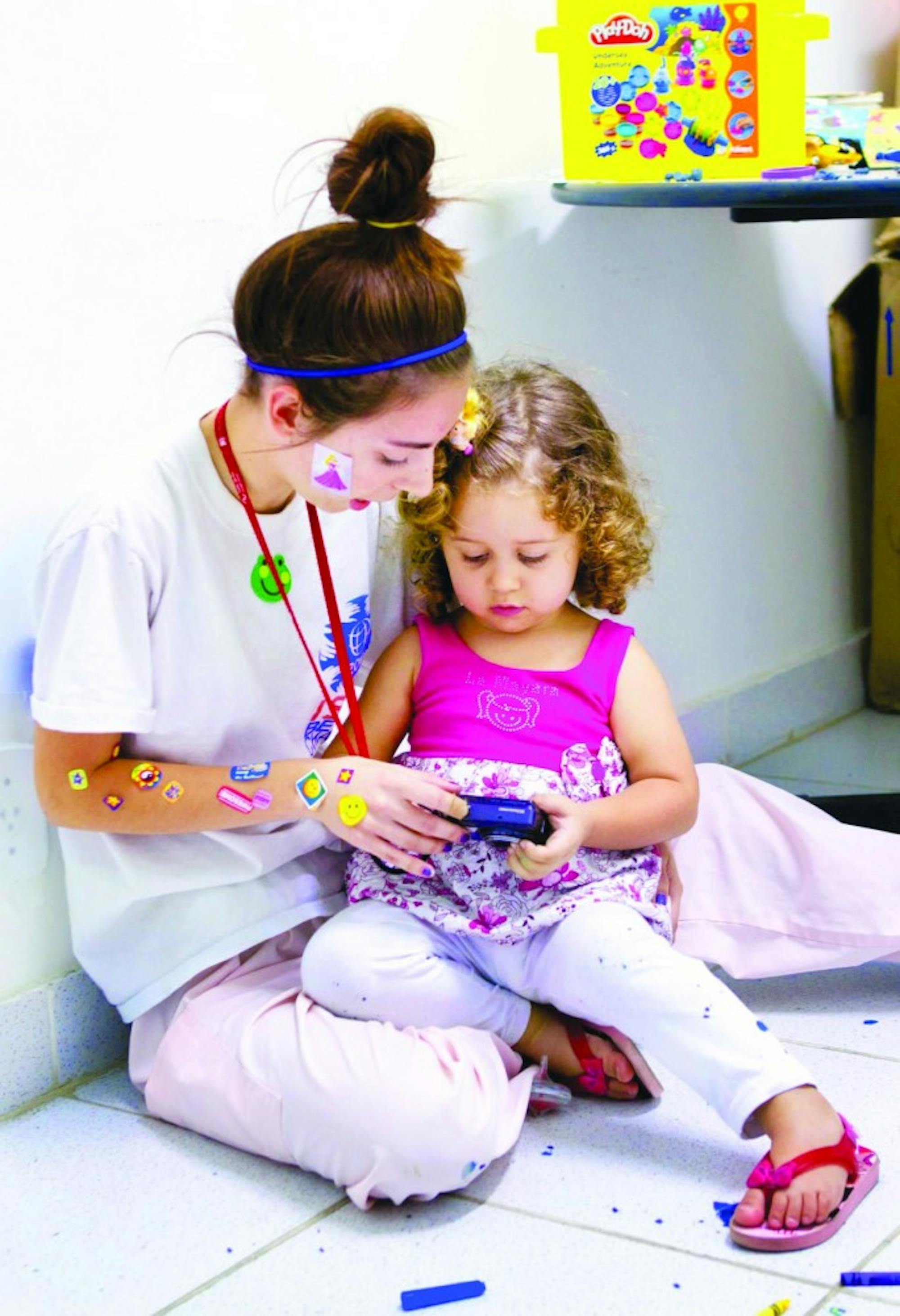
Operation smile raises funds to help children with cleft palates and/or cleft lips get reconstruction surgery.
Deciding how to feed a child is one of the first challenges for new parents. For those whose babies are born with cleft palates, this can be even more of a problem.
About 2,650 children are born with a cleft palate, a split in the top of the mouth, and about 4,440 have a cleft lip, a separation of tissue in the lip with or without a cleft palate each year, according to the Centers for Disease Control and Prevention.
Ohio University’s chapter of Operation Smile fundraises to pay for surgeries for children in remote areas throughout the world.
“It is truly life-changing and often lifesaving in each and every circumstance,” said Ann LaComb, the organization’s adviser, in an email.
OU’s chapter was able to sponsor a surgery, which costs about $240.
Adriane Baylis, a speech scientist at Nationwide Children’s Hospital said babies don’t experience pain from clefts, which are formed by tissue that never fused or healed when the child was developing.
Though the cleft does not harm the child, the first challenge that a baby with either a cleft palate or lip has is feeding. When feeding a baby with a cleft lip, some alterations are necessary, such as using special bottles.
“(There is) significant concern in a developing country where (breast-feeding) is often the only means babies can be fed,” Baylis said. “So there may be some creative ways that mothers modify their breast-feeding, or if they have access to special bottles and nipples that are designed for babies with clefts they will use those because that will help them feed the baby more quickly and efficiently.”
Operation Smile sponsors these surgeries to correct a cleft palate or lip.
“I love this club because it is a way for me to help children in need while spending time with some great friends,” said Hayley Horsley, a junior studying nursing and the president of OU’s chapter, in an email. “With many of us learning the way of the world of medicine, this is a contribution for us to feel like we have made a difference with our spare time.”
There are many surgeries that are a part of the journey of reconstruction.
“A lot of times you might do an initial surgery to close the cleft but then kids get bigger so you have other surgeries that you can do to really refine things,” said John McCarthy, associate professor of communication sciences and disorders. “Closing the cleft is a really important step.”
@annachristine38
ag836912@ohio.edu