
The opioid epidemic has quietly shaped daily life across Appalachia for decades. Although addiction touches every corner of the U.S., the burden in Appalachia is heavier and more persistent. At the start of the 2000s, overdose death rates in Appalachian counties mirrored the rest of the nation. By 2017, those same counties saw overdose death rates 72% higher than non-Appalachian areas, according to the 2019 Opioids in Appalachia report by the National Association of Counties and the Appalachian Regional Commission.
This crisis took root decades earlier, as the presence of prescription painkillers surged in rural communities in the 1990s and early 2000s. As medical providers increasingly turned to opioids for chronic pain, access soared while safeguards lagged. Prescription rates in Appalachian counties were 45% higher than in the rest of the country by 2017, according to NACo. Leftover pills became a pipeline to misuse: more than half of patients had unused medication, and most people who used painkillers non-medically got them from friends or family, according to a report by Governing.
Today, the human cost continues to grow. In 2023, opioid overdose deaths nationwide were 10 times higher than in 1999, according to the Centers for Disease Control and Prevention. Behind each statistic is a family and a community navigating loss, stigma and limited access to treatment.
To move beyond the statistics and examine what is being done in response, and whether those efforts are working, The Post traveled to West Virginia University in Morgantown to compare its approach, and that of Monongalia County, with Ohio University and Athens County. Both towns sit in the heart of Appalachia, and both face similar challenges, but their responses reveal how policy, resources and community partnerships can shape recovery in markedly different ways.
On campuses, the response to the opioid epidemic has centered on education and naloxone access. In communities, institutionalized treatment, recovery programs and group therapy have formed the foundation of local response, with differing results that raise the central question of this project: what actually works, and why?
Two campuses, two prevention playbooks
With comparable student populations and economic pressures, both OU and WVU campuses are taking active roles in addressing the opioid epidemic. Less than three hours apart by car, both universities serve about 20,000 undergraduate students and are located in counties classified as “high poverty,” according to the U.S. Census Bureau, where more than 20% of the population lives below the federal poverty line.
As a result, both campuses have centered their harm-reduction efforts on education alongside free access to naloxone, aiming to ensure students not only have the medication but also know how and when to use it. Naloxone distribution at WVU’s Office of Wellness and Health Promotion began in fall 2020 in partnership with the local county health department, according to Senior Health Educator Wesley Thomas.
At OU, five naloxone cabinets are spread across campus. The Office of Health Promotion and the Collegiate Recovery Community also maintain supplies for students and have distributed about 133 boxes of Narcan through cabinet locations and the main office.
At WVU, naloxone access is far more widespread, with 25 distribution locations across campus – five times the amount as OU – and almost half of them are located inside WVU student residence halls. Both schools also offer free fentanyl testing strips in various boxes and offices.
The WVU Student Health Clinic located in Morgantown, West Virginia, Nov. 20, 2025.
Together, the data suggests that while naloxone access and training alone cannot fully account for statewide declines, the states investing most heavily in layered, campus-to-clinic harm reduction are seeing the steepest short-term drops in overdose deaths.
While both campuses rely on naloxone access and education as their frontline defense, the scale and structure of those efforts reflect fundamentally different philosophies of prevention. WVU’s model prioritizes saturation and institutional integration, embedding Narcan into residence life and student organizations. OU’s approach is more decentralized, routed through offices and voluntary participation, making harm reduction available, but less unavoidable.
At WVU, Narcan training has been a part of resident advisor training for several years, and the Interfraternity Council requires fraternities to keep a naloxone kit on hand. At OU, Narcan training is not currently included in required RA training or listed as a part of their job responsibilities.
Although campus naloxone access alone cannot explain community overdose trends, statewide data still points to broader change. Overdose deaths in West Virginia fell 36% from January to July 2024 compared to the same period in 2023, according to the West Virginia Department of Human Services, reflecting expanded harm-reduction and education efforts also seen on WVU’s campus.
In Ohio, the decline has been more modest. The state recorded 4,452 unintentional drug overdose deaths from 2022 to 2023, a 9% decrease and the second consecutive year of decline following a 5% decrease from 2021 to 2022, according to the Ohio Department of Health. That drop exceeded the national decrease of 4% in the same time period, but it remains far smaller than West Virginia’s recent reduction. Illicit fentanyl was still involved in 78% of Ohio overdose deaths in 2023, highlighting both the progress and the limits of current prevention efforts.
At OU, most fraternity and sorority chapter houses keep Narcan on site and receive annual training on how to use it, according to Chris Medrano Graham, the director of sorority and fraternity life.
“We do this type of education for our Greek Community annually and are consistently providing training on high-risk behavior and prevention,” Medrano Graham said in an email.
Both universities also train faculty and staff, the scale and consistency, however, differ. At WVU, more than 100 faculty and staff members have received some form of naloxone training over the years, according to Thomas. That number, however, is only a fraction of WVU’s 8,346 faculty and staff, only making up about 2% of the population.
At OU that number is roughly three times higher than at WVU, with about 7% of the 6,023 faculty and staff trained when campus naloxone cabinets were first installed, according to Ann Brandon, the associate director of prevention and education in the Office of Health Promotion.
Providing naloxone is only part of the equation. Access alone is not enough, Thomas and Brandon said, stressing that students and employees must also be trained to use it in emergencies.
At WVU, naloxone education is built into the academic year, with multiple trainings offered during welcome week and at least one open training scheduled each month for students and employees, according to Thomas. Students and faculty can also request training for clubs or classes, and many first-year seminar instructors do so.
Students and employees at OU can similarly request naloxone trainings. Many first-year students participate in learning communities during their first semester, where alcohol and other drug education is incorporated into the curriculum with support from the Office of Health Promotion. Since 2022, there have been 4,375 students enrolled in a learning community, with 98% of the first year students being enrolled this year.
Despite these efforts, neither university requires mandatory Narcan training for students at any point during their academic journeys. As a result, the reach of overdose education remains limited by awareness, scheduling and student interest.
Staffing constraints further shape what both campuses can offer. OU’s Office of Health Promotion operates with two full-time staff and six to eight Bobcat Peer Educators. At WVU, Thomas said expanding education efforts requires broader campus partnerships, including student-led advocates who now assist with training.
In an overdose emergency, access to Narcan and the knowledge to use it can mean the difference between life and death. But the limits of the medication, the rise of non-opioid substances and capacity constraints continue to shape how far harm-reduction efforts can extend on both campuses. As the opioid crisis evolves across Appalachia, both universities remain in the process of adapting their approaches while balancing data, resources and student safety.

Two counties, two recovery roadmaps
Natalie Saddler | Slot Editor
Athens County and Monongalia County share more than just close relationships with their flagship universities, OU and WVU. In both, student populations drive the local economy and shape public health infrastructure. That dependence has positioned each university as a central player in how its community responds to the opioid epidemic, but the strategies that have emerged look different.
In Monongalia County, the response is heavily clinical and tightly measured. According to a county naloxone report, 582 people received substance-use-related assistance in October, and 291 Narcan kits were distributed that same month. This reflects both sustained overdose risk and a scaling harm-reduction system designed to meet it with frequent contact, medical supervision and accountability.
Athens County’s response is more community-centered and less medicalized. In 2023, the county’s opioid dispensing rate stood at about 40 prescriptions per 100 people, according to the CDC. Monongalia County’s 2023 rate was significantly higher at 59.6 per 100 that same year, though it has since declined while Athens County’s rate has continued to rise.
The diverging trends reveal a core tension in Appalachian recovery efforts: while Monongalia has leaned into treatment intensity and structured monitoring, Athens has prioritized peer support and recovery access outside formal clinical settings.
In Athens County, much of that work flows through Recovery Connections of Southeast Ohio, a nonprofit that provides non-clinical recovery support and connects people to long-term services. The organization operates locations in both Nelsonville and Athens, where weekly meetings offer people in recovery a consistent, substance-free environment focused on peer connection rather than medical intervention.
Executive director Chris McNeil said public visibility is central to the group’s strategy. Partnerships with local festivals including Nelsonville Music Festival and Paw Paw Festival, Recovery Connections and OU Collegiate Recovery Community create on-site sober spaces for attendees navigating substance use.
“A lot of festivals have alcohol and drugs, and sometimes people just need a break from that,” McNeil said.
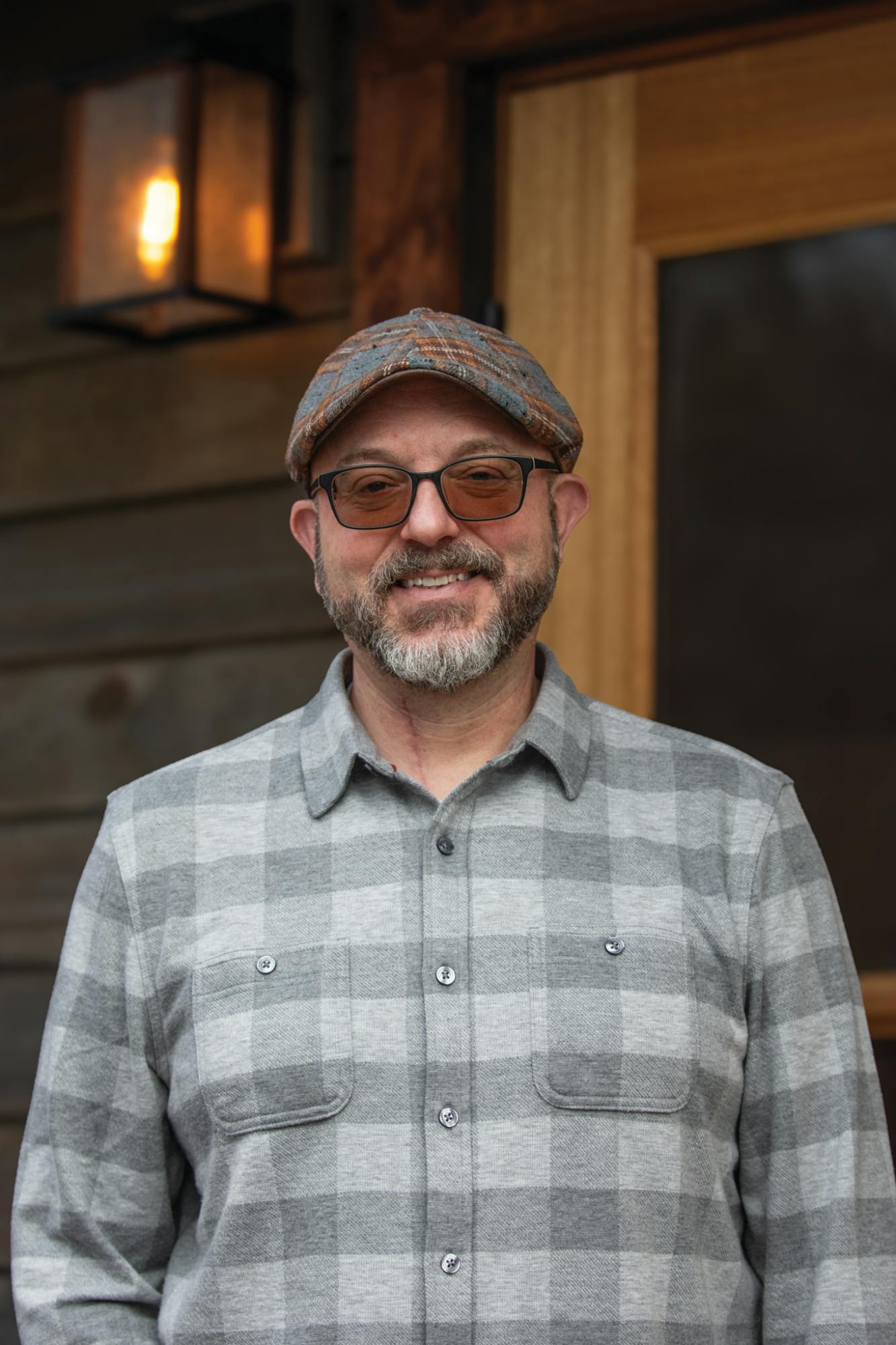
Chris McNeil poses for a portrait outside the Recovery Connections of Southeast Ohio building in Athens, Dec. 5, 2025
The model’s strength, accessibility without clinical barriers, is also its greatest limitation. Opioids carry one of the highest documented relapse risks among substances. DrugAbuse.com reports 91% of people recovering from opioid use disorder are at risk of relapse. For a system built largely around peer support rather than continuous medical oversight, that volatility presents ongoing challenges to long-term stability.
“That’s part of the brain makeup of somebody who has an addictive personality,” McNeil said. “I was like, ‘OK, I just need to get this under control.’ Well, my brain just wouldn’t allow me to do that without completely relieving it or getting rid of it.”
McNeil said OU’s role remains essential to maintaining momentum in Athens County’s recovery network.
“You can’t do anything in this town and ignore Ohio University,” McNeil said. “Reaching out to organizations to be a part of our events … has been a really good collaboration because the largest employer in town is the university.”
Monongalia County’s response, by contrast, is anchored in clinical integration through WVU Medicine, the Center for Hope and Healing and the Center of Addiction Excellence. Psychiatrist Jeremiah Hopkins works with both students and community members through the Comprehensive Opioid Addiction Treatment program, a structured treatment model built on frequent supervision and layered care.
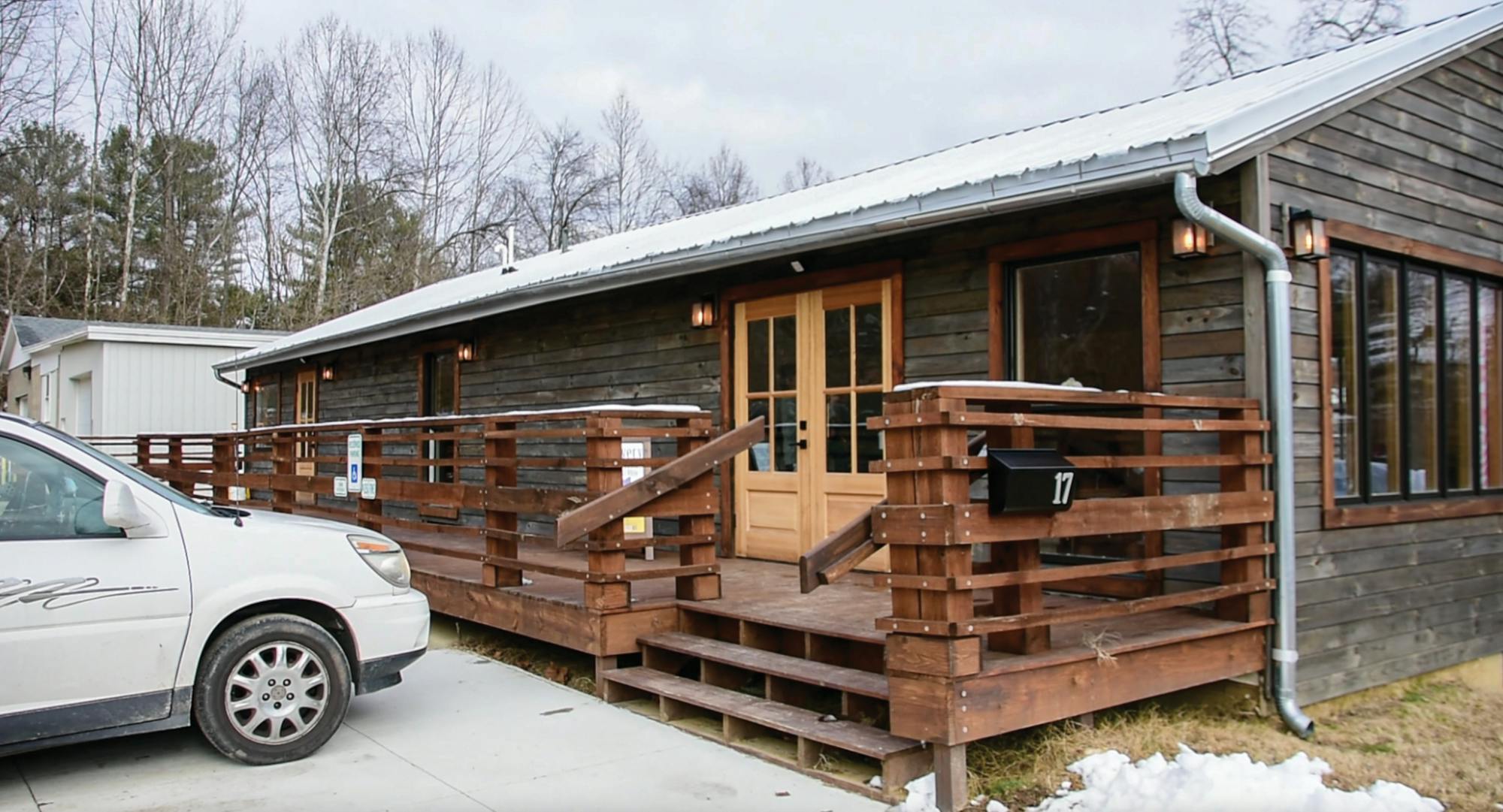
The Recovery Connections of Southeast Ohio building in Athens, Dec. 5, 2025.
Through COAT, patients receive coordinated services from a psychiatrist, therapist and case manager. Treatment typically begins with weekly visits, with intensified monitoring when relapse risk rises.
“More touch-base points means better accountability,” Hopkins said. “(Patients are) more likely to improve in the future as they progress through the program.”
Hopkins also pointed to Chestnut Ridge Center in Morgantown as a key facility offering multiple levels of inpatient and outpatient care based on patient need. Together, these programs form a tightly regulated clinical pipeline, one that prioritizes medical accountability and structure alongside harm-reduction access.
In two neighboring Appalachian counties facing the same epidemic, recovery has taken different shapes, one rooted in community connection and visibility, the other structured through clinical oversight and medical accountability. Neither offers a cure-all, together they reveal how the choices a community makes about response determine not only who receives help, but also what kind of help is possible. For students and residents on both sides of the Ohio River, those choices can be life changing.