

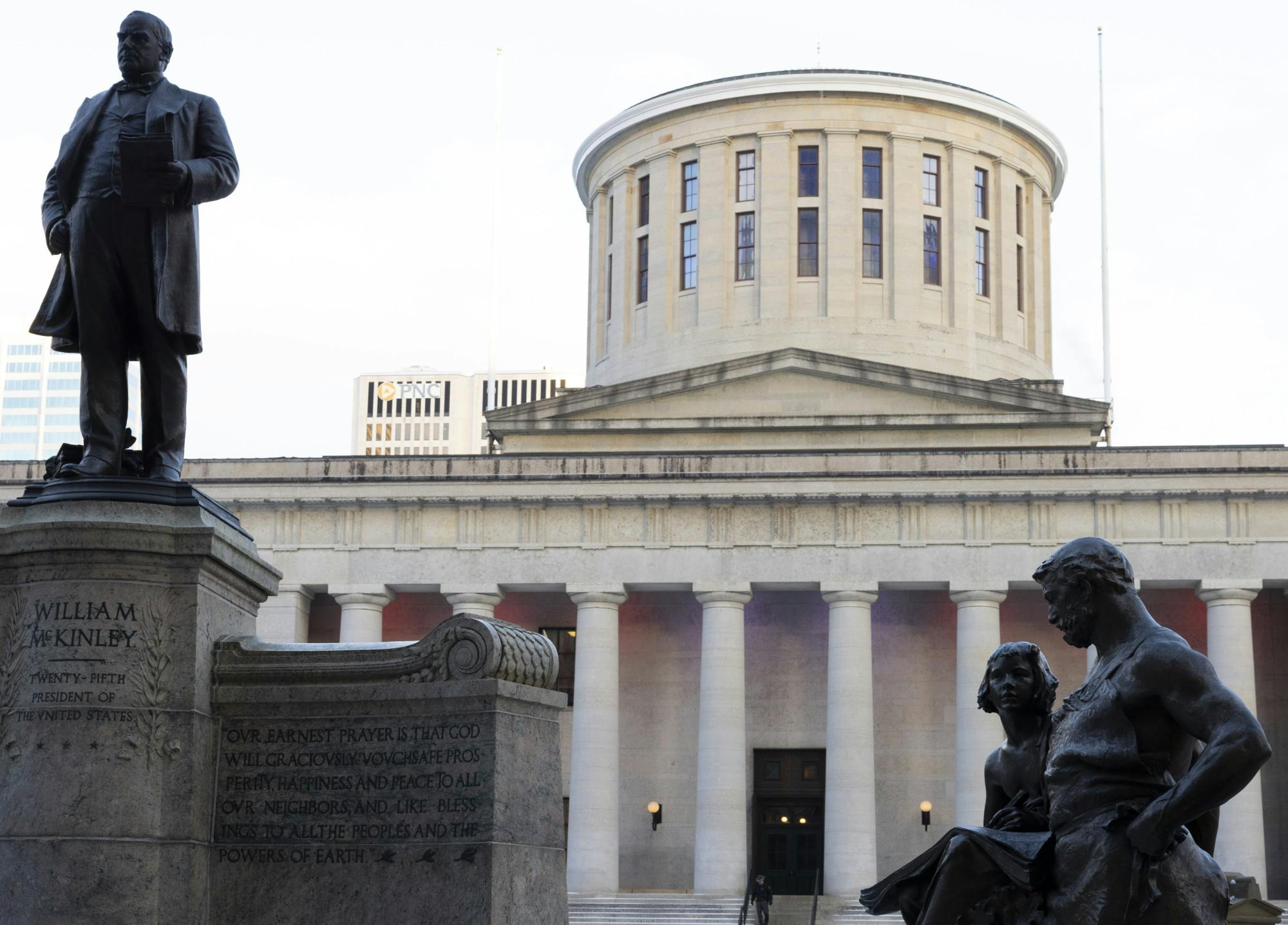
The Ohio House passed House Bill 96, the legislature’s budget bill for the fiscal year 2026-2027 on April 9. The bill is currently being debated by the Ohio Senate committees and, if passed, will go to Gov. Mike DeWine for approval.
The bill covers state funding for many programs, but some of the most notable points have been its proposed changes to education and public libraries. Many public school districts are specifically concerned with how the proposed budget will affect their funding for the next school year.
Malania Birney is a legislative services consultant for the Ohio School Boards Association, a nonprofit organization that advocates for Ohio public schools.
Birney said the section of the bill they are most concerned about is the 30% cash carryover cap. The House is proposing that any school district that has more than 30% of its expenses saved at the end of the fiscal year will have its income reduced.
Birney said she is concerned this will encourage reckless spending and the state will cut the budgets of schools that still need full funding.
“There is a fear that districts will be incentivized just to spend it, or else you lose it,” Birney said. “That’s not a great fiscal policy.”
Jared Bunting, chief finance officer of the Athens City School District, said he thinks Ohio lawmakers may want to impose a cap because they believe school districts are misusing state funds, but that is not the case.
“I believe that there’s this big misconception that we are hoarding money,” Bunting said.
Bunting said if Athens City Schools are unable to carry over money from the previous school year, they may have to take out loans to make payroll. He said he thinks Athens City Schools would have to change the way they handle their funds and be more careful with spending.
“It’s going to cause a lot of uncertainty, which is going to cause decisions that the school district makes to be a lot more conservative,” Bunting said.
Nick Tepe, director of Athens County Public Libraries, said HB 96 concerned library directors across Ohio because public libraries rely on state funding.
Tepe said Ohio libraries are among the best in the nation, being able to maintain a library in every county.
“We have had a long-standing partnership with the state of Ohio going back almost 100 years,” Tepe said. “The public library fund money that we receive from the state makes up half of our budget, so putting that at risk by removing it from statute was very concerning to us.”
The proposed budget would significantly change the way libraries are funded. Currently, public libraries receive tax funds, which are a dedicated percentage of the state's general revenue.
State lawmakers are proposing that libraries receive a specific dollar amount from the budget ($485 million in 2026), which would be less money than they currently receive.
Tepe said these lawmakers are tampering with a system that has been in place for many years, making the future of public libraries in Ohio highly uncertain.
“Our primary concern is that this destabilizes us,” Tepe said. “It makes us much less able to count on receiving this funding from the state … in the short term, it makes it a lot harder for us to plan.”
Tepe also said the budget bill proposes a new restriction on libraries where any books or materials discussing “sexual orientation and gender identity or expression” must be placed in a restricted section of the library. Tepe said he thinks the clause interferes with libraries' rights to operate and citizens’ rights to choose what they read.
“It’s up to the public to decide what of those materials are appropriate for them and their family,” Tepe said. “It really doesn’t make sense for the state to be coming in and telling us where those materials should be shelved. That’s our job as librarians.”
The budget has a deadline of July 1, and when the Senate passes it, the bill will go to DeWine. DeWine has the power to line-item veto any amendments he disagrees with to create the final product.


