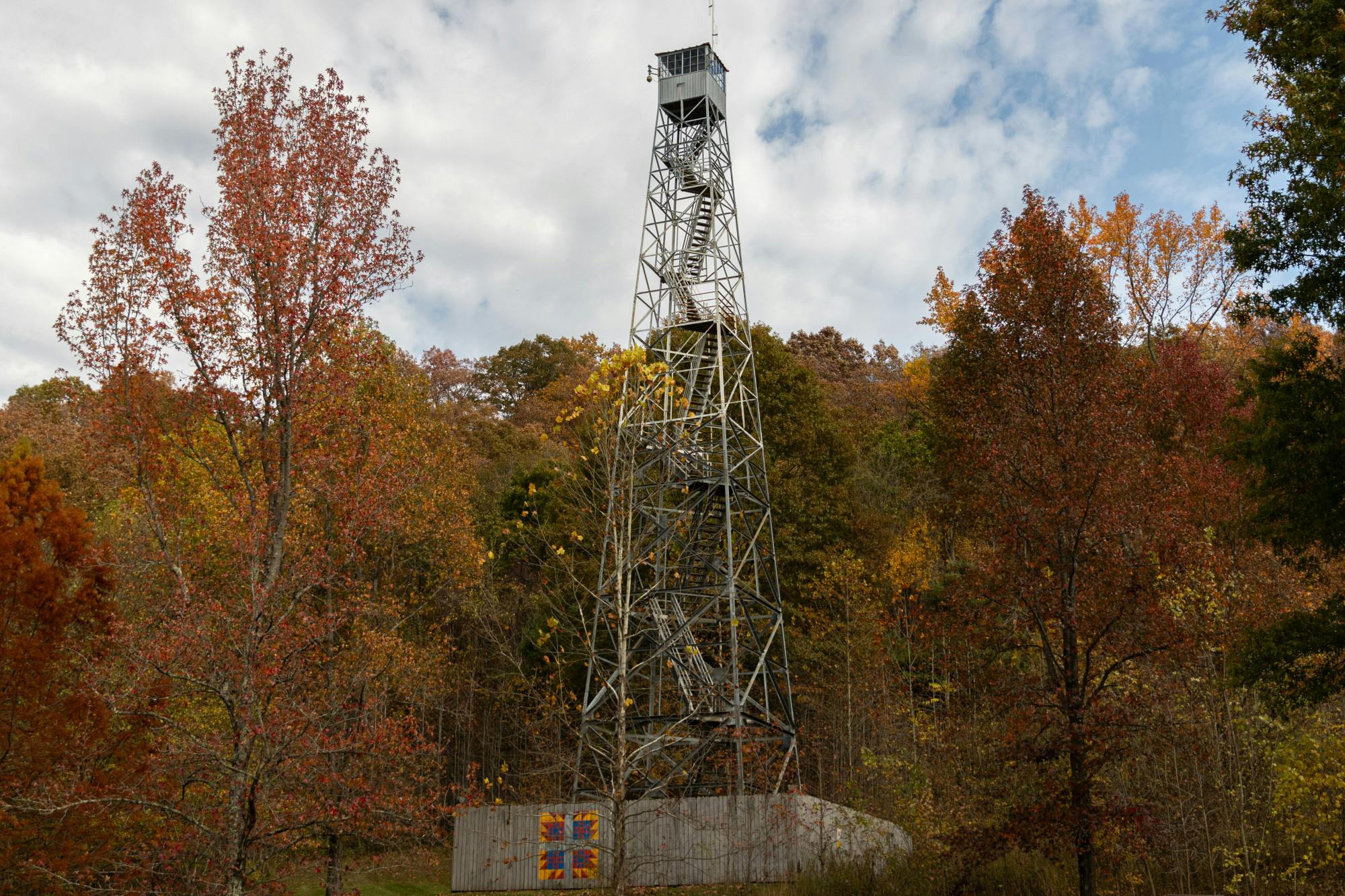
Southeast Ohio is renowned for its extensive forest coverage and diverse wildlife. The region holds eight of the top nine forested counties in Ohio, according to an article by Ohioline.
The Wayne National Forest also lies in Southeast Ohio, which covers about a quarter million acres of land, according to the U.S. Department of Agriculture.
In recent years, deforestation has taken a toll on the presence of forests and tree life in the area. According to Global Forest Watch, Ohio has lost 4.91 Mha, or hectares of natural forest, in 2024.
Local movements are focused on improving the presence of trees and other plant life, which could lead to reforestation in the area.
Director of Environmental Programs at the Voinovich School at Ohio University, Jen Bowman, is leading efforts to improve local water quality through foresting the waters surrounding areas.
She said the projects are concentrated on reforesting stretches of land located next to rivers or streams, known as a riparian corridor.
Riparian corridors help improve water quality and stimulate aquatic wildlife, according to Bowman. Without the buffer of plant life next to the water, sediments from surrounding areas, such as construction sites, can easily be transported into the water, harming the aquatic environment.
“That is the impairment that's happening; it happens when it rains, you get more erosion, you get more overland flow,” Bowman said. “That sediment that's being carried in that waterway is choking out that oxygen for the fish that are living there.”
Planting trees and other plant life in riparian corridors gives local bodies of water more shade, which then cools the water temperature down, thus providing more dissolved oxygen fish need to live. These trees and other plants additionally provide nutrients and woody debris used for habitats.
Professor of environmental studies at OU Sarah Davis, who has a doctorate in Biology, is a part of a study aimed at finding out the ideal conditions for white oaks to grow in.
The University of Kentucky provided OU with 17 different white oak seed sources from different parts of the Eastern United States, which were planted at Sugarbush Valley Farm. Davis commented on why this study is being done.
“The purpose of this project is to compare the growth and physiological activity of white oaks, from acorns that come from different locations where they may have slightly different climates and different precipitation and temperature,” Davis said. “And we're just testing to see which ones do the best here in Athens.”
White oaks are extremely beneficial to the local environment, providing humans with versatile wood and animals with food and habitats. According to Davis, the tree has historically been one of the dominant species in the area, but their population has been decreasing in recent years, providing the impetus for this project.
According to an article by the U.S. Department of Agriculture, white oaks are often surpassed by faster-growing trees, which then block sunlight from reaching the saplings.
Davis hypothesized the increased precipitation and lack of fire management in the area are also contributing factors to the species' decline.
According to Davis, these white oaks are in their third growing season, meaning little information can be deduced from their growth. However, the trees OU planted seem to be performing better in the high-light environment than the naturally occurring white oaks.
This data alone can help local individuals better treat the environment by creating conditions where white oaks can receive enough sunlight to grow, such as using fire management to ensure larger gaps in the forests.
“If we can manage our forest sustainably and balance the multiple benefits that we're getting from forest ecosystems, then that will ensure that the forests remain intact, because people who have different interests are going to be invested in making sure that the forest stays in place,” Davis said.