

A coalition of Ohio environmental organizations filed an ethics complaint against Republican Sen. Brian Chavez on Jan. 20, alleging that he used his position within the Senate to influence policies and benefit financially, according to the ethics complaint.
The complaint, submitted to the Joint Legislative Ethics Committee, was initiated by Washington County for Safe Drinking Water and signed by other environmental groups such as Buckeye Environmental Network, Save Ohio Parks and FaCT Ohio, according to a press release.
Chavez serves as the chair of the Senate Energy Committee and the vice chair of the Senate Finance Committee, according to the Ohio Senate. The first part of the complaint alleges that Chavez used his positions to advance Senate Bill 219.
SB 219, legislation passed by the Senate and currently in the House Committee, makes many changes to the law governing the oil and gas industry, according to the Ohio Legislature. However, Hillary Royster, a member of Washington County for Safe Drinking Water, said SB 219 is heavily geared to favor the oil and gas industry.
Royster alleges Chavez pushed this bill because he and people close to him hold numerous connections to companies that would benefit from it.
The second part of the complaint claims that Chavez failed to disclose five limited liability companies in which he and his wife had stakes.
“That's the more lengthy part of the complaint, because it goes through how we found those LLCs and how we think that he should have reported them just because of how closely tied they are to his wife and his business, but that is what the ethics complaint is,” Royster said.
Royster discussed Chavez Well Service, a company Chavez owns, which is based in Marietta and plugs orphaned oil and gas wells.
“It's in the ethics complaint, he has Chavez Well LLC, which is a business that, as he's been a senator, has bid five times on abandoned well plugging,” Royster said. “So it just seems a little self-serving.”
Additionally, Chavez’s financial statements from 2023 and 2024 state his employment with Deeprock Disposal Operating LLC, but fail to include his ownership of the company, according to the ethics complaint.
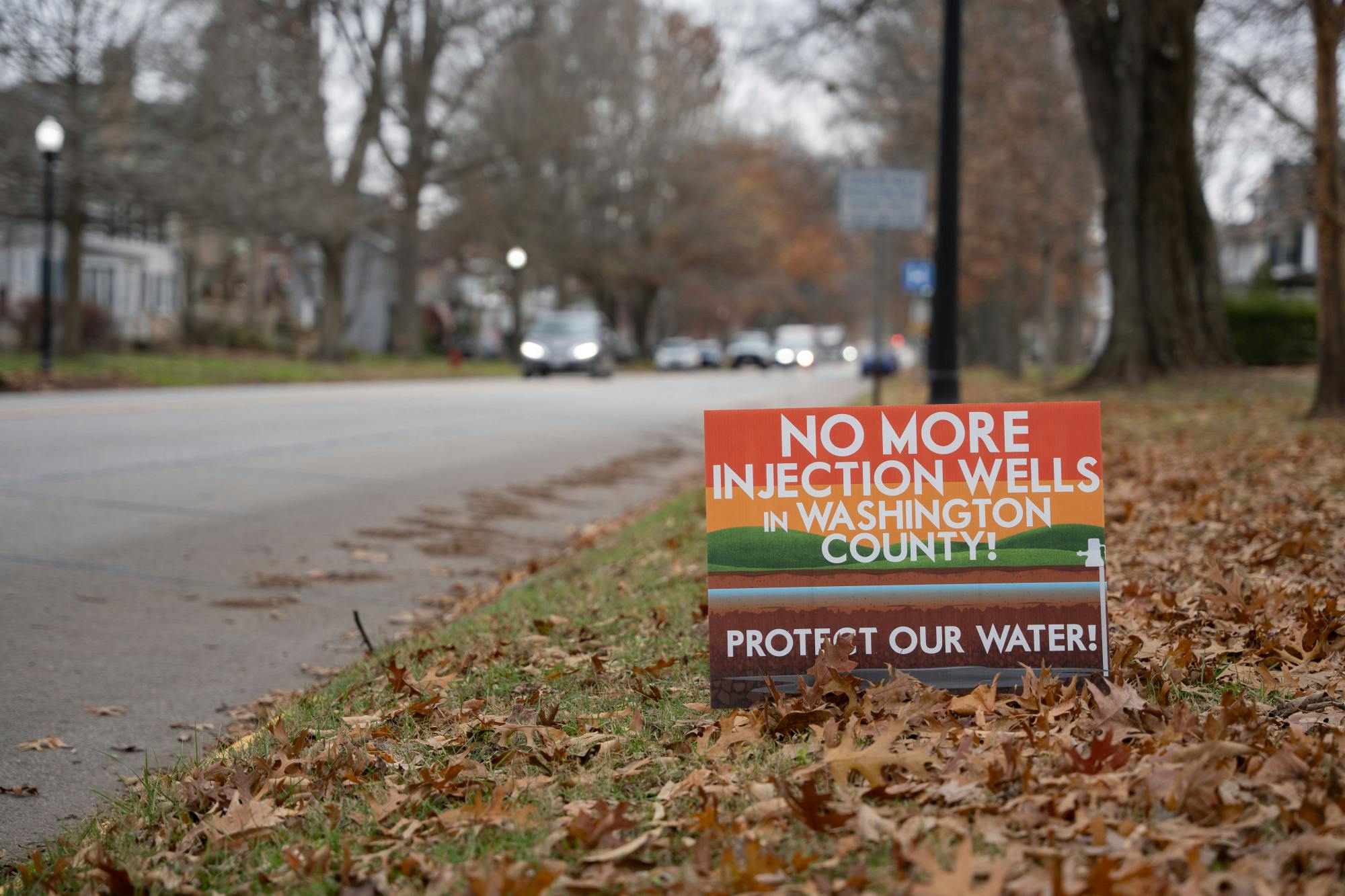
Chavez represents District 30, which contains parts of Washington County, an area that has been the center of ongoing tensions regarding injection wells and their waste disposal. The dispute includes an ongoing lawsuit started by Buckeye Environmental Network over two Deeprock Solutions injection wells in Washington County, according to a previous report by The Post.
Roxanne Groff, advisory board member of Buckeye Environmental Network, discussed the history of brine migration in Washington County.
“The people in Washington County have been aware of migration issues with injection wells in Washington County, starting back in 2019 with the Red Bird No. 4 injection well that migrated brine at least five miles from the injection well site and has now ruined almost 50 conventional oil and gas wells,” Groff said.
A group of local advocates and residents came together in October to form the organization known as Washington County for Safe Drinking Water. The coalition’s Facebook group currently has 323 followers and spearheaded the ethics complaint.
John Fortney, director of communications for the Ohio Senate Majority Caucus, denounced the allegations, stating they are simply part of a smear campaign against Chavez.
“This failed publicity stunt was nothing more than a libelous smear campaign against a respected State Senator that was backed by California special interests, dead set on killing the oil and gas industry in Ohio,” Fortney wrote in an email. “They don’t care what they say; they want to whip people into hysterics with campaigns designed to destroy an industry and rip apart a community.”
JLEC told The Post it is unable to confirm or deny the receipt of a complaint or allegations due to Ohio law.
“The non-partisan Office of the Legislative Inspector General and the Members of the bipartisan Joint Legislative Ethics Committee are explicitly prohibited by Ohio law (RC 102.06 & 102.07) from confirming or denying the receipt of a complaint or allegations,” the JLEC said.
However, Royster provided email correspondence between JLEC and the organization. In those emails, JLEC states while the request does not meet the requirements of 102.06 of the Ohio Revised Code, the committee may investigate charges presented to it.
“I would just like to see Senator Chavez held accountable for what we put in the ethics complaint,” Royster said. “And if that's him losing his position, then that's what it has to be … I know on the undisclosed five LLCs, they could potentially press charges, but for the personal pecuniary benefit, that's kind of up to JLEC, how they would deal with that.”


