

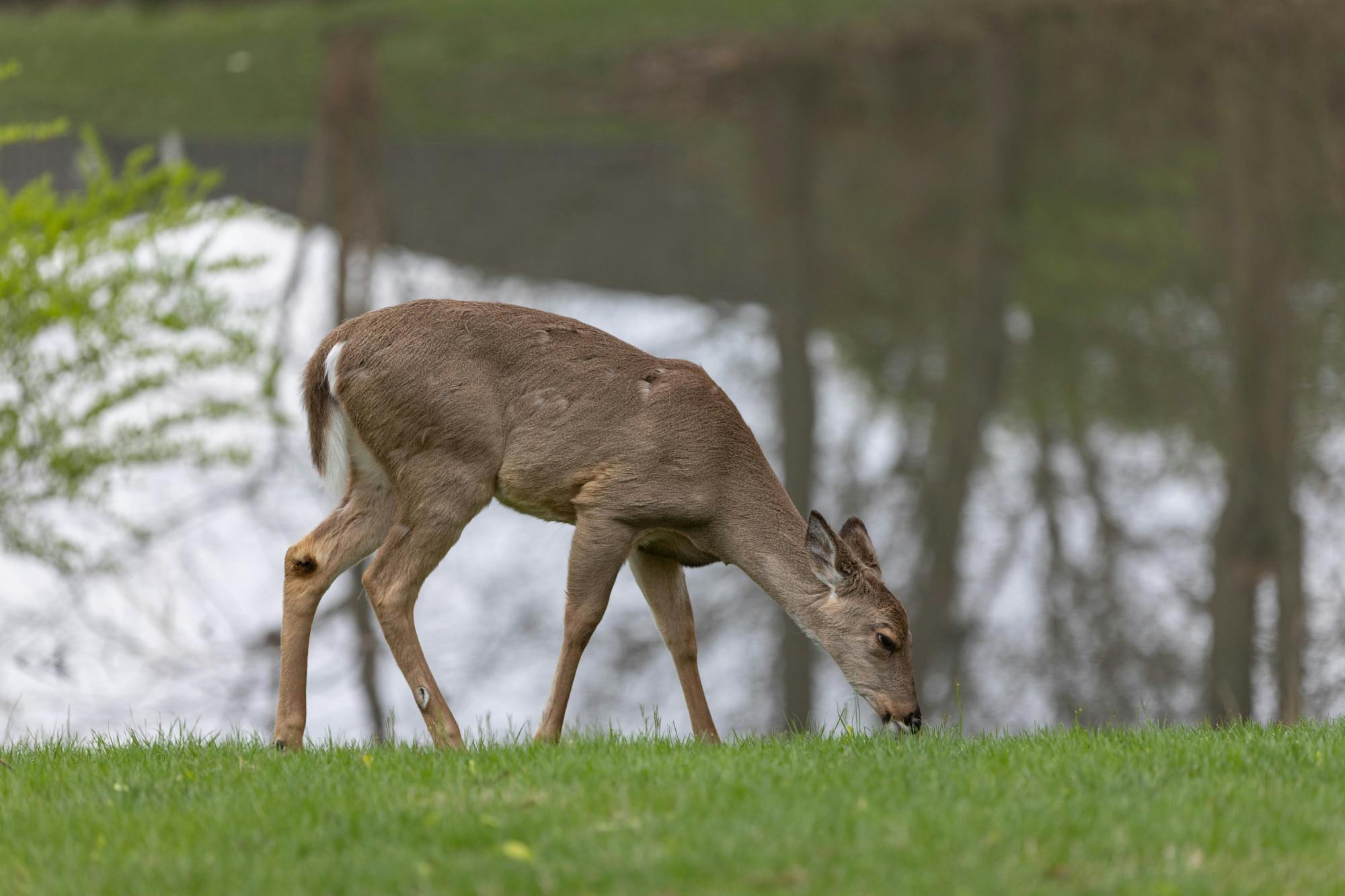
Athens County is experiencing an outbreak of Epizootic Hemorrhagic Disease, or EHD, in the local whitetail deer population, with cases concentrated on the eastern side of the county, according to the Ohio Department of Natural Resources, or ODNR.
EHD is a hemorrhagic disease caused by bites from midges, a type of small fly, which transmit the disease and trigger fatal internal bleeding. Infected deer often seek water sources as their bodies overheat. Symptoms appear suddenly, and death typically occurs within 72 hours.
There is currently no cure, although outbreaks decline once the frost kills off the midges. Once winter comes around, cases of EHD in the area drop significantly.
Ryan Donnelly, an ODNR wildlife officer assigned to Athens County, said EHD does not spread directly between deer, cannot infect humans and poses no known risk to venison meat. However, ODNR cautions against consuming visibly sick animals.
“The midge bites the deer, and it gives it (the disease) to the deer, and then it flies to another one and gives it to the deer,” Donnelly said. “The deer don't give it to each other. The midge has to carry it to other deer.”
The City of Athens issued guidance Aug. 28, instructing people on what to do if they found a dead or infected deer.
They are urging residents to report dead deer using ODNR’s online form. The city also only removes carcasses from public rights-of-way. Disposal on private property is the responsibility of landowners.
While the total number of infected deer remains unclear, Donnelly said this year’s outbreak is larger than in past years.
Archery season for deer in Ohio begins Sept. 27, and the outbreak has not affected the season so far. However, it is advised that hunters use their best judgment while out for the season.
“They usually don't see the symptoms because it happens so quickly. If the deer overall looks healthy, then it probably is,” Donnelly said. “If it doesn't look healthy, then I usually don't recommend it because if a hunter shoots the deer, they need to tag the deer.”
Donnelly said the disease does not have any known effects on the meat, but it is best left to the determination of the hunter.
“To be cautious, never kill or eat a sick deer. Depending on the actual illness, the deer may be unfit for consumption. Without testing, we cannot be certain what a sick deer is suffering from,” ODNR’s website posted.
The symptoms can vary from deer to deer, but common symptoms include disorientation, lack of fear of humans, labored breathing, fever and swelling of the head, tongue, neck and eyelids.
*ODNR is asking residents to report sightings of sick or dead deer to help track the outbreak. Anyone who spots an affected animal should call 800-945-3543 so wildlife officials can respond.


