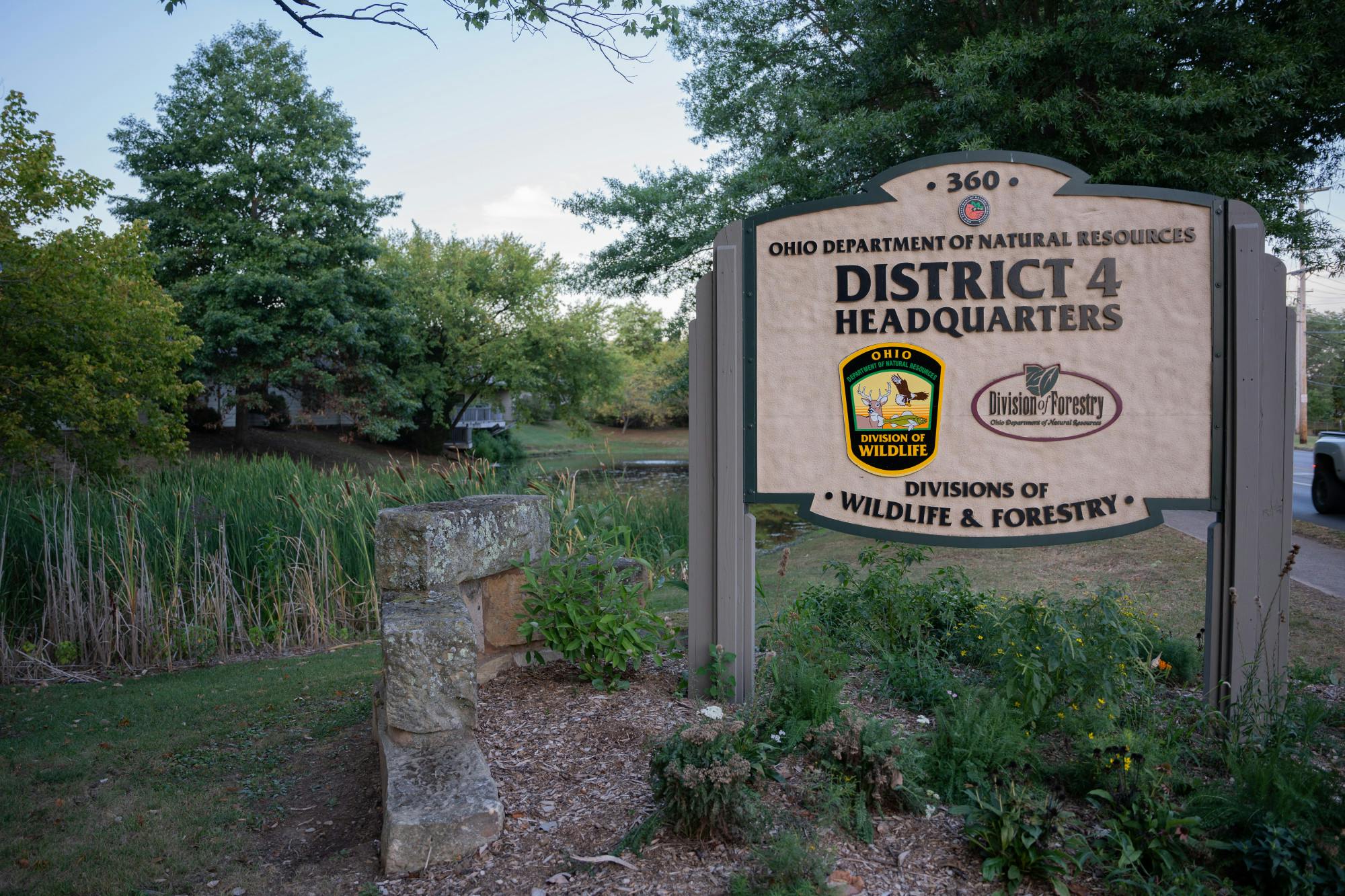
House Bill 399, sponsored by Ohio Democratic Reps. Tristan Rader and Christine Cockley proposed legislation that prevents the Ohio Department of Natural Resources from issuing permits to drill for oil and gas under state parks, as well as Lake Erie.
HB 399 makes a specific point to include the prevention of fracking under Lake Erie. Rader added this stipulation as a precaution, stating the federal government is showing no respect for public and private lands, potentially resulting in drilling under Lake Erie.
“If we don't protect our environment, our ecosystems, our biodiversity, we'll lose it forever,” Rader said. “And generations to come won't know what I knew as a kid, being able to explore these wonderful wild spaces in our state.”
The bill comes after HB 507, signed into law in 2023, effectively required state agencies to lease oil and gas interest lands for fracking purposes. HB 507 allowed drilling for oil and gas to occur under Salt Fork State Park, Valley Run Wildlife Area and Zepernick Wildlife Area, according to The Associated Press.
Save Ohio Parks, a social welfare organization dedicated to protecting public lands across Ohio from fracking, spoke out in support of the proposed HB 399.
Board President Cathy Cowan Becker expressed her support of HB 399 but stated she would prefer to see it expanded, covering wildlife areas and all public lands.
Becker mentioned the dangerous nature of fracking, claiming an accident occurs at an oil and gas operation in Ohio about every 1.5 days. She detailed recent incidents that occurred across the state, like the explosion in Guernsey County, featured in a January report from The Post.
“If that happened right next to a state park, even 1,000 feet away, how would you evacuate Salt Fork? It's 20,000 acres,” Becker said.
Once these fracking sites are depleted of available resources, the company overseeing the operation will typically pull resources out and move to a new site, according to an article by the U.S. Department of Agriculture. In doing this, the companies are leaving behind orphan wells that can pose future issues, according to a previous report by The .
Rader cited these orphan wells, bringing up a recent explosion at a well in Washington County. The explosion injured six workers, causing four to need helicopter transport for treatment.
“This is not a straightforward, safe, clean activity. This is activity that could end up damaging wildlife, damaging land,” Rader said.
Another major concern with fracking opponents cite is the water supply and healthy drinking water. Fracking extracts oil and gas from underground by forcing water, sand and chemicals down into wells. Although the amount of water varies, the use per well ranges from 1.5 to 16 million gallons of water, according to the United States Geological Survey.
Becker claims after the water is laced with toxic chemicals and pumped into the ground, the risk of this water leaking and harming local ecosystems and drinking water is high.
In May 2024, ODNR shut down multiple injection sites in Athens County for danger posed to health and the environment, according to a previous report.
The bill remains in the House, with Rader hopeful it will garner support, stating the bill has broad support from rank-and-file members across the state. The democratic congressman stated why the bill is important, even amidst a Republican controlled state.
“We have to set that vision,” Rader said. “We have to lay out there where we need to be as a country and a state in order to have a chance to save these spaces before it's too late.”
Becker also advocated for more transparency concerning ODNR’s management of fracking procedures, arguing state laws are tipped in favor of the fracking industry, she said.
“The oil and gas lobby in Ohio gives a lot of money to a lot of different state legislators, and they lobby them constantly,” Becker said.
As a result, Save Ohio Parks heavily supports HB 562, currently in the House Committee, which would require horizontal fracking well pad owners to disclose the chemicals used in their drilling procedures, some of which are argued to be cancer-causing.