

If you have tuned into anything pop culture-related, you have probably consumed some sort of media involving a love triangle. Love triangles are not a new concept, with references in “Little Women,” “Pride and Prejudice” and even in some Shakespearean plays.
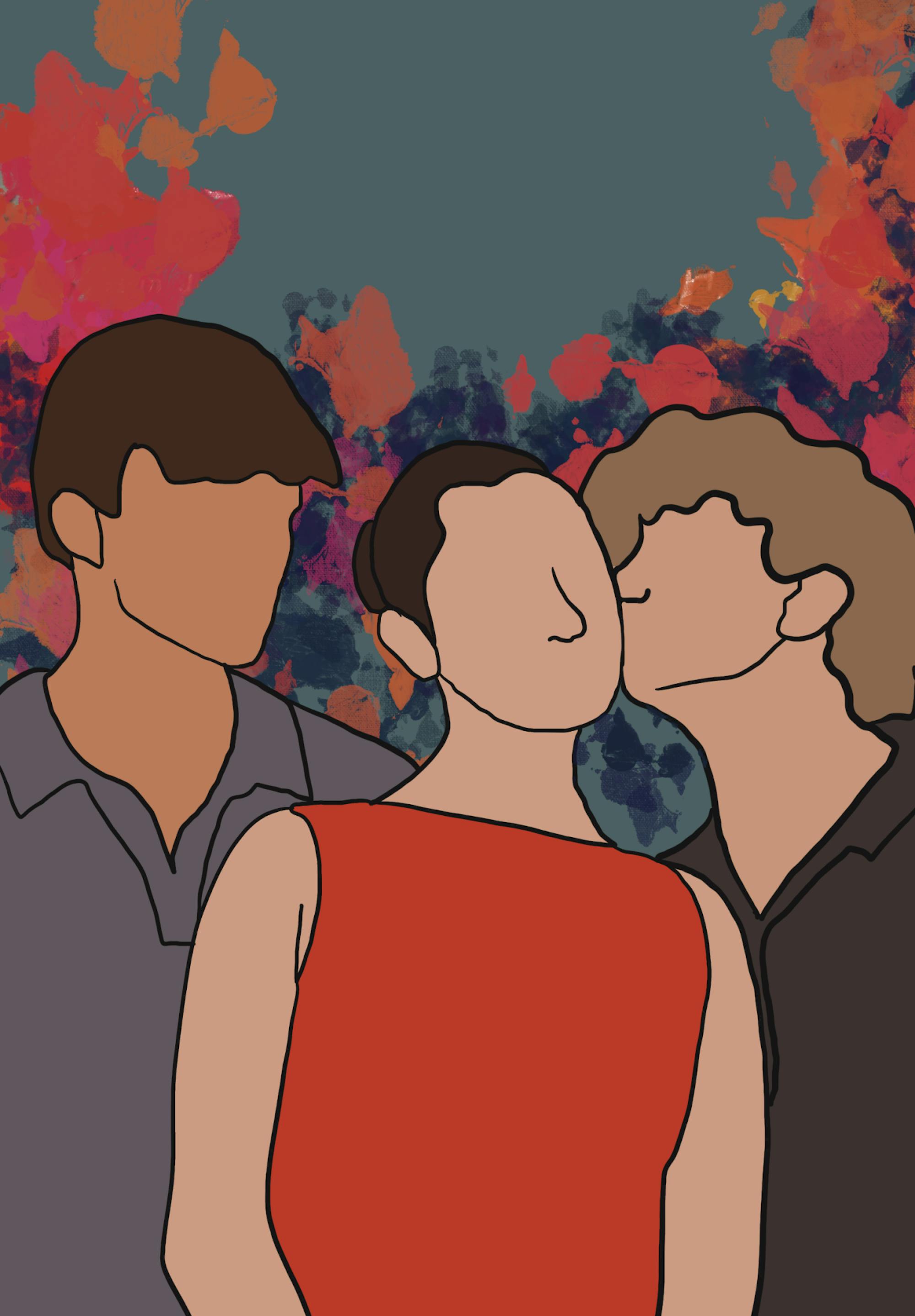
However, what actually is a love triangle? A love triangle consists of a main character choosing between two suitors while actively having feelings for both. The main character goes back and forth between the two options until one is taken out of the competition because of a fatal flaw, leading the main character to choose the other person and leave the latter heartbroken. The love triangle in itself is the plot of the story, with the conflict being the fight over the main character.
A popular example of a love triangle that is causing a huge debate on the internet is “The Summer I Turned Pretty.” The TV show is based on a book series written by Jenny Han, which revolves around a girl named Belly who has to choose between two brothers she grew up spending the summer with.
Fans of the show have taken strong stances on social media to defend which brother they want Belly to be with, Conrad or Jeremiah. Both Conrad and Jeremiah want Belly, and she has feelings for both of them simultaneously.
Other examples include the Twilight Saga, where Bella Swan has to choose between Edward Cullen, a vampire, and Jacob Black, a werewolf. Over the span of six movies, Bella discovers herself and ultimately picks one of the men.
People on social media have started to define leading men in love triangles based on whether they are a “black cat” or a “Golden retriever” boyfriend. “Black cat” boyfriends are mysterious, brooding and misunderstood. While the latter option is outgoing, loyal and friendly. Both have traits that are similar to the animal they represent.
“In the Summer I turned Pretty,” Conrad is seen as the “black cat,” and Jeremiah is the “Golden retriever.”
Similarly, in the Twilight Saga, Edward Cullen is the “black cat” and Jacob Black is the “Golden retriever.” These two love interests not only correlate with their respective animals, but also represent two different possibilities for the main character’s future and force her to weigh her priorities.
Bella Swan famously says to Edward, “It wasn’t a choice between you and Jacob, it was a choice between who I should be and who I am,” (Meyer, 2010). This goes to show that the decision the main character has to make goes far beyond who she loves more, but more importantly, how she wants to see herself.
One option is usually the safe choice that makes the protagonist feel comfortable; however, the second option, which is usually chosen, challenges her and makes her question her lifestyle.
The romance genre is commonly read by women. The love triangle trope is beloved because we see ourselves as the main character and feel as if we are choosing alongside her.
It is relatable to be conflicted when it comes to something as significant as love. Oftentimes, pop culture portrays love as knowing for certain you were destined to be with someone (instalove). However, that is not usually the case. Being in love is a complicated feeling, usually accompanied by fear of uncertainty.
Love triangles stray away from the common idea that there’s only one soulmate out there for everyone. Instead, it portrays a more realistic path to finding love, filled with multiple love interests in a lifetime and instances of heartbreak. The main character is often messy and makes mistakes, just like any human would.
Readers feel by the end of a story that the main character can fully commit because they have struggled and shown tremendous growth to find their person, each love interest having contributed to their overall identity and character growth.
Overall, love triangles are a timeless trope that will continue to influence a vast array of media. We can all relate to wanting to be desired, just like the main character experiences. It is empowering to see a character, especially a female, have full autonomy over their love life and the direction they want it to go in.
Readers and movie watchers alike are continually drawn to love triangles because of their relatability and comforting predictability. You can always count on a love triangle to be entertaining at the least.


