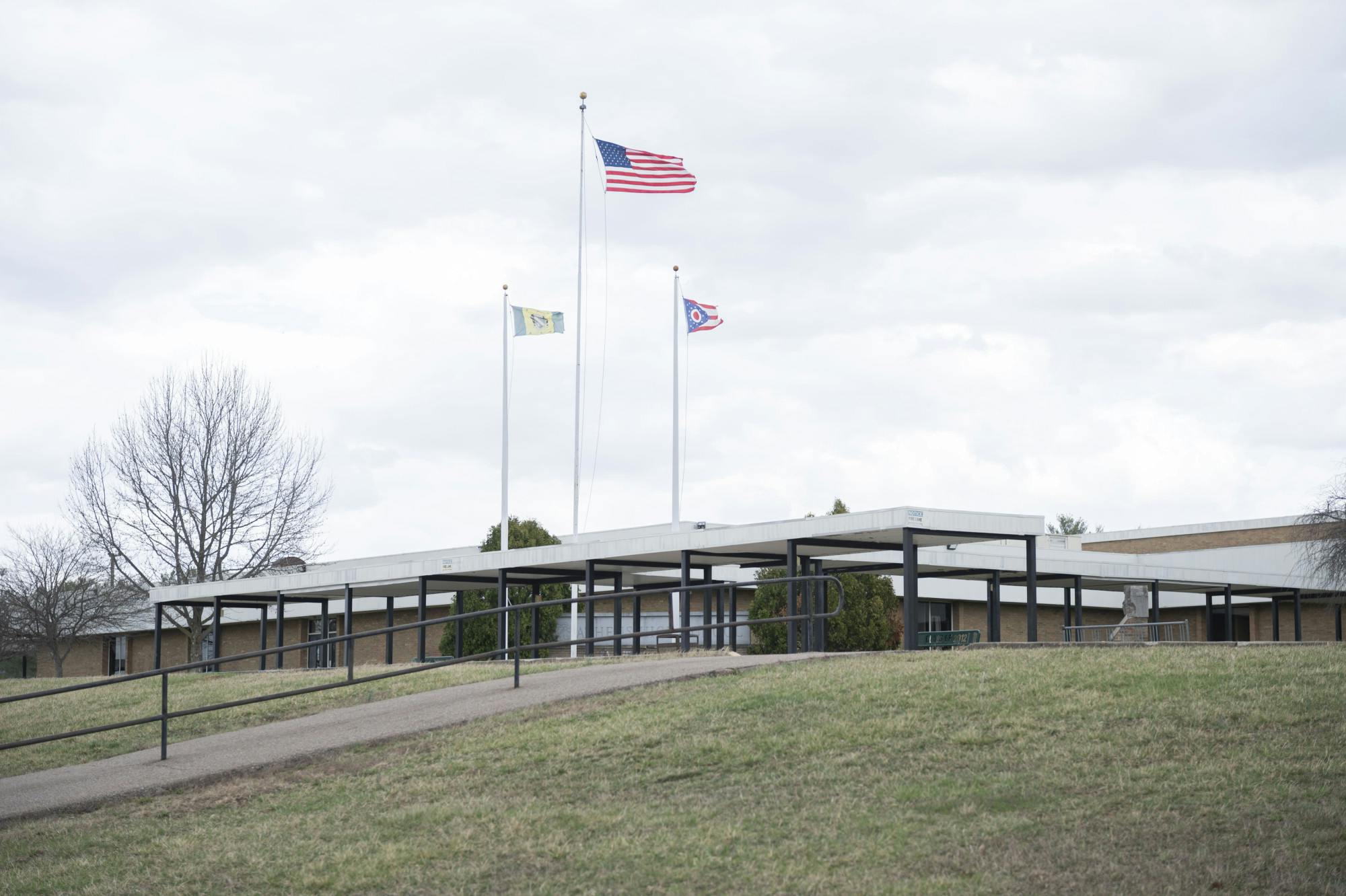
A teacher shortage continues to expand across Ohio, affecting school districts and existing teachers.
The loss of teachers has opened vacancies in certain positions across all levels of education, as well as most subjects. The vacancies have also sparked a situation where schools are hiring unqualified individuals without proper certification to teach certain subjects.
According to the Ohio Department of Education and Workforce, proper certification is defined as successfully completing and holding all the requirements for licenses or certifications for the subject of the teaching assignment.
Rowan Thompson, a senior studying integrated language arts with plans to be a high school English teacher, has firsthand experience with schools' reliance on non-certified teachers.
During her time as a student teacher at Federal Hocking High School, Thompson was asked to head the drama department, despite lacking any prior experience and being a student.
“There’s just so much on the other teachers' plates that we can't even have a drama club like we've had the past couple of years because we've diminished in size with our teachers,” Thompson said.
Vacancies in special education and STEM positions are specifically becoming harder to fill.
Arthur Bargainer, a senior studying integrated social studies, said he has noticed a large issue filling special education positions in the district he student teaches in. Bargainer cited a lack of funding for special education programs in the district as a cause of this issue.
President of Southeastern Ohio Education Association Norvel Crandall was a teacher in Morgan County Local School District for 41 years and commented on why the programs are being impacted at a higher rate than others.
“STEM especially, there are so many more benefits and perks and income in the industry than there is in education,” Crandall said. “Then, special ed, I think that it's much harder to find people who are patient and empathetic enough to work with struggling students.”
Southeast Ohio has not been spared from the teacher shortage and is currently experiencing a significant increase in student-to-teacher ratios. The increase causes more teachers to carry the burden of a higher number of students.
“I feel like I definitely have a lot more on my plate than I would as a typical student teacher, maybe in a bigger area where there are a lot more teachers in the schools,” Thompson said.
The loss of teachers has caused schools to hire individuals with less certification. According to the Ohio Department of Education and Workforce, 4% of rural district teachers and 4.7% of town district teachers in the Southeast region do not have the proper certification for their job.
“Due to the fact that we have a number of smaller schools, the teacher shortage can sometimes have a more pronounced impact in Southeast Ohio,” Mathew Felton-Koestler, OU department chair of Teacher Education, wrote in an email. “For example, if a school only has one teacher with a particular license or area of expertise and they leave, then that can have an outsized impact on the school and the students' learning opportunities.”
Felton-Koestler also commented on why hiring unqualified teachers is not an appropriate solution to the issue.
“The state's current strategy of focusing on easing licensure requirements without addressing pay and working conditions will contribute to the ongoing deprofessionalization of teaching,” Felton-Koestler wrote. “High-quality teaching requires specialized knowledge both about children and about academic subjects … Longer term, this combined with policies focused on school vouchers, serves to undermine the quality of public education in the state.”
One method of drawing more teachers to the profession is incentivizing veterans to attain an education degree.
OU has implemented a program for this reason, known as the OHIO Patton Empower Veteran Education program. The program offers scholarships to attain a master’s degree or teaching license for veterans, transitioning military members and their spouses. It is funded by both the Ohio Department of Education and Workforce and the Ohio Department of Job and Family Services.
Some also argue the current salary for teachers is not adequate to entice potential educators. The average starting salary for a teacher in Ohio is $40,982, with the average salary being $68,236, according to a 2025 report by the National Education Association.
The average starting salary is ranked 47 in the nation, and the average overall salary is ranked 22. Thus, placing Ohio's starting teacher salary below the national average by $5,544 and the average salary below the national average by $3,794.
“The pay is not competitive with other bachelor's or master's degree types of professions,” President of the Ohio Federation of Teachers, Melissa Cropper, said. "That causes a problem, but I think most of the result revolves around lack of respect and lack of pay.”
Many also cited a lack of respect and a changing climate surrounding the role of teachers. Cropper said teaching is not an attractive profession anymore, and parents are not encouraging children to pursue an education degree.
“A lot of that is because there's so much finger-pointing,” Cropper said. “So much blame happening in the system or within the policy-making realm, pointing fingers at teachers when teachers are accused of indoctrinating students.”
Cropper went on to mention a loss of autonomy in the classroom, stating teachers are being told what to say and what not to say, deterring many from the profession.
Moving forward, Cropper said school districts need to receive more state funding. She said insufficient funding is causing inadequate teacher pay and an inability to hire more teachers.