

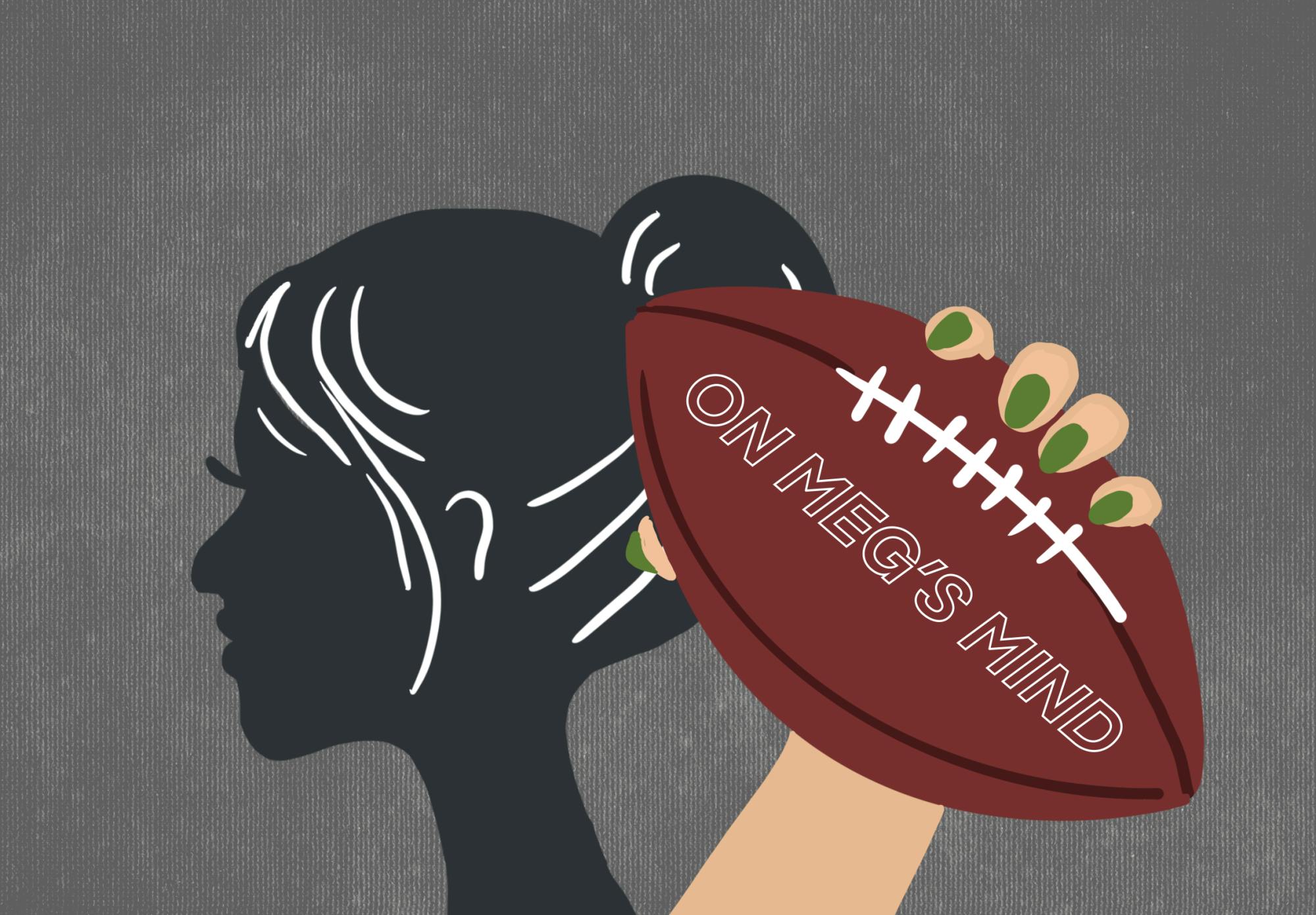
As a woman who is striving to work in the sports industry, it can be exhausting when you’re in a room with men talking about sports and they don't ask your opinion. You get treated like you're not there when the topic is sports. Or, if you are ever brave enough to speak up, you're called a “pick me.” Women should be taken more seriously in the sports industry. We know what we’re talking about.
A study published by the Atlantic Journal of Communication found that of 2,242 sports-related articles, 94.9% are written by male journalists. When men are reading stories about sports written by men, they're conditioned to expect sports talk from men.
The number of women employed in sports needs to rise. There is a demographic out there for women, and it needs to be represented in the media. How is this possible when at the same time, 47% of viewers for the Super Bowl, one of the biggest American sporting events, are women. The number of women watching sports is not something you can tell by looking at who is broadcasting it.
We have a large demographic of women consuming sports in America, but somehow, we still are not including women in the conversation. Yes, this is improving as we broaden coverage of women's sports. The number has risen from 4% to 15% of total sports media being women's sports. But that's not enough. Putting women in coverage of women's sports is just shoving them in a corner.
Women like Erin Andrews, Maria Taylor and Holly Rowe have proven that women are more than capable of covering men's sports. The notion that you have to be able to play the sport to cover it is outdated and has to go. Men have been covering women's sports since broadcasting began, so what's with the double standard?
Women are underrepresented in sports media due to systematic bias against female voices in sports, as well as exclusion from the field historically. Sports journalism has long been a “men-only” club, with sports having long been marketed as a place for men and by men. This often means a lack of female voices, whether due to the history of male employees or the underestimation of female knowledge of the game. No matter the circumstance, a lack of women in the industry no longer unrightfully ignores the capability of women but creates a harmful cycle as incoming reporters are left without mentors or role models, only further promoting the lack of women in the field.
The way we fix it is by including the girls in the conversation around the dinner table or in class. Then we are used to speaking about it across genders in casual settings, so when it becomes a professional hiring situation, the next generation loses the bias.
Women are sick of sitting around the table responding to the men's conversation about sports in their heads because they can't be bothered to ask. Let's fix it now. We are far too advanced as a society to keep such a silly problem. Talk to the women around you about sports, ask the girls across the table and invite everyone. Inclusion happens in every realm of life, so let's please stop acting like anyone's gender controls what they are and aren't allowed to talk or know about.
Meagan Larick is a freshman studying Journalism at Ohio University. Please note the opinions expressed in this column do not represent those of The Post. Want to talk to Meagan about her column? Email her at ml386724@ohio.edu. @meaganlarick (instagram)


