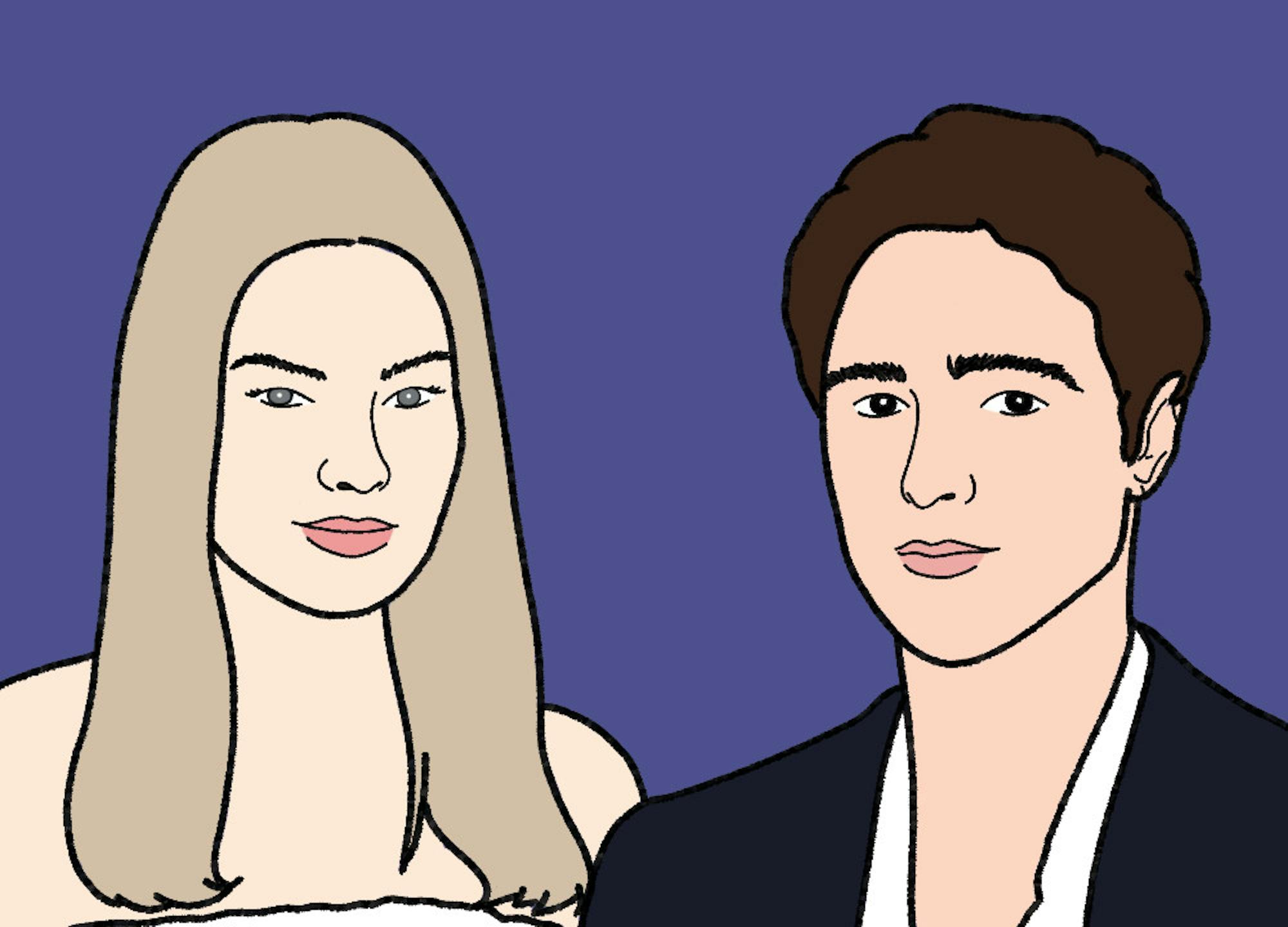
The teaser trailer for Emerald Fennell’s upcoming “Wuthering Heights”adaptationreleased Sept. 3, and naturally sparked discourse and distaste among book-lovers and movie-goers. The movie will star Margot Robbie as Catherine Earnshaw and Jacob Elordias Heathcliff and is set to release Feb. 13, 2026.
Many fans expressed disapproval of the upcoming adaptation for several reasons. Early screenplay reviews called it “aggressively provocative,” and critics have pointed out the age difference between Robbie and Earnshaw, as well as casting accuracy between Heathcliff and Elordi.
Casting director Kharmel Cochraneresponded by disregarding the casting inaccuracies and stated, “It’s just a book.” Many people also shared their hesitancy with Fennell being the one to adapt the book. Judging by her prior films, such as “Saltburn," many believe it will be handled poorly and become an excuse to make a raunchy period piece.
Besides the “it’s just a book” crowd, many audiences are theorizing that this adaptation will be a loose recreation. Thetheorysuggests because the title is in quotes, the casting is inaccurate and the era of the clothing is inconsistent, there will be a twist in the adaptation.
This loose theory will follow a reader of the book who is engulfed in the story, fantasizing about the contents. Though Margot Robbie has been confirmed as Earnshaw, some optimistic fans are still hoping this is the direction the film will follow, tying up the loose ends audiences have seen so far.
However, if Fennell’s adaptation isn’t a twist on the original story, then what parts of a book adaptation should be accurate to the source material? One of the biggest concerns is the casting inaccuracy of Heathcliff.
One of the major plot points in the original book is Heathcliff being shunned and rejected from the family, for a number of reasons, including his appearance and dark skin.
In Heathcliff’s case, he was seen as an outsider because of his appearance. Yet, Elordi is not only a white man, but a pale white man, making the casting incredibly incongruent with the book version of Heathcliff.
This potentially exposes Fennell’s blind spot for writing and incorporating minorities into her films. If this is a direct retelling of the book, it might support the allegations of being a “raunchy period piece.”
This leads to a host of other issues, such as Heathcliff’s abuse, which could be exemplified. If it's not, then this means Fennell did not want a man of color in the main male role in her lewd retelling of the story. If she does, then this showcases her inability to write people of color as villains.
Non-white characters can be villains, and in Heathcliff’s case, his background of racial abuse can be a way to create a cause and effect between racial, physical and verbal abuse and how those things contributed to Heathcliff’s villainous spiral.
On the other hand, if this is an adjacent retelling of the story, there is still not much room to justify not casting a man of color in the role. Even if this is a woman reading the story, it means she cannot envision her version of Heathcliff as a man of color, which is highly unbelievable.
It’s astounding how Halle Bailey’s portrayal as Ariel in “The Little Mermaid” had so many people clutching pearls and demanding accurate “representation” for a fictional mermaid whose character arc is not contingent on race. #NotMyAriel was trending, the movie was reviewed poorly and the trailer was disliked heavily on YouTube.
Yet, for a story studied and dissected in English classes across the nation, where students have to analyze how the qualities of Heathcliff’s abuse caused him to spiral, there is still a gray area and some wiggle room which explains why Elordi is playing Heathcliff.