

It’s no secret that people are on their phones too much. At times, it feels like screen time has replaced the necessary outlet of hobbies. Recently, hobbies and analog interests have resurfaced, allowing more and more people to engage in “traditional” hobbies.
Some of these hobbies include journaling, baking and walking. For many, a hobby is anything that encourages people put down their phones and find something new. However, along with this, there is a term that follows most of these activities. On the internet, it’s labeled as “grandma hobbies.”
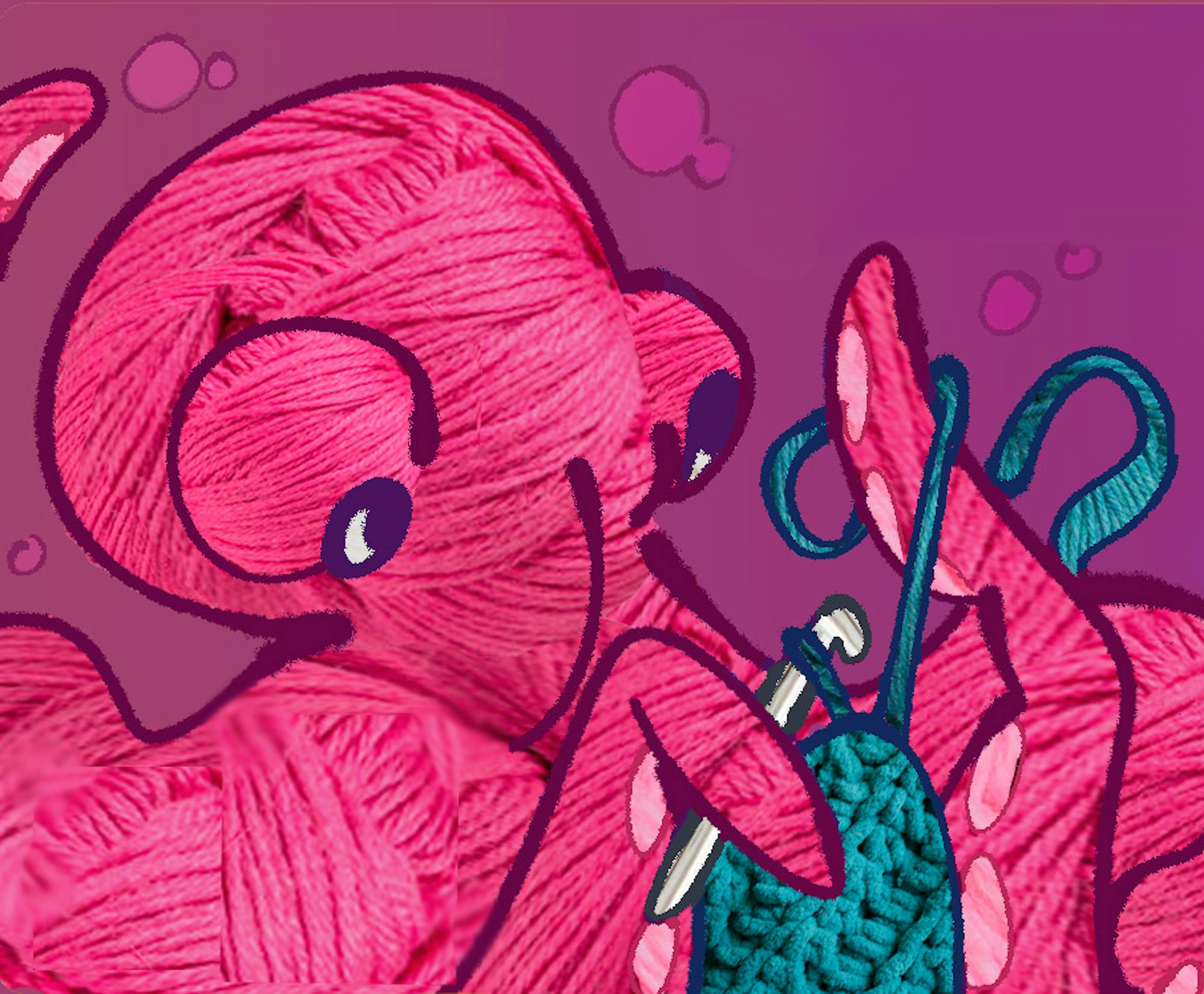
If you look up this term, some of the first things that come up are embroidering, knitting and crocheting. Even when not marked as “grandma hobbies,” crocheting and knitting get a horrible reputation on the internet.
In a now-deleted SciShow video with Hank Green, the history and science of knitting are presented in a misinformed and somewhat demeaning way. Most of the fiber arts community responded poorly to this video, while some even took the time to react and deconstruct what the video was saying.
“For centuries, knitting was more of an art than a science,” Green says. “But then, the physicists showed up.”
The video showed fiber arts, knitting specifically, as something that was “silly” until it could be backed up by science. This framing almost makes it seem that some arts are less necessary than others, even going as far as suggesting that these works have no purpose if there’s no reason behind them.
To research the history of every fiber art form and why it's important, with or without logic, would take ages. Still, it’s crucial to point out the importance of hobbies like this.
During the COVID-19 quarantine, people became lonely. Whether you have experienced this or not, you have probably seen it around you. Social media was one of the only ways people could still feel a part of a community, and now, some people still see this as their only outlet.
This isn’t all bad. Through social media, many people have been introduced to new hobbies. Not only this, but some have also found community through it.
Whether it’s physical or virtual, there are Facebook groups, the Crocheting Guild of America, textile clubs and entire subreddits dedicated to yarn and advice. Fiber arts are no strangers to warm welcomes and members who stick.
Beginners and experts in these hobbies can come together, sharing experiences, advice and projects they’re working on. Whether it’s support or solidarity, many hobbyists can find somewhere they belong.
“(H)obbies have also been shown to provide important opportunities for social connection, friendship and support,” Emma Parkhurst, a Professional Practice Extension Assistant Professor at Utah State University, wrote on the importance of hobbies.
Although it may not be this deep, hobbies like this are known to die out and be revived by younger generations. In the 20th century, quilt making rose and fell due to its association with frugality and the Great Depression.
In the 70s, however, there was a rebirth of quilting and the culture that was carried with it. Children and grandchildren of quilters picked up the skill and viewed it with more appreciation, therefore keeping it alive. Quilting wasn’t just considered a hobby. It carried culture and was an art form at the same time.
Now, while most people on social media probably aren’t trying to save “grandma hobbies” from disappearing out of our culture forever, it still remains important that these things are continued. Even if it’s marked as silly, it carries so much more than its label. Don’t be ashamed of picking up a new hobby, even if you aren’t great at it. There’s more to these skills than meets the eye.


