

Friends are such a wonderful thing. But sometimes they have to leave and can’t always be with you. What if your best friend could be with you all the time and know everything about you?
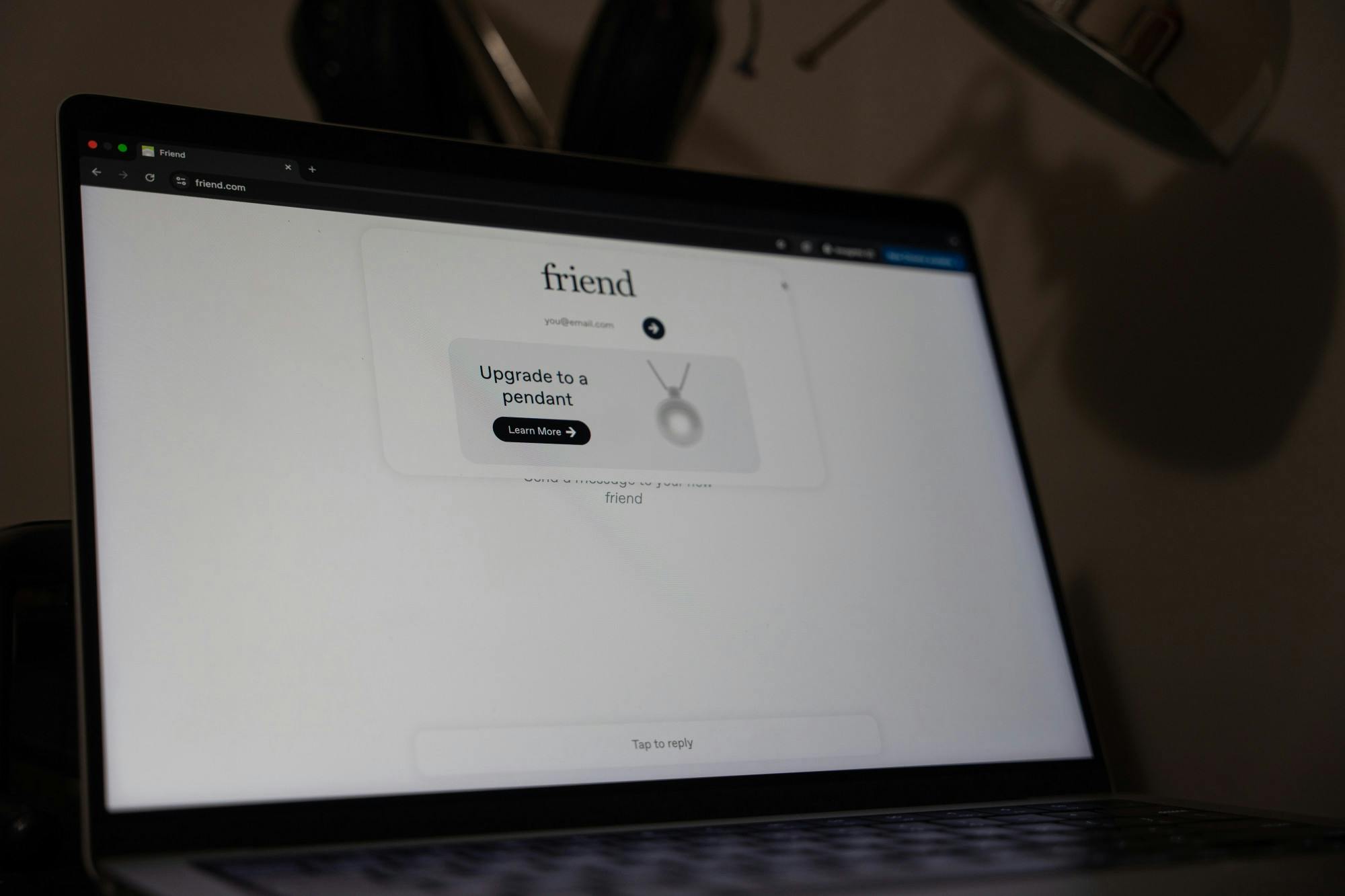
22-year-old Harvard dropout, Avi Schiffman, might have the answer. He has announced and released an AI-powered necklace, simply called Friend.
The product is simple; it looks like an AirTag worn as a necklace. Yet the necklace is meant to be able to listen to your surroundings and provide you with text messages that feel like you’re connecting with a real friend.
Its ability to read your surroundings seems far-fetched at first, but Schiffman has made it real. Before using the product, the user must agree to terms and conditions. However, one of the terms that allows the product to function has raised many eyebrows. It has to do with biometric data.
Section 1.4 of their terms document is quite short for legal documents but is bolded for a reason. The first sentence of the term states: “You acknowledge and agree that the product passively records your surroundings, including video, audio and biometric data such as facial recognition and voice recognition.”
According to Schiffman, he will not be using this data for anything malicious.
“He doesn’t plan to sell your data, or to use it to train third party AI models, or his own models,” Eva Roytburg wrote, summarizing one of the founder's points in his interview with Roytburg for Fortune.
This has already raised many concerns about this device being used for surveillance. Steven Anthwal the CEO of Big Phone Store expressed some of those concerns in an interview with Cybernews“Conversations shouldn’t be datapoints – they’re emotional, spontaneous, and not meant to be logged anywhere.”
To many it already started to feel surreal with the announcement ad. The ad features people hanging out with their own friends but talking more with their AI.
It has also drawn many comparisons to the Netflix series “Black Mirror.” One user sarcastically commented, “I'm loving these new 'Black Mirror' episodes. Keep up the good work!”
Despite this pushback online, Schiffman was confident in his product, going all in on spending 1 million dollars advertising in the New York City subway system. However, these ads showed the disdain people had for the product as the ads were almost immediately graffitied.
Schiffman has stayed optimistic, sharing “The audience completes the work, capitalism is the greatest artistic medium” in a follow-up interview with Roytburg.
It seems Schiffman is trusting in his product to break through and make money off of people buying his $129 necklace to keep him going.
However, the product does not seem to work as intended. Eva Roytburg spent two weeks with the Friend necklace. She noticed problems with its ability to listen and be aware of its surroundings, which is one of the main selling points of the product.
In fact, Roytburg explained “after about a week and a half of using it, it forgot my name entirely.”
“At best, having a conversation with people in real life and then checking your phone to see these misguided texts was amusing,” Roytburg said. “At worst, it was invasive, annoying and profoundly unhelpful.”
Lackluster performance, worries about surveillance and a societal skepticism toward AI has doomed the product from the start. Schiffman has reportedly raised over $8 million in venture capital.
Schiffman created a product that fills a need people do not have and do not want and it seems to be flopping. People are preparing for AI integration into their lives. But replacing human connection with a confused chatbot is unhelpful and dystopian.


