

President Donald Trump signed a proclamation Sept. 19 requiring a $100,000 annual visa fee for highly-skilled foreign workers, which was previously $215, according to the Associated Press.
An H-1B visa is a temporary, non-immigrant visa allowing employers to hire educated foreign professionals to work in specialty occupations that require at least a bachelor’s degree or equivalent, according to the American Immigration Council. Most occupations that often qualify for H-1B visas include mathematics, engineering, technology and medical sciences.
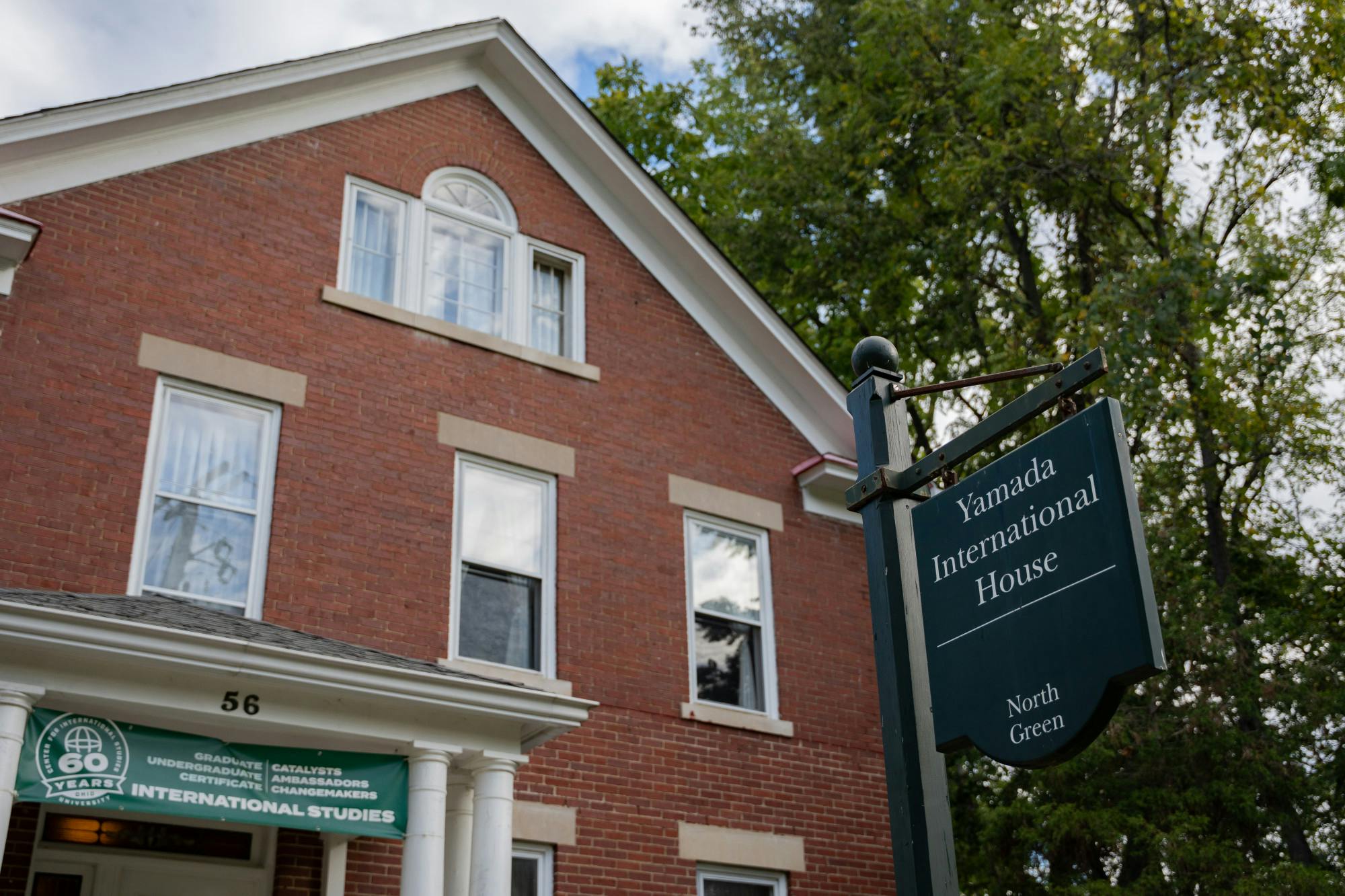
Dan Pittman, senior director of communications for Ohio University, provided commentary about the new fee and whether it affects present and future scholars with H-1B visas.
“The University is aware of the H-1B executive order that was signed by President Trump last week, and we are continuing to gather additional information in order to thoroughly analyze its potential impact(s) on the University and its workforce,” Pittman said in an email.
According to a data hub from the U.S. Citizenship and Immigration Services, the top five Ohio employers that hold H-1B visas include Cleveland Clinic, Ohio State University, OhioHealth Corporation, ERP Analysts Inc. and Cardinal Health Inc.
OU is placed at the top 22 of Ohio employers with H-1B visas, with only 27 non-immigrant workers.
White House officials argue the change is necessary to protect American workers and prevent what they view as exploitation of the H-1B program, according to a proclamation written by Trump.
The White House stated the new fee is due to the “abuse” of the H-1B visa program, saying it has made it more difficult for college students ages 22 to 27 to find jobs after college graduation, referencing the high unemployment rates.
According to the Pew Research Center, India is the top country for H-1B visas, with China being the second. The official spokesperson for India’s Ministry of External Affairs reacted to the U.S. legislation with a press release.
“This measure is likely to have humanitarian consequences by way of the disruption caused for families,” the statement said. “Government hopes that these disruptions can be addressed suitably by the U.S. authorities.”
According to USCIS, the newly imposed fee only affects visa applications submitted after Sept. 21; no petitions filed before are affected. The fee is only required to be paid once. It also does not prevent any current H-1B visa holder from traveling in and out of the U.S.
There is a national interest exception allowing the secretary of Homeland Security to waive the fee on a case-by-case basis, “if in the national interest,” according to a White House fact sheet.
Critics argue the $100,000 fee is a barrier many overseas workers cannot overcome, since many non-immigrant workers are willing to work for as little as $60,000 annually, according to AP.
According to the AIC, economists are forecasting a sharp drop-off in new H-1B applications, especially for mid-level or lower-wage jobs, and suggest companies will move jobs overseas rather than pay the fee. Others caution the policy would hurt U.S. competitiveness by pushing skilled workers to other countries.
Some studies have also found that for companies that hire many H-1B visa holders, unemployment rates are lower. The two complement each other, according to the AIC.
For now, the new fee has caused a lot of confusion and worry among employers, families and current H-1B workers. Although it does not impact current visa holders, it raises critical questions for prospective applicants and employers who want to hire them.
“USCIS has provided a page where you can read some of the publicly available information here: H-1B FAQ | USCIS,” the OU website states. “We will provide more information to our University community as soon as additional guidance is available.”
With lawsuits on the horizon and implementation details still being worked out, workers and employers alike are preparing for uncertainty in this critical skilled immigration program.


