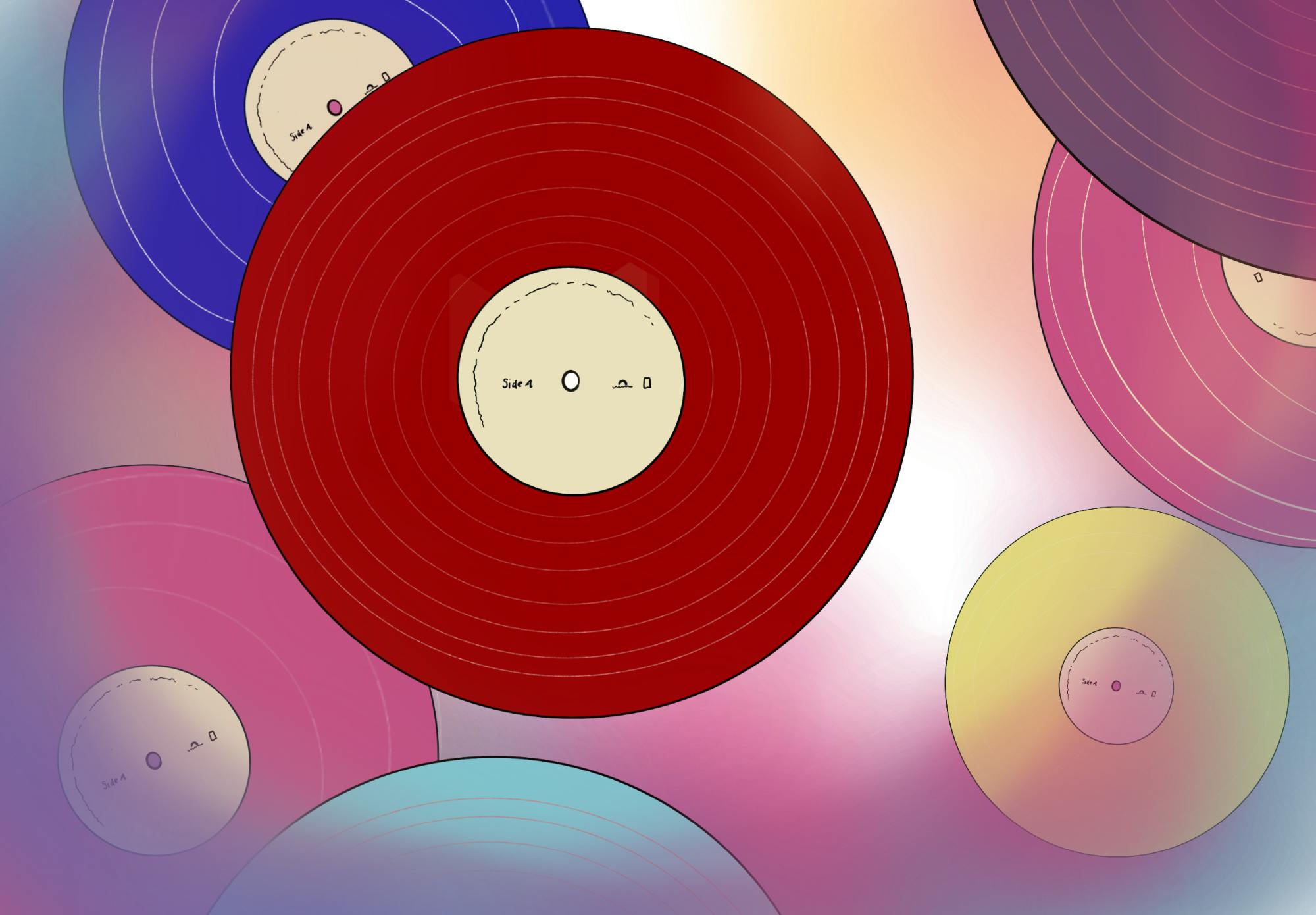
Certain trends from the late 20th century are making a comeback. Scrunchies, wide-leg jeans and even disposable cameras have all re-entered the spotlight, embraced by Gen Z as both nostalgic nods and statements of individuality. However, no comeback has made an impact on revenue as much as Long Press’, more commonly known as vinyl records or LPs.
For many reasons, the resurgence of vinyl has entered the 21st century with force. Driving independent record store revenue by breathing new life into what was once considered a dying format, vinyl has become a cornerstone in music sales. It may be in part to the collectible value, overall sound quality or its nostalgic nature, but vinyl sales show no signs of slowing down.
When vinyl was first popularized, the introduction of compact discs (CDs) in the 1980s began to affect overall record sales. For decades, vinyl was largely pushed to the sidelines, often seen as an outdated or niche format. Now in the mid-2020s, vinyl’s remarkable comeback has captured the attention of those within the music industry and the general population. Limited-edition pressings, colored variants and intricate album artwork have made vinyl a collectible item, while record stores and national events like Record Store Day create spaces for community and discovery.
One of vinyl’s biggest draws has always been the overall sound. Audiophiles–a person highly passionate about sound quality–often argue that vinyl offers a warmth and depth digital formats can’t replicate. Within the ridges and grooves of the individual pressing, records seemingly manipulate soundwaves to preserve the full richness of the track. Whether it be a guitar riff or the bass’ beat, subtle details that may be lost in the streaming version come through clearly on vinyl.
Beyond sound, vinyl thrives as a collectible. Artists such as Taylor Swift and Olivia Rodrigo have capitalized on multiple varied pressings, offering different colors, covers and exclusive editions that encourage fans to purchase more than one copy.
With this marketing tactic, artists have begun to transform their albums into multi-sensory experiences, where ownership feels personal and exclusive. The inclusion of bonus items within the sleeves, such as notes, posters, lyric sheets and stickers, has also added to the increase in revenue, allowing fans to be more actively engaged with the music.
Extending beyond sound and collectibility, vinyl has been recognized as a canvas for visual storytelling. Album covers, booklets and liner notes often serve as works of art, carefully designed by photographers, illustrators or graphic designers to reflect the album’s themes and overall mood.
Phoebe Bridgers’ “Punisher” booklet, for example, doesn’t just have the lyrics to go along with her heart-wrenching songs but includes high-detail sketches by illustrator and political cartoonist, Chris Riddell. Giving platforms to other creatives not only enriches the album’s artistic depth but also creates a collaborative space where visual and musical storytelling intersect.
Thriving on social engagement, the introduction of Record Store Day in 2008 truly helped cement vinyl as one of the main modes of music consumption. Not only does the annual event boost overall sales for independent record stores, but it also draws fans and artists together, making the day a celebration of music and its local community.
For those not within the Gen Z demographic, vinyl offers a link to the past. Giving a way to revisit aesthetics and trends from their childhood, it brings back the sensory experience of the record store in the 1980s, where browsing racks and flipping through album covers was as much about discovery and community as it was about purchasing the music. The revival of vinyl for those who grew up without streaming platforms such as Spotify and Apple Music allows them to experience music the way they did as children and young adults.
Giving listeners of all ages a way to engage with music on a deeper level, vinyl has redefined how albums are experienced in the 21st century. This revival connects generations, allowing older fans to relive the music experiences of their youth, while introducing younger audiences to the tactile joy and artistry of physical media. Vinyl’s comeback proves that even in a digital age, nothing can beat setting the needle down and hearing the first crackle as it begins to spin.
@emiliedeoreo