

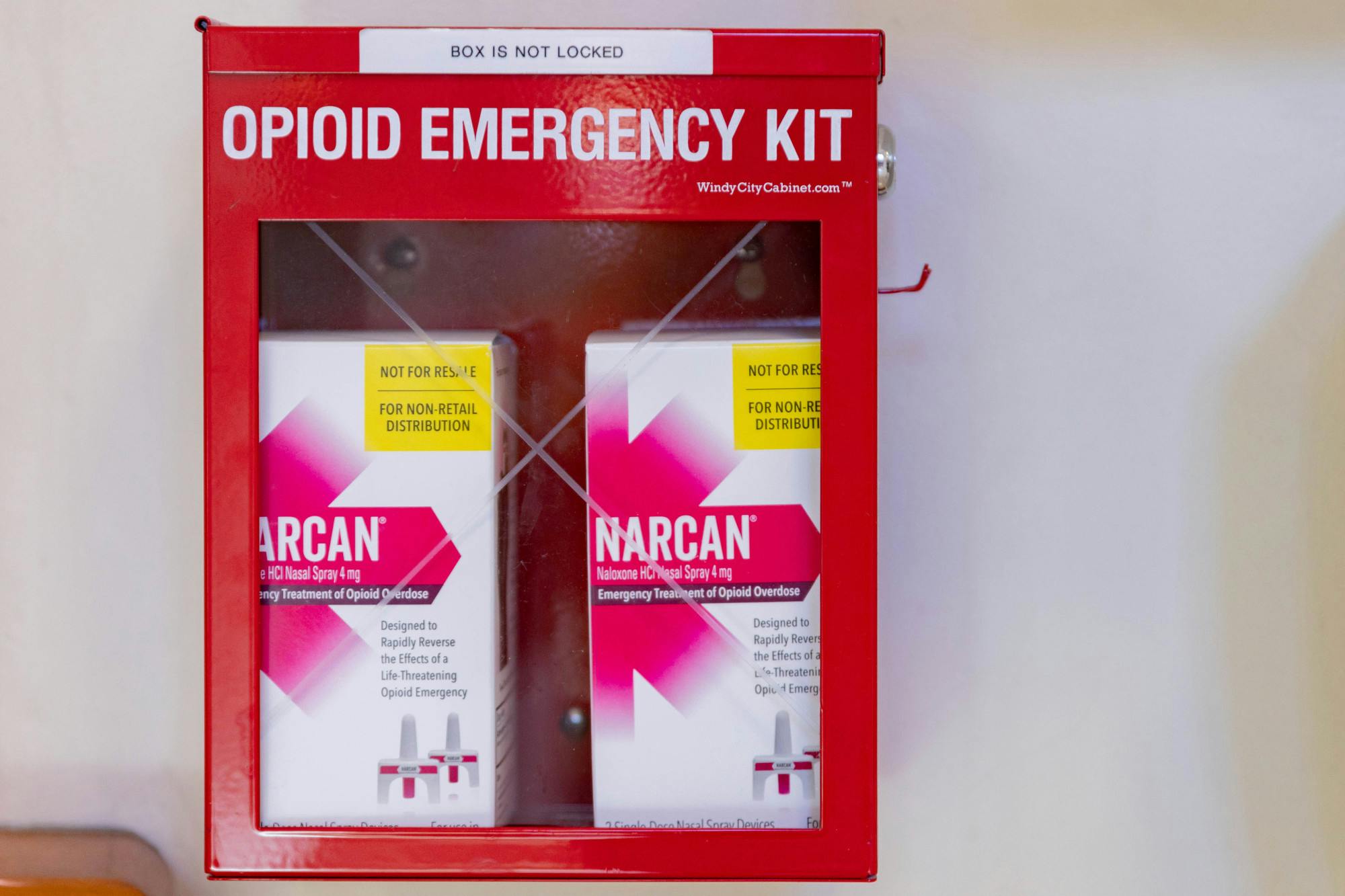
The Ohio Department of Behavioral Health, Anchor Addiction and Wellness Center and Paint Valley Alcohol, Drug Addiction and Mental Health Services Board teamed together to launch the state’s first mobile opioid treatment units Oct. 17 for seven rural counties, joining 17 other states, according to a press release.
AAWC is an outpatient addiction treatment program in Ohio that provides the staffing and medication for the mobile medical units. Paint Valley ADAMH, which partnered with AAWC, is a program to help families and individuals affected by mental illness and addiction receive high-quality care systems, according to its website.
The AAWC said the two new MMUs will bring direct treatment, including medication-assisted therapy, assessments and counseling, to people in rural communities across Southeast Ohio.
Jordan Knipper, the Ohio State Opioid Treatment Administrator, said the MMU will be equipped with a medication room, an intake area for the admission process of any patient and an exam room where the medicator can assess the patient. Each room will have proper security via the Drug Enforcement Administration requirements.
The units are required to have the same amount of staffing and operational capacity as a brick-and-mortar opioid treatment site. Knipper mentioned there will be a nurse who will conduct the actual administration of medication, along with a prescriber conducting the medical evaluations.
“These units themselves will have a designated driver for the unit, designated security for the unit and then either an on-board clinician for counseling or the capacity to do telehealth services via the unit itself,” Knipper said.
Knipper said the MMUs are in the process of acquiring licensing from the DBH, the Substance Abuse and Mental Health Services Administration, the Ohio Board of Pharmacy and the Drug Enforcement Administration.
Although opioid-related deaths have decreased in Ohio over the past two years, MMUs can reach rural areas that have less access to substance-abuse facilities.
The Ohio State University Rural and State Health website said out of Ohio’s 88 counties, 83 have more than 50% of their area classified as rural, while 65 of the counties have more than 95% rural area.
Knipper emphasized the lack of treatment available to towns with lower population sizes.
“How can we provide the best possible treatment options to these individuals?," Knipper said. “Something that research shows nationwide is bringing services to individuals oftentimes correlates with better outcomes, higher retention rates for those individuals in treatment. One of the more modern approaches to opioid treatment programming is with the use of mobile medication.”
Knipper said funding comes from an Ohio State Opioid and Stimulant Response 4.0 federal grant award of up to $23 million, which went to the Paint Valley ADAMH.
According to the DBH press release, funding to obtain a contract for a provider to operate the units comes from a $1.7 million grant that was sent to the Paint Valley ADAMH Board from the federal State Opioid and Stimulant Response.
“There are other types of mobile programming or mobile mat services, which do more of the clinical side of it, or they will assess and prescribe medication be filled at a retail pharmacy,” Knipper said. “But these will be the first of their kind in the state that will actually be able to dispense medication from the unit to individuals seeking opiate use disorder treatment services. As far as the idea itself, it comes out of a desire with the department to focus on expanding into treatment deserts across the state.”


