

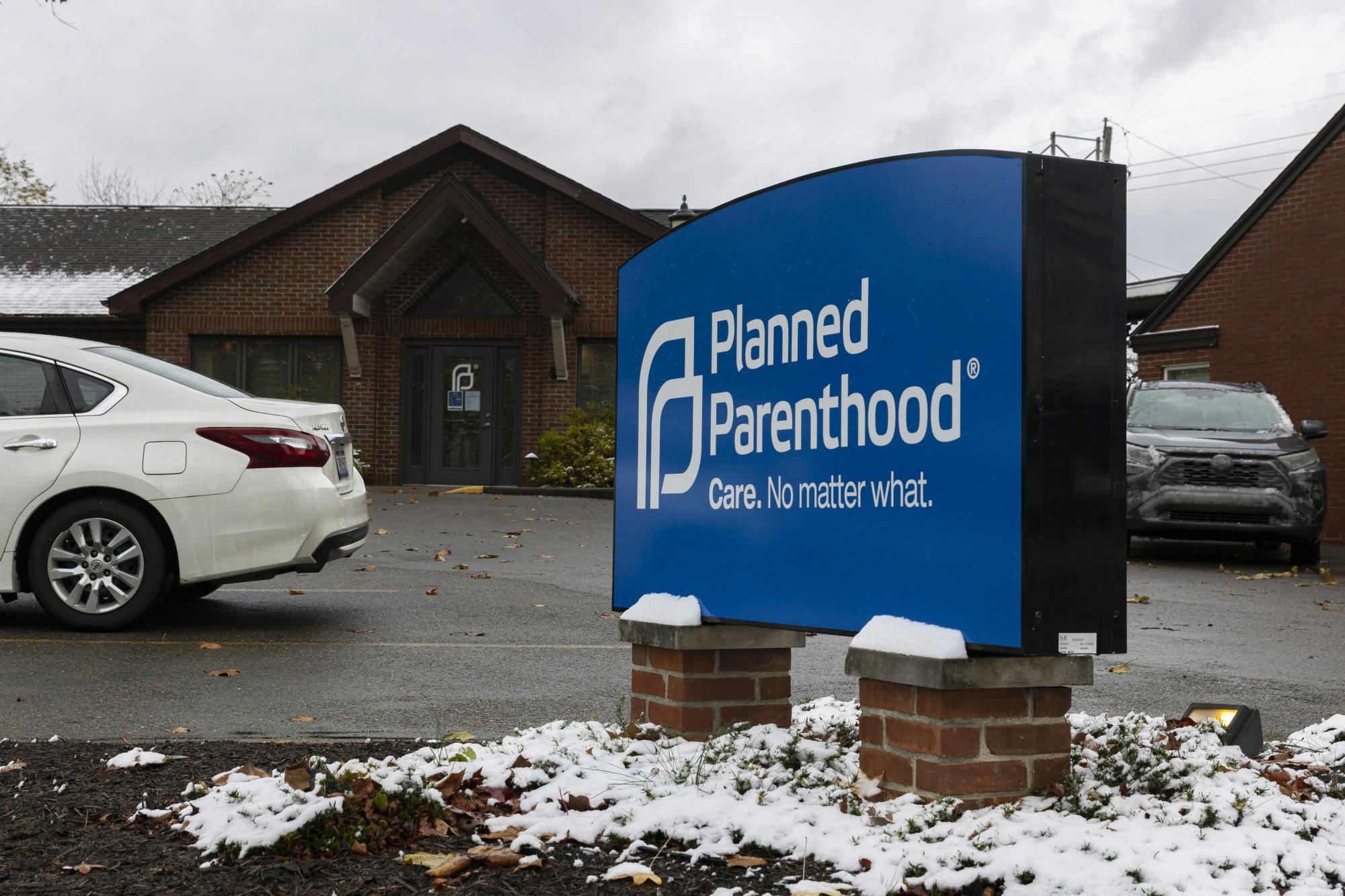
Ohio Planned Parenthood plans to challenge new state Medicaid constraints that would cut off federal funding to healthcare non-profits, including preventative care, STD screenings, cancer screenings and more general health services.
Stemming from the federal 2025 Budget Reconciliation Act in the One Big Beautiful Bill Act signed by President Donald Trump, federal funding is prohibited for certain non-profit healthcare providers, which include Planned Parenthood, according to the Ohio Capital Journal.
According to a 2023 fact sheet from the U.S. Government Accountability Office, Planned Parenthood received $1.54 billion in Medicare, Medicaid and Children’s Health Insurance Program Payments.
Section 71113 of the OBBBA specifically states, “This section prohibits federal funding Medicaid payment for one year to non-profit health care providers that serve predominantly low-income, medically underserved individuals if the provider primarily furnishes family planning services, reproductive health and related care; offers abortions in cases other than that of rape, incest or life-threatening conditions of the woman …”
Stephanie O’Grady, deputy director and chief communications officer for Ohio’s Department of Medicaid, wrote in an email clarifying the agency’s position on the issue.
“Ohio Medicaid is committed to upholding all federal and state laws governing the Medicaid program. The provisions of the federally mandated 2025 Budget Reconciliation Act prohibit certain nonprofit health care providers from receiving federal Medicaid reimbursements for services,” O’Grady wrote in an email.
Lauren Blauvelt, executive director of Planned Parenthood Advocates of Ohio, addressed a common misconception of the non-profit.
“Our patients who are using Medicaid at our health centers are using it to cover their birth control, to cover their STI testing and treatments, and their cancer screenings, their pap smears,” Blauvelt said. “So the cut is the regular access to reproductive health care that they have been used to using, and they should have access to go even further.”
While most people may associate abortions with Planned Parenthood, the non-profit has never used federal funding for abortions; in fact, it is illegal to do so.
“In the state of Ohio, we can’t use Medicaid to cover abortion, and so no funding from Medicaid ever touched funding to support abortion,” Blauvelt said. “... Even though lawmakers are falsely claiming this has to do with abortion, the impact is completely on birth control, STI testing and treatment, and cancer screens for our communities.”
Blauvelt said that those who do seek abortions at Planned Parenthood either pay for it directly or get resources, such as an abortion fund, to pay for it.
Patients seeking healthcare at Planned Parenthood may be unable to access these services due to financial barriers. Blauvelt discusses what would happen if patients were compelled to pay out of pocket for services.
“Unfortunately, that means they’re either making a decision where they’re not paying for something else that they need, or they choose to go without health care,” Blauvelt said.
Despite these restrictions on funding, Blauvelt discussed Planned Parenthood’s main mission.
“One of our goals is to make sure that our communities are healthy and that they’re able to access that health care in high quality and it’s affordable, and so by taking Medicaid out, they’re making it not affordable or a lot less affordable,” Blauvelt said.
Rebekah Crawford, assistant professor of social and public health, discussed the implications of funding being cut.
“The risks of funding being taken away are that a whole generation of people who have uteruses will not be able to make their own decisions about their lives,” Crawford said. “And if you can’t access reproductive health care, then you can’t really make decisions about how your life is going to go.”
Crawford said Planned Parenthood offers a bridge in the system of public health, and if the funding is taken away, then people can fall through the gaps.
Crawford also discussed the distinction between abortion and preventative care, both services Planned Parenthood offers.
“Well, if you really, really hate abortion, then preventative care is where you should be investing,“ Crawford said. "You should be investing in education and health literacy that people can use to prevent unwanted pregnancies, you should be investing in access to contraceptives. So it doesn’t seem to me like if you don’t want people to get abortions, you should empower them to not get pregnant, and that’s what Planned Parenthood does.”
While Planned Parenthood offers services such as birth control and pap smears, its services are not limited to women.
“I think it also benefits men to allow women to have healthy reproductive options,“ Crawford said. "So I think it benefits everybody to protect and support Planned Parenthood."


