

The Advance Ohio Higher Education Act, or Senate Bill 1, signed into law earlier this year, requires state universities to adopt a post-tenure review policy and implement new systems for documenting faculty workload.
The specific workload-reporting system is not yet in place at Ohio University. Instead, OU, like all public universities, is in the process of developing the mandated post-tenure review and workload policies.
SB1 also required OU to eliminate its diversity, equity and inclusion programs and centers, such as the Pride Center, the Multicultural Center and the Women’s Center, according to a previous report by The Post.
The law requires every public state university to report faculty work in terms of credit hours, standardizing how universities measure teaching and other responsibilities. The workload policy must include “an objective and numerically defined teaching workload expectation based on credit hours,” according to the bill.
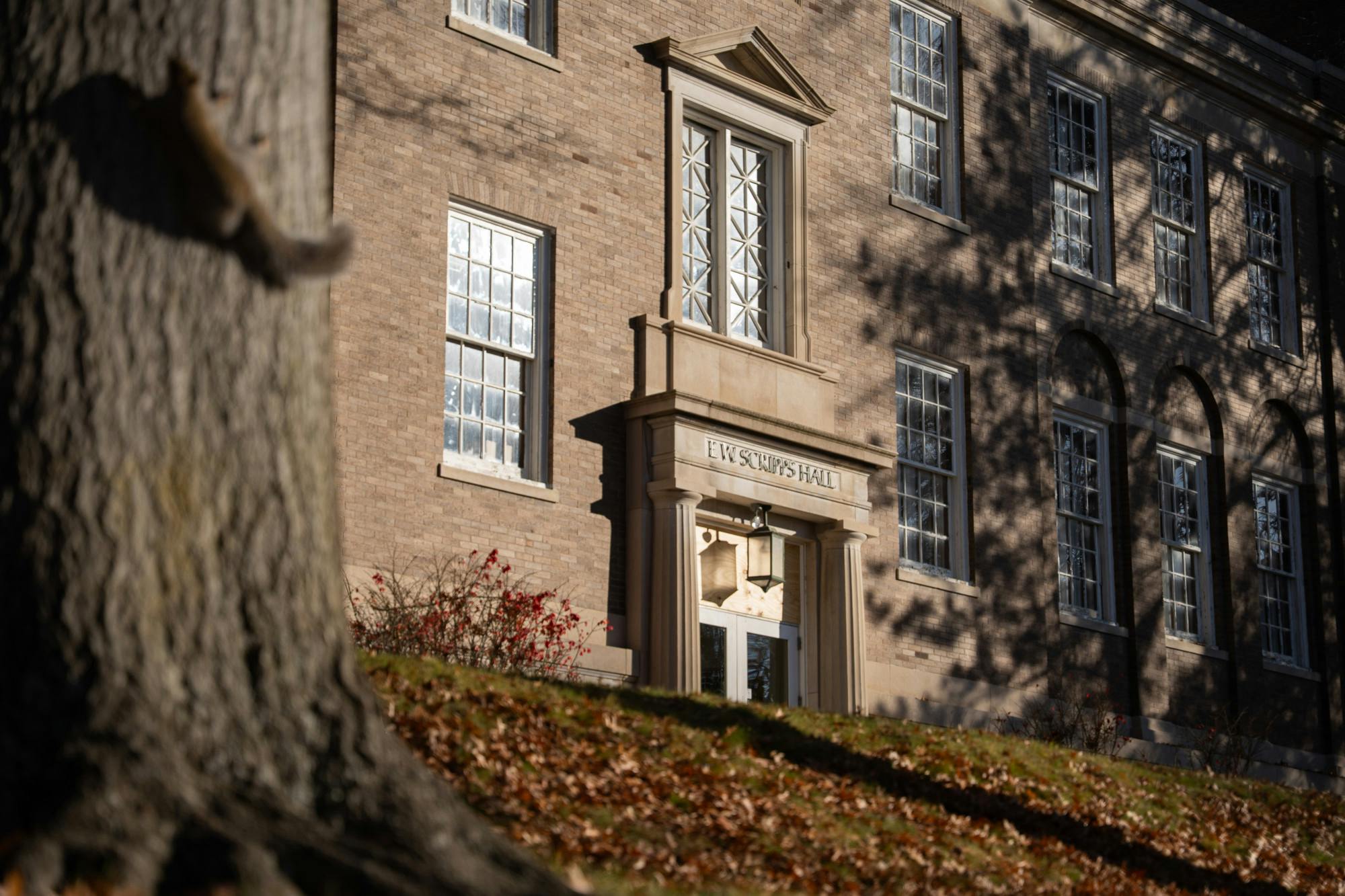
At OU, some professors in the E.W. Scripps School of Journalism said the reporting requirements are changing how they account for the hours they spend teaching, advising and other responsibilities.
Nerissa Young, an associate professor of journalism, said the new requirements formalize tasks that previously were not tracked in detail.
“I see this as a really empowering development because it allows us to document and get credit for the many things that we do,” Young said. “It appears to me there's an impression among the general assembly members that all we do is show up in class, maybe six or seven hours a week, and lecture, and that's all, and without being able to quantify work units, it doesn’t recognize the myriad of other things that we do often on outside contract days and during summer break.”
Young said the requirement to log hours and tasks highlights the breadth of work faculty complete outside the classroom.
She said the tasks faculty must now report include advising student organizations, attending meetings, writing recommendation letters, responding to student emails and completing creative or research projects. The reporting also covers recruitment and retention work, such as Bobcat Student Orientation, attending conferences, class-related field trips and other activities.
Some faculty expressed concern about how detailed reporting may affect their workflow. Kelly Ferguson, an associate professor of journalism, said much of her job takes place outside scheduled class hours.
“I teach two classes, and that's three hours a week I’m in this classroom teaching,” Ferguson said. “We've tried to come up with all the glacier parts of our job, right? All the things that people don't see that we do. I feel like nitpicking that minute by minute, hour by hour, again, is a waste of my time, and I'd like to see other jobs have to do that. I don't feel that administrators or politicians have to document their day, so I don't know what it's going to look like.”
Young said she hopes lawmakers consider faculty input as implementation continues.
“Maybe we should have talked to faculty and university administrators about it before we drafted this bill and voted for it, and Gov. DeWine signed it,” Young said. “Because I'm going to follow that law, and when I time out, I'm going to lock my office door and go do something else.”
Hans Meyer, director of the E.W. Scripps School of Journalism, said the bill reflects a misunderstanding of the work faculty do beyond the classroom.
“We're super busy,” Meyer said. “SB1 didn’t really take into account that. They just thought, ‘Oh, they're just teaching classes,’ when that mission of a university to help students develop critical thinking skills goes so far beyond the classroom.”
Meyer said the journalism school is currently working with the provost to categorize faculty output into “work units.” A three-credit-hour class equals three work units, meaning faculty would need to teach five classes per semester to meet the law’s 30-unit benchmark unless other duties are formally counted.
“You start to think about all the little things that you did before and just did because they were part of the job, and now you're trying to add up, ‘Oh, is this part of the work units that I need to fill so that I can meet my quota?’” Meyer said.
However, he said he does not anticipate a shift in faculty commitment.
“People go into the profession of journalism or teaching journalism because they love it, because they have a passion for it,” Meyer said. “You could tell them, ‘Hey, don't work so hard,’ and that's just not going to happen. They're going to work hard. They're focused on students.”


