

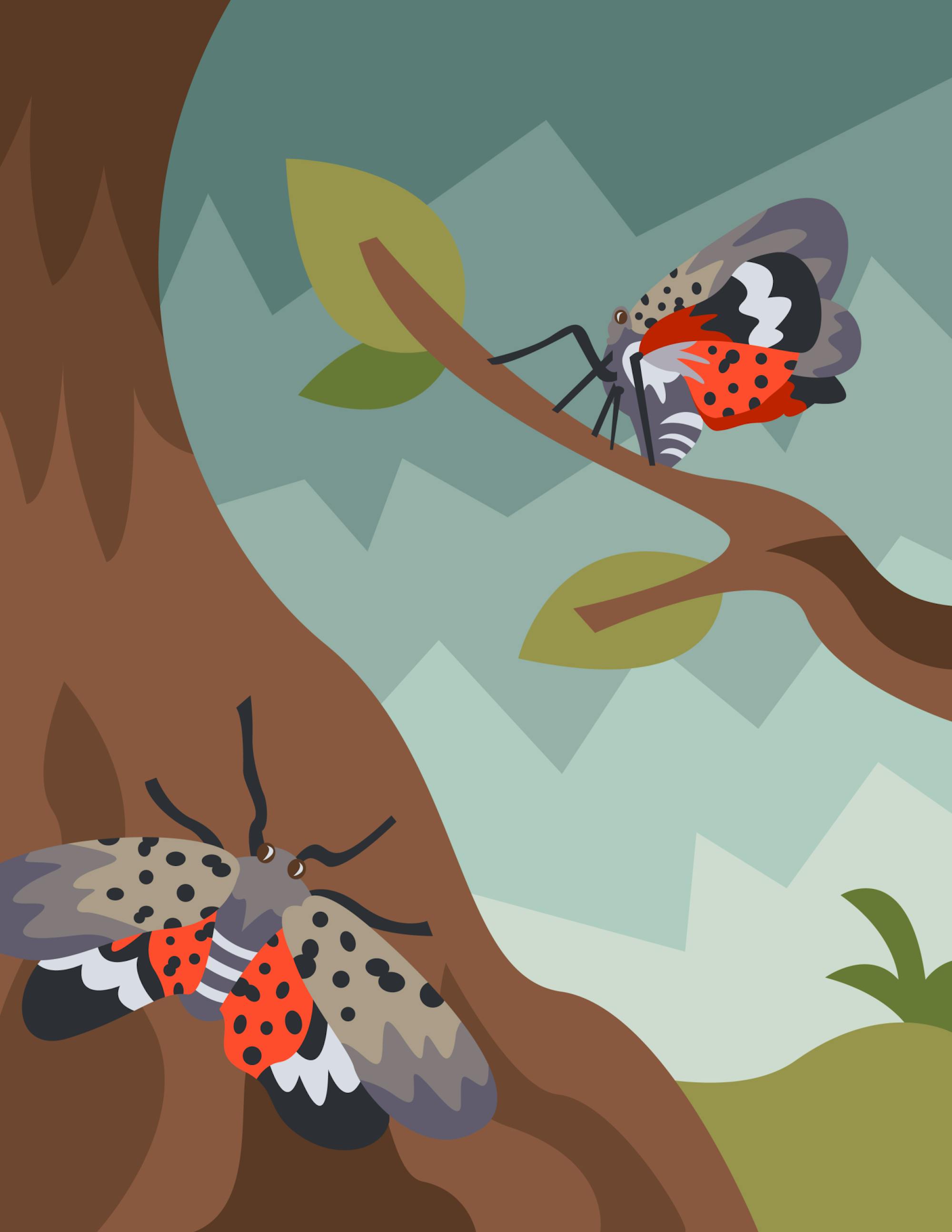
The spotted lanternfly population has become an increasingly large problem in Ohio, leading the Department of Agriculture to instate a statewide quarantine.
According to a previous article from The Post, reports of only 18 Ohio counties had established infestations in October.
Brian Baldridge, director of the Ohio Department of Agriculture, said in an interview with The Post the state-wide quarantine went into effect Feb. 17.
The species, indigenous to Asia, was first spotted in eastern Pennsylvania in 2014. It then moved across state lines via the railway system, earning the nickname “hitchhiker,” Baldridge said.
“This insect will latch on, we call it a hitchhiker, and it'll actually just take a ride until it hops off to that point,” Baldridge said. “Check your vehicle, because you don't want to take a spotted lanternfly insect home to your county, somewhere across the state of Ohio or outside of the state.”
The spotted lanternfly has a particular effect on crops and agriculture. They are particularly attracted to the tree of heaven, an invasive species of tree that can be found in diverse landscapes across the state, according to a press release. Individuals who have them in their landscaping are asked to monitor, as the lanternflies tend to congregate on the trees.
Another area of agriculture which is being particularly affected by the spotted lanternflies is vineyards, Baldridge said. There are approximately 432 wineries throughout the state, making it a nearly $6.6 billion industry, he said.
“We are very concerned about managing and protecting our vineyards that we have in our state because they will latch on and they’ll start pulling sap out of that plant, out of that grapevine and be very devastating to the plant itself,” Baldridge said.
Pleasant Hill Vineyards, located on 5015 Pleasant Hill Road in Athens, is owned by the Corder family. A spokesperson for the winery said because it is only just beginning to get warm, the lanternflies have not been a noticeable issue.
According to the Ohio Department of Agriculture, “Spotted lanternflies are not known to kill plants other than grapevines, black walnut saplings and tree of heaven. They can feed on more than 100 plant species, and have the potential to greatly impact the viticulture, tree fruit, nursery and timber industries.”
The PennState Extension published an article in October 2025 about lanternflies in Pennsylvania and specifically outlined a connection between spotted lanternflies and honeybees.
“In addition, once lanternflies are established in an area, beekeepers notice unusual late-season honey collecting in their hives,” the article states. “The honeydew is a sugary liquid that accumulates where there are aggregations of lanternfly adults. Honeybees readily collect this honeydew and process it as honey.”
The Spotted Lanternfly Project wrote something similar in an article posted on it's website, stating the honeydew “builds up and promotes the growth for sooty mold (a type of fungus), which can quickly cover the plant, forest understories, patio furniture, cars and anything else found below feeding lanternflies.”
It is not just Ohio that is having problems with spotted lanternflies, either. West Virginia’s Department of Agriculture reported 21 counties with positive cases of lanternflies as of December 2025, according to the West Virginia Department of Agriculture.
The Ohio Department of Natural Resources has a webpage dedicated to spotted lanternfly information. The website states, “Management of spotted lanternflies is focused on preventing their spread on vehicles or other objects through quarantines, trapping of nymphs, removal of host plants and chemical control.”
“We don't want to send out something that creates a problem for neighboring states, and we want to do best practices when it comes to having our inspectors look at these,” Baldridge said. “These nursery products are being shipped so that we are doing our best here in Ohio to not add insult to injury when it comes to the spotted lanternfly.”


