

Spoilers ahead.
The Crave original series “Heated Rivalry” found its home on HBO Max, bringing the drama of Major League Hockey from author Rachel Reid’s “Game Changers” series to the U.S. The first season concluded Dec. 25, but the energy surrounding the LGBTQIA-focused show remains strong.
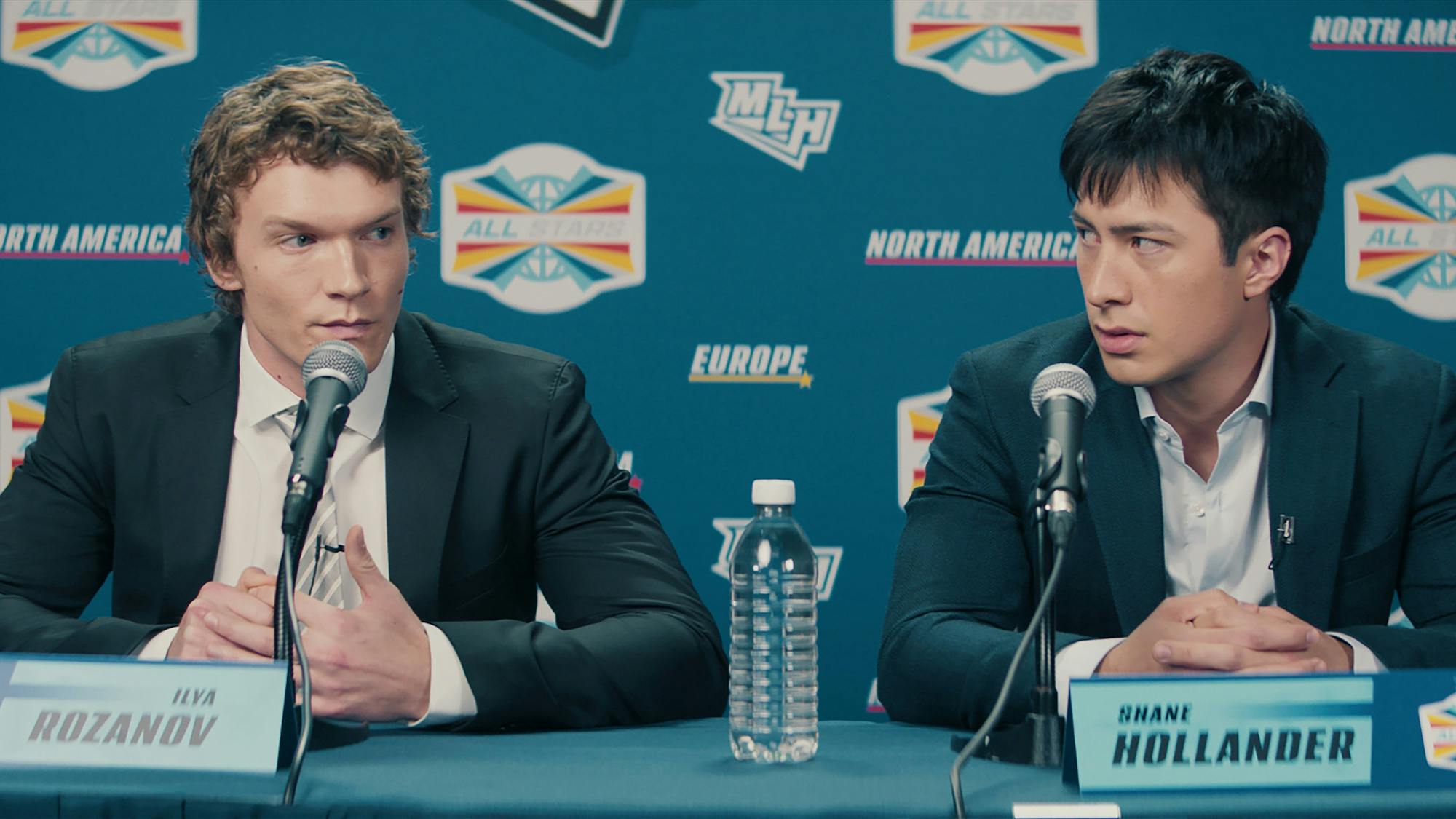
The show follows Ilya Rozonov (Connor Storrie) and Shane Hollander (Hudson Williams) through graphic, clandestine hookups between games as they navigate their first few years as professional hockey players while coming to terms with their relationship.
Episode three follows hockey player Scott Hunter (François Arnaud) and smoothie barista Kip Grady (Robbie G.K.). The pair quickly fall for each other after Hunter comes in for a smoothie, but Hunter’s fear of being out as a gay hockey player forces the couple apart by the end of the episode.
The fifth episode highlights Hunter’s MLH Cup win. As his teammates celebrate with their spouses, Hunter motions for Grady to come down from the stands and onto the ice. In a totally public display of affection, Hunter kisses Grady in front of his teammates and the world.
As Hunter and Grady have their moment, Hollander and Rozonov are having their own moment of realization. Hunter’s public coming-out scene pushed Rozonov to take the leap and join Hollander at his cottage over the summer, solidifying their relationship and proving LGBTQIA+ representation really does matter.
“When I first watched it, I was just giddy about it,” G.K. said of episode five to Variety. “I think this is the moment where all these storylines intersect. I’m glad it turned out as it did. It’s much better than anything I could have imagined.”
Arnaud spoke to Glamour about the weight on Hunter’s shoulders throughout episodes three and five and the implications of watching his teammates celebrate their championship win with their spouses.
“I think there’s just something like, ‘Oh, I’m going to do this for me now,’” Arnaud said. “‘I’ve done enough. I’m going to do this.’”
According to GLAAD, 80% of heterosexual, cisgender people who were exposed to LGBTQIA+ people in movies or TV shows said they were more supportive of equal LGBTQIA+ rights than those who were not. The representation in “Heated Rivalry” is making a similar impact on both its characters on-screen and real people off-screen.
Williams made an appearance on “Andy Cohen Live” and shared that professional athletes who are not out have sent him and Reid messages after watching the show.
“Those are the ones that really just kind of hit you and go, ‘Oh so this is a fun show, and it’s celebratory, but also sometimes it’s just hitting people right in the nerve,’” Williams said.
Arnaud said he met agents who represent professional hockey players who told him “Heated Rivalry,” in all of its devastating glory, is something some of these players actually go through, and he hopes the show can inspire real change.
“I hope that, yes, some people do connect the dots and maybe reflect on the locker room talk that is inadvertently toxic, that we’re taught to partake in,” Arnaud said to Glamour. “Not so long ago … the word ‘gay,’ for instance, in high school didn’t mean homosexual. It just meant weak and bad.”
The NHL commented on “Heated Rivalry” briefly, but without a show of support for its potential LGBTQIA+ players.
“There are so many ways to get hooked on hockey and, in the NHL’s 108-year history, this might be the most unique driver for creating new fans,” a league representative said to Hollywood Reporter.
The sixth episode steps away from hockey and into the Canadian wilderness. However, before joining the once-hockey-rivals at the cottage, the audience is taken to an award ceremony where Hunter is giving a speech on the homophobic tendencies of the hockey world. Later at the cottage, Rozonov and Hollander finally admit they love each other and reflect on what being professional hockey players means for their relationship.
At the end of the episode, Hollander’s dad comes to the cottage to borrow a phone charger and sees the couple making out. Hollander then comes out to both his parents, with Rozonov at his side, and shares an emotional moment with his mom, telling her he tried not to fall in love with Rozonov, and also tried to not be gay. The season ends with Hollander’s parents' love and support as Rozonov and Hollander drive off into the sunset, a whole new part of life awaiting them.
Through the intertwined stories of Hollander and Rozonov and Hunter and Grady, the audience gets a front row seat to the LGBTQIA+ characters’ everyday challenges, but also to the unapologetic joy of falling in love.
As “Heated Rivalry” follows the lives of LGBTQIA+ hockey players existing in a world that is not outwardly accepting, Jacob Tierney, the show’s creator, told Hollywood Reporter he was excited to see the audience’s reaction to the show’s overarching message.
“The thing that we really don’t get as queer people is a happy f----ing ending, where we get to exist, f--- and smile at the same time,” Tierney said. “Usually it’s like, pick one. You get to have it all in this one.”


