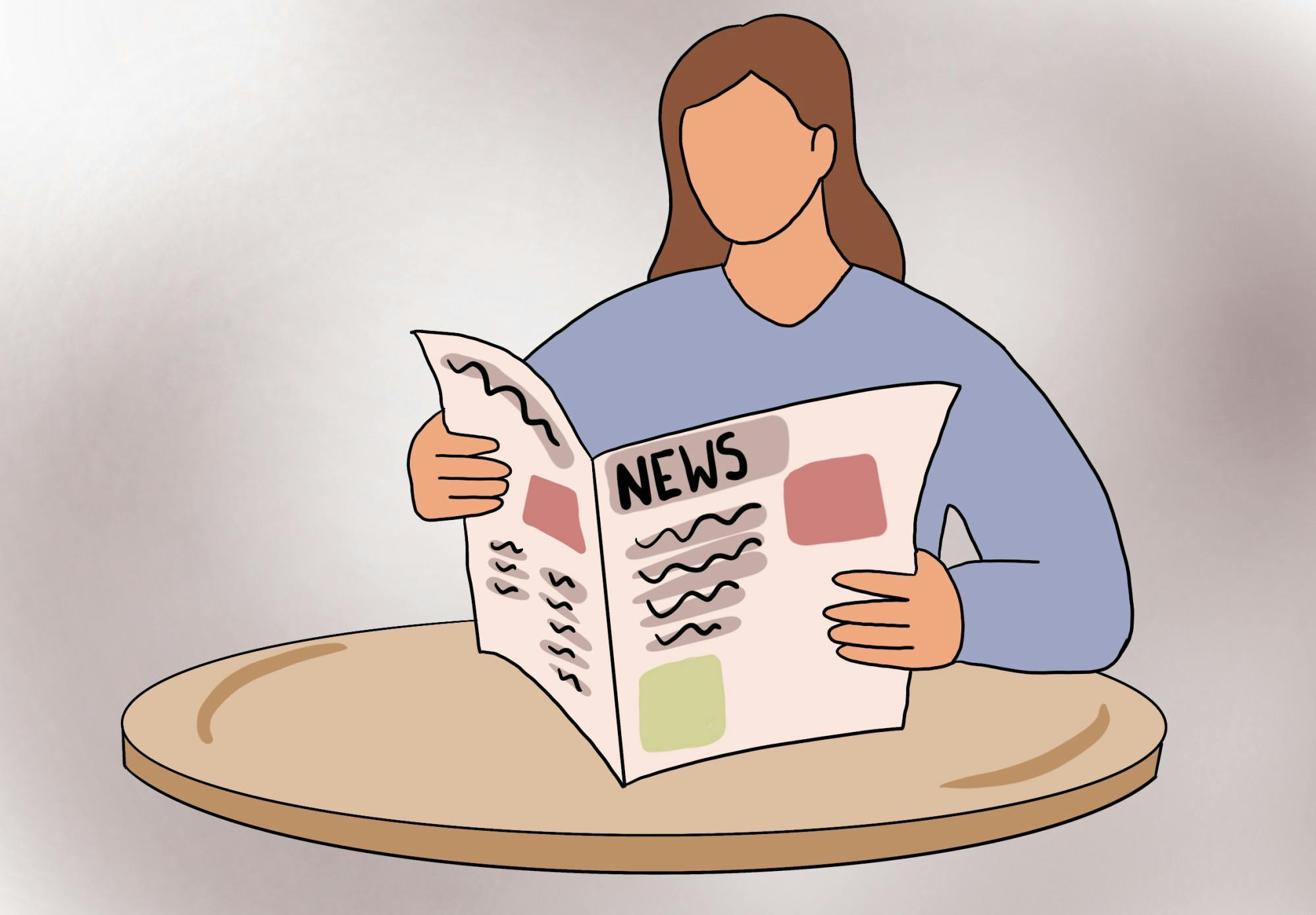
The last few decades have seen a sharp decline in local news. According to data collected by public relations software firm Muck Rack, since 2002, there has been a 75% decrease in the number of local journalists. The sudden rush of technological advancements and the creation of large global communities on the Internet have led to countless news deserts, a shift from local engagement to online communities and choosing a party’s national ideology.
The alarming lack of local journalists has led to the creation of news deserts, areas where few or no news outlets report on local issues or events. Although many people expect this issue to affect rural areas, urban areas are also suffering. On average, the counties containing Cincinnati, Columbus and Cleveland have only seven local journalists for every 100,000 people, according to data from Muck Rack.
Widespread internet access has taken the spotlight off local news. Data from The Pew Research Center reports 48% of Americans prefer to get their news from digital spaces, such as websites or social media. Spaces like X are now primarily used to learn about and discuss political issues happening across the country. Despite creating a well-informed national voter base, local news is severely underrepresented on social media. Only 1 in 4 Americans receives local news from digital spaces, leaving 75% of people uninformed about local politics and news.
News can now be quickly found in our pockets in a way that is unlike anything we've experienced in our society before. As we begin navigating national news, we are shown the two major political parties working against each other, along with social media algorithms that show users media they agree with, oftentimes being isolated from the other party.
These algorithms can force us into media echo chambers. The University of Texas at Austin defines these spaces as “when one experiences a biased, tailored media experience that eliminates opposing viewpoints and differing voices.” Inside an echo chamber, we are surrounded by like-minded individuals, making it seem as if their opinion is the only reasonable choice. A possible solution to this issue is found in our local news.
Local news connects us to others in our community, and we can relate to opposing ideas as we understand they are experiencing the same hardships. Being well-informed about the events happening in one’s area broadens the knowledge they have of those in office and political candidates, beyond the political affiliation that comes after their name on the ballot.
National-scale politics are often reduced to disagreements about ideologies, blaming opposing views for many of the issues that our country faces. However, it’s uncommon to see the federal government address local issues. It’s the role of our local governments to handle issues that impact their community’s day-to-day lives, such as decisions by the school board, infrastructure projects, local crime and local tax increases.
This isn’t to say national elections are less important than local elections; there is a fundamental difference in the work they do. It can be easy to overlook the accomplishments of local governments, as it happens on a smaller scale, but these are the accomplishments that directly affect us.
In a piece from PBS News, Johanna Dunaway, a professor and research director at Syracuse University’s Institute for Democracy, Journalism and Citizenship, said, “People don't feel comfortable voting when they know virtually nothing about any of the people running for office.”
Through reading local news, we familiarize ourselves with the stances and policies of our local candidates. It becomes difficult to distinguish between a candidate's personal platform and their party's national talking points if voters are not informed. This reliance on a political party’s ideology may lead to another candidate, with the correct agenda to help their local community, being overlooked.
In a time in which so much of our day is spent scouring social media, the issues that are affecting our communities can seem minuscule compared to the hardships of our country as a whole. We must remember that political parties serve the people; we should never blindly trust that a candidate is the correct choice solely because of their party.
The changes we want to see in our countries can start right in our backyards. Instead of getting wrapped up on social media for countless hours, subscribe to a local newspaper, familiarize yourself with your local politicians and start working toward the change you want to see.
Jack Shirley is a freshman studying journalism at Ohio University. Please note the opinions expressed in this column do not represent those of The Post. Want to talk to Jack about their column? Email them at js553624@ohio.edu.